












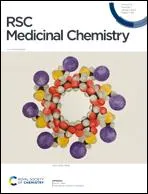

Porphyromonas gingivalis: where do we stand in our battle against this oral pathogen?
Literature Information
Publication Date
2021-02-26
DOI
10.1039/D0MD00424C
Impact Factor
0
Authors
Kaitlind C. Howard, Octavio A. Gonzalez, Sylvie Garneau-Tsodikova
View Original
Abstract
Periodontal diseases, such as gingivitis and periodontitis, are inflammatory diseases triggered by pathogenic bacteria that lead to damage of the soft tissue and bone supporting the teeth. Amongst the identified oral periodontopathogenic bacteria, Porphyromonas gingivalis is able to enhance oral dysbiosis, which is an imbalance in the beneficial commensal and periodontal pathogenic bacteria that induces chronic inflammation. Given the critical role of oral pathogenic bacteria like P. gingivalis in the pathogenesis of periodontitis, local and/or systemic antibacterial therapy has been suggested to treat this disease, especially in its severe or refractory forms. Nevertheless, the majority of the antibacterial agents currently used for the treatment of periodontal diseases are broad-spectrum, which harms beneficial bacterial species that are critical in health, inhibit the growth of pathogenic bacteria, contribute in protecting the periodontal tissues to damage and aid in its healing. Thus, the development of more effective and specific antibacterial agents is needed to control oral pathogens in a polymicrobial environment. The strategies for the development of novel antibacterial agents include natural product isolation as well as synthetic and semi-synthetic methodologies. This review presents an overview of the periodontal diseases gingivitis and periodontitis along with current antibacterial treatment options (i.e., classes of antibacterial agents and the mechanism(s) of resistance that hinder their usage) used in periodontal diseases that specifically target oral pathogens such as P. gingivalis. In addition, to help medicinal chemists gain a better understanding of potentially promising scaffolds, this review provides an in-depth coverage of the various families of small molecules that have been investigated as potential anti-P. gingivalis agents, including novel families of compounds, repositioned drugs, as well as natural products.
Related Literature
Establishment of an immunofiltration strip for the detection of 17β-estradiol based on the photothermal effect of black phosphorescence
Lixia Lu, Minglu Wang, Dan Zhang, Hongyan Zhang
2019-09-27
Paper
DOI: 10.1039/C9AN01495K
Recent advances in inorganic materials for LDI-MS analysis of small molecules
C. Y. Shi, C. H. Deng
2016-03-18
Minireview
DOI: 10.1039/C6AN00220J
A flowing atmospheric pressure afterglow as an ion source coupled to a differential mobility analyzer for volatile organic compound detection
Marcos Bouza, Jaime Orejas, Silvia López-Vidal, Jorge Pisonero, Nerea Bordel, Rosario Pereiro, Alfredo Sanz-Medel
2016-04-13
Paper
DOI: 10.1039/C5AN01938A
Rapid detection of synthetic cannabinoids in herbal highs using surface-enhanced Raman scattering produced by gold nanoparticle co-aggregation in a wet system
Hiroki Segawa, Takao Fukuoka, Tamitake Itoh, Yuichi Imai, Yuko T. Iwata, Tadashi Yamamuro, Kenji Kuwayama, Kenji Tsujikawa, Tatsuyuki Kanamori, Hiroyuki Inoue
2019-10-07
Paper
DOI: 10.1039/C9AN01512D
Real-time monitoring of calcification process by Sporosarcina pasteurii biofilm
Dustin Harris, Jyothir Ganesh Ummadi, Andrew R. Thurber, Yvan Allau, Circe Verba, Frederick Colwell, Marta E. Torres, Dipankar Koley
2016-02-29
Paper
DOI: 10.1039/C6AN00007J
Voltammetric detection of glutathione: an adsorptive stripping voltammetry approach
Madalena C. C. Areias, Kenichi Shimizu, Richard G. Compton
2016-04-01
Paper
DOI: 10.1039/C6AN00550K
A lysosome specific theranostic NO donor inhibits cancer cells by stimuli responsive molecular self-decomposition with an on-demand fluorescence pattern
Wuyang Hua, Xinyi Wang, Sinan Pei
2019-09-30
Paper
DOI: 10.1039/C9AN01746A
Electrochemical sensors for rapid diagnosis of pathogens in real time
Olja Simoska, Keith J. Stevenson
2019-10-07
Minireview
DOI: 10.1039/C9AN01747J
You might also like
Compound Q&A
How should waste containing 6-Chloro-5-(2'-hydroxy-3'-methoxy-4-biphenylyl)-3-(3-methoxyphenyl)-1H-pyrrolo[3,2-d]pyrimidine-2,4(3H,5H)-dione (CAS: 1346607-05-3) be handled?
Waste containing 6-Chloro-5-(2'-hydroxy-3'-methoxy-4-biphenylyl)-3-(3-methoxyphe...
1346607-05-36-Chloro-5-(2'-hydro...
Compound Q&A
What are the main uses of (3alpha,5alpha)-3-Hydroxypregnane-11,20-dione (CAS: 23930-19-0)?
(3alpha,5alpha)-3-Hydroxypregnane-11,20-dione is primarily used in the pharmaceu...
23930-19-0(3alpha,5alpha)-3-Hy...
Compound Q&A
What is the market or research trend for 4-Amino-6-chloro-2-pyridinecarboxylic acid (CAS: 546141-56-4)?
The market for 4-Amino-6-chloro-2-pyridinecarboxylic acid (CAS: 546141-56-4) is ...
546141-56-44-Amino-6-chloro-2-p...
Compound Q&A
Are there alternatives to (2-Benzoylethyl)trimethylammonium chloride (CAS: 24472-88-6) in synthesis?
Alternatives to (2-Benzoylethyl)trimethylammonium chloride (CAS: 24472-88-6) in ...
24472-88-6(2-Benzoylethyl)trim...
Compound Q&A
Is N-[4-Nitro-3-(trifluoromethyl)phenyl]acetamide (CAS: 393-12-4) safe?
N-[4-Nitro-3-(trifluoromethyl)phenyl]acetamide (CAS: 393-12-4) is generally safe...
393-12-4N-[4-Nitro-3-(triflu...
Compound Q&A
Are there alternatives to [(4R,5R,6S)-5-hydroxy-10-imino-3,7-dioxa-1,9-diazatricyclo[6.4.0.02,6]dodeca-8,11-dien-4-yl]methyl dihydrogen phosphate (CAS: 39679-56-6) in synthesis?
Alternative reagents such as other phosphates or similar functional groups can b...
39679-56-6[(4R,5R,6S)-5-hydrox...
Compound Q&A
Are there alternatives to N,N'-Bis(3-aminopropyl)-1,3-propanediamine (CAS: 4605-14-5) in synthesis?
There are alternatives to N,N'-Bis(3-aminopropyl)-1,3-propanediamine (CAS: 4605-...
4605-14-5N,N'-Bis(3-aminoprop...
Compound Q&A
What precautions should be taken when handling Aluminium trihexadecanoate (CAS: 555-35-1)?
When handling Aluminium trihexadecanoate, it is important to use appropriate per...
555-35-1Aluminium trihexadec...
Compound Q&A
What is (1,1-Dioxido-3-oxo-1,2-benzothiazol-2(3H)-yl)acetic acid (CAS: 52188-11-1)?
(1,1-Dioxido-3-oxo-1,2-benzothiazol-2(3H)-yl)acetic acid is a chemical compound ...
52188-11-1(1,1-Dioxido-3-oxo-1...
Compound Q&A
Are there alternatives to 5,5-dimethyloxolan-2-one (CAS: 3123-97-5) in synthesis?
Several alternatives to 5,5-dimethyloxolan-2-one (CAS: 3123-97-5) can be used in...
3123-97-55,5-dimethyloxolan-2...
Source Journal
Recommended Compounds
![2-morpholino-2-[2-(trifluoromethyl)pyrimidin-5-yl]ethanamine structure](https://static.chemtradehub.com/structs/119/1192570-20-9-2810.webp "2-morpholino-2-[2-(trifluoromethyl)pyrimidin-5-yl]ethanamine structure")
2-morpholino-2-[2-(trifluoromethyl)pyrimidin-5-yl]ethanamine
CAS Number:
1192570-20-9
Molecular Formula:
C11H15F3N4O
Recommended Suppliers





Disclaimer
This page provides academic journal information for reference and research purposes only. We are not affiliated with any journal publishers and do not handle publication submissions. For publication-related inquiries, please contact the respective journal publishers directly.
If you notice any inaccuracies in the information displayed, please contact us at support@chemtradehub.com. We will promptly review and address your concerns.