


Exploring the charging mechanisms in non-aqueous multiphase surfactant solutions, emulsions and colloidal systems via conductivity behaviors predicted with eyring's rate process theory
Literature Information
Publication Date
2015-11-19
DOI
10.1039/C5CP05026J
Impact Factor
3.676
Authors
View Original
Abstract
The common charging agents and charging mechanisms in non-aqueous multiphase systems available in the literature are analyzed, and the conductivity equations derived on the basis of the charging mechanisms with the Eyring's rate process theory are compared with experimental observations. The popular charging mechanisms in non-aqueous systems, such as the ion preferential absorption, ion pair dissociation, and micelle disproportionation/fluctuation models, are found to be incapable of explaining all experimental evidences. Particularly, the ion pair dissociation and micelle disproportionation/fluctuation models apparently suffer a major drawback: how charges are separated and most importantly how charging entities are stabilized in non-aqueous systems, are not adequately addressed; in low dielectric constant non-aqueous media separated ions tend to bind together rather than stay separately. A new charging mechanism incorporating an electric field internally available or externally applied into the charging process is proposed to explain charge separations and stabilizations. The conductivity equations derived on the basis of this new mechanism predict that conductivity should linearly increase with both the electric field and the concentrations of inverse micelles in very low concentration regions, which is consistent with experimental evidences.
Recommended Journals

Journal of Chemical Sciences

Topics in Catalysis

Medicinal Chemistry Research

Bioorganic & Medicinal Chemistry Letters

Acta Metallurgica Sinica-English Letters

Journal of the Indian Institute of Science

Colloid Journal

Herald of the Russian Academy of Sciences

Electroanalysis

Biocatalysis and Biotransformation
Related Literature
Structural evolution of toll-like receptor 7/8 agonists from imidazoquinolines to imidazoles
Deepender Kaushik, Arshpreet Kaur
2021-05-14
Review Article
DOI: 10.1039/D1MD00031D
An overview of the development of EED inhibitors to disable the PRC2 function
Kai-Lu Liu, Kongkai Zhu, Hua Zhang
2021-10-21
Review Article
DOI: 10.1039/D1MD00274K
A mimotope attached to an ITIM–SHP-1 interaction inhibitory peptide boosts immune response and efficacy
Koushik Roy, Syamal Roy, Siddhartha Roy
2021-05-19
Research Article
DOI: 10.1039/D1MD00099C
Fragment-based drug discovery: opportunities for organic synthesis
Jeffrey D. St. Denis, Richard J. Hall, Christopher W. Murray, Tom D. Heightman, David C. Rees
2020-12-24
Review Article
DOI: 10.1039/D0MD00375A
Put a ring on it: application of small aliphatic rings in medicinal chemistry
Matthias R. Bauer, Paolo Di Fruscia, Simon C. C. Lucas, Iacovos N. Michaelides, Jennifer E. Nelson, R. Ian Storer, Benjamin C. Whitehurst
2021-01-07
Review Article
DOI: 10.1039/D0MD00370K
Macrocyclic peptides that inhibit Wnt signalling via interaction with Wnt3a
Manuel E. Otero-Ramirez, Kyoko Matoba, Emiko Mihara, Junichi Takagi, Hiroaki Suga
2020-03-24
Paper
DOI: 10.1039/D0CB00016G
Human carboxylesterases and fluorescent probes to image their activity in live cells
Anchal Singh, Mingze Gao, Michael W. Beck
2021-05-18
Review Article
DOI: 10.1039/D1MD00073J
The tridecaptins: non-ribosomal peptides that selectively target Gram-negative bacteria
Samantha J. Bann, Ross D. Ballantine, Stephen A. Cochrane
2021-01-22
Review Article
DOI: 10.1039/D0MD00413H
Targeting the protease of West Nile virus
Saan Voss, Christoph Nitsche
2021-05-26
Review Article
DOI: 10.1039/D1MD00080B
You might also like
Compound Q&A
How should waste containing 6-Chloro-5-(2'-hydroxy-3'-methoxy-4-biphenylyl)-3-(3-methoxyphenyl)-1H-pyrrolo[3,2-d]pyrimidine-2,4(3H,5H)-dione (CAS: 1346607-05-3) be handled?
Waste containing 6-Chloro-5-(2'-hydroxy-3'-methoxy-4-biphenylyl)-3-(3-methoxyphe...
1346607-05-36-Chloro-5-(2'-hydro...
Compound Q&A
What are the main uses of (3alpha,5alpha)-3-Hydroxypregnane-11,20-dione (CAS: 23930-19-0)?
(3alpha,5alpha)-3-Hydroxypregnane-11,20-dione is primarily used in the pharmaceu...
23930-19-0(3alpha,5alpha)-3-Hy...
Compound Q&A
What is the market or research trend for 4-Amino-6-chloro-2-pyridinecarboxylic acid (CAS: 546141-56-4)?
The market for 4-Amino-6-chloro-2-pyridinecarboxylic acid (CAS: 546141-56-4) is ...
546141-56-44-Amino-6-chloro-2-p...
Compound Q&A
Are there alternatives to (2-Benzoylethyl)trimethylammonium chloride (CAS: 24472-88-6) in synthesis?
Alternatives to (2-Benzoylethyl)trimethylammonium chloride (CAS: 24472-88-6) in ...
24472-88-6(2-Benzoylethyl)trim...
Compound Q&A
Is N-[4-Nitro-3-(trifluoromethyl)phenyl]acetamide (CAS: 393-12-4) safe?
N-[4-Nitro-3-(trifluoromethyl)phenyl]acetamide (CAS: 393-12-4) is generally safe...
393-12-4N-[4-Nitro-3-(triflu...
Compound Q&A
Are there alternatives to [(4R,5R,6S)-5-hydroxy-10-imino-3,7-dioxa-1,9-diazatricyclo[6.4.0.02,6]dodeca-8,11-dien-4-yl]methyl dihydrogen phosphate (CAS: 39679-56-6) in synthesis?
Alternative reagents such as other phosphates or similar functional groups can b...
39679-56-6[(4R,5R,6S)-5-hydrox...
Compound Q&A
Are there alternatives to N,N'-Bis(3-aminopropyl)-1,3-propanediamine (CAS: 4605-14-5) in synthesis?
There are alternatives to N,N'-Bis(3-aminopropyl)-1,3-propanediamine (CAS: 4605-...
4605-14-5N,N'-Bis(3-aminoprop...
Compound Q&A
What precautions should be taken when handling Aluminium trihexadecanoate (CAS: 555-35-1)?
When handling Aluminium trihexadecanoate, it is important to use appropriate per...
555-35-1Aluminium trihexadec...
Compound Q&A
What is (1,1-Dioxido-3-oxo-1,2-benzothiazol-2(3H)-yl)acetic acid (CAS: 52188-11-1)?
(1,1-Dioxido-3-oxo-1,2-benzothiazol-2(3H)-yl)acetic acid is a chemical compound ...
52188-11-1(1,1-Dioxido-3-oxo-1...
Compound Q&A
Are there alternatives to 5,5-dimethyloxolan-2-one (CAS: 3123-97-5) in synthesis?
Several alternatives to 5,5-dimethyloxolan-2-one (CAS: 3123-97-5) can be used in...
3123-97-55,5-dimethyloxolan-2...
Source Journal
Physical Chemistry Chemical Physics

CiteScore:
5.5
Self-citation Rate:
10.3%
Articles per Year:
3036
Physical Chemistry Chemical Physics (PCCP) is an international journal co-owned by 19 physical chemistry and physics societies from around the world. This journal publishes original, cutting-edge research in physical chemistry, chemical physics and biophysical chemistry. To be suitable for publication in PCCP, articles must include significant innovation and/or insight into physical chemistry; this is the most important criterion that reviewers and Editors will judge against when evaluating submissions. The journal has a broad scope and welcomes contributions spanning experiment, theory, computation and data science. Topical coverage includes spectroscopy, dynamics, kinetics, statistical mechanics, thermodynamics, electrochemistry, catalysis, surface science, quantum mechanics, quantum computing and machine learning. Interdisciplinary research areas such as polymers and soft matter, materials, nanoscience, energy, surfaces/interfaces, and biophysical chemistry are welcomed if they demonstrate significant innovation and/or insight into physical chemistry. Joined experimental/theoretical studies are particularly appreciated when complementary and based on up-to-date approaches.
Recommended Compounds

![2-Methyl-2-propanyl [2-(2-oxa-6-azaspiro[3.3]hept-6-yl)ethyl]carbamate structure](https://static.chemtradehub.com/structs/141/1415562-38-7-c0a4.webp "2-Methyl-2-propanyl [2-(2-oxa-6-azaspiro[3.3]hept-6-yl)ethyl]carbamate structure")
2-Methyl-2-propanyl [2-(2-oxa-6-azaspiro[3.3]hept-6-yl)ethyl]carbamate
CAS Number:
1415562-38-7
Molecular Formula:
C12H22N2O3
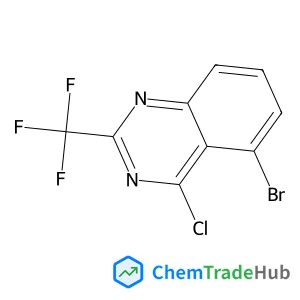
5-Bromo-4-chloro-2-(trifluoromethyl)quinazoline
CAS Number:
2089311-03-3
Molecular Formula:
C9H3BrClF3N2
![Benzyl 2-{[(tert-butoxy)carbonyl]amino}acetate structure](https://static.chemtradehub.com/structs/542/54244-69-8-6399.webp "Benzyl 2-{[(tert-butoxy)carbonyl]amino}acetate structure")
Recommended Suppliers



Disclaimer
This page provides academic journal information for reference and research purposes only. We are not affiliated with any journal publishers and do not handle publication submissions. For publication-related inquiries, please contact the respective journal publishers directly.
If you notice any inaccuracies in the information displayed, please contact us at support@chemtradehub.com. We will promptly review and address your concerns.