


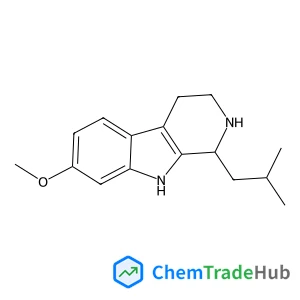
1-Isobutyl-7-methoxy-2,3,4,9-tetrahydro-1H-beta-carboline
CAS Number:
175975-76-5
Molecular Formula:
C16H22N2O
S. Soulé, J. Allouche, J.-C. Dupin, C. Courrèges, F. Plantier, W.-S. Ojo, Y. Coppel, C. Nayral, F. Delpech, H. Martinez
This work provides a detailed study on the physico-chemical characterization of a mechanized silver–gold alloy@mesoporous silica shell/pseudorotaxane nano-assembly using two main complementary techniques: XPS and NMR (liquid- and solid-state). The pseudorotaxane nanovalve is composed of a stalk (N-(6-aminohexyl)-aminomethyltriethoxysilane)/macrocycle (cucurbit[6]uril (CB6)) complex anchored to the silica shell leading to a silica/nanovalve hybrid organic–inorganic interface that has been fully characterized. The stalk introduction in the silica network was clearly demonstrated by XPS measurements, with the Si 2p peak shifting to lower energy after grafting, and through the analysis of the C 1s and N 1s core peaks, which indicated the presence of CB6 on the nanoparticle surface. For the first time, the complex formation on nanoparticles was proved by high speed 1H MAS NMR experiments. However, these solid state NMR analyses have shown that the majority of the stalk does not interact with the CB6 macrocycle when formulated in powder after removing the solvent. This can be related to the large number of possible organizations and interactions between the stalk, the CB6 and the silica surface. These results highlight the importance of using a combination of adapted and complementary highly sensitive surface and volume characterization techniques to design tailor-made hybrid hierarchical structured nano-assemblies with controlled and efficient properties for potential biological purposes.

Russian Journal of General Chemistry

Russian Journal of Coordination Chemistry

Chemistry Education Research and Practice

Chemical Communications

Nature Medicine

Russian Journal of Applied Chemistry

Russian Journal of Organic Chemistry

Drug Discovery Today

Current Opinion in Colloid & Interface Science

Current Opinion in Solid State & Materials Science
Vafa Fakhri, Aliakbar Jafari, Mir Alireza Shafiei, Mohammad Vahid Ehteshamfar, Shima Khalighiyan, Hadi Hosseini, Vahabodin Goodarzi, Frederik R. Wurm, Mehrdad Moosazadeh Moghaddam
DOI: 10.1039/D1PY01040A
Bilal Özen, Nicolas Candau, Cansel Temiz, Ferdinand C. Grozema, Grégory Stoclet, Christopher J. G. Plummer, Holger Frauenrath
DOI: 10.1039/D1PY01203G
Khalaf A. Jasim, Ibrahim F. Waheed
DOI: 10.1039/D1PY00964H
Chuandong Dou
DOI: 10.1039/D0PY00868K
Shuang Zhu, Lianlei Wen, Yan Xiao, Meidong Lang
DOI: 10.1039/D0PY00865F
Rachel L. Snyder, Claire A. L. Lidston, Guilhem X. De Hoe, Maria J. S. Parvulescu, Marc A. Hillmyer, Geoffrey W. Coates
DOI: 10.1039/C9PY01957J
Wanan Cai, Zhicheng Wang, Zhaohui Shu, Wenbin Liu, Jun Wang, Jian Qiu
DOI: 10.1039/D1PY01451J
DOI: 10.1039/D1PY01079D
Monika Topa-Skwarczyńska, Mariusz Galek, Magdalena Jankowska, Fabrice Morlet-Savary, Bernadette Graff, Jacques Lalevée, Roman Popielarz
DOI: 10.1039/D1PY01263K
N-(4-Methoxybenzyl)-2-pyridinamine (CAS: 52818-63-0) is increasingly being used ...
When handling Ethyl 4-(2-chlorophenyl)-1,3-thiazole-2-carboxylate, appropriate p...
Diethyldiselane (CAS: 628-39-7) is classified under the Globally Harmonized Syst...
The market for oxocopper (CAS: 12053-18-8) is primarily driven by its use in cat...
The market for 5-{[(2-Methyl-2-propanyl)oxy]carbonyl}-5-azaspiro[2.4]heptane-7-c...
2-(1-Pyrrolidinyl)-4-pyridinamine is a chemical compound with the CAS number 359...
2-(3-Pyridinyl)-1-azabicyclo[2.2.2]octane (CAS: 91556-75-1) is a crystalline sol...
(S)-Alpha-allyl-proline hydrochloride is usually synthesized via a Wittig reacti...
3-Methyl-1,2-oxazole-5-carboxylic acid (CAS: 4857-42-5) is an organic compound w...
Lys-SMCC-DM1 is synthesized via a multi-step process involving the coupling of S...

Physical Chemistry Chemical Physics (PCCP) is an international journal co-owned by 19 physical chemistry and physics societies from around the world. This journal publishes original, cutting-edge research in physical chemistry, chemical physics and biophysical chemistry. To be suitable for publication in PCCP, articles must include significant innovation and/or insight into physical chemistry; this is the most important criterion that reviewers and Editors will judge against when evaluating submissions. The journal has a broad scope and welcomes contributions spanning experiment, theory, computation and data science. Topical coverage includes spectroscopy, dynamics, kinetics, statistical mechanics, thermodynamics, electrochemistry, catalysis, surface science, quantum mechanics, quantum computing and machine learning. Interdisciplinary research areas such as polymers and soft matter, materials, nanoscience, energy, surfaces/interfaces, and biophysical chemistry are welcomed if they demonstrate significant innovation and/or insight into physical chemistry. Joined experimental/theoretical studies are particularly appreciated when complementary and based on up-to-date approaches.
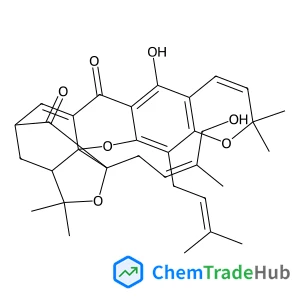

![1-oxaspiro[4.4]nonan-6-one structure](https://static.chemtradehub.com/structs/134/134179-01-4-e051.webp "1-oxaspiro[4.4]nonan-6-one structure")






