












![1-oxaspiro[4.4]nonan-6-one structure](https://static.chemtradehub.com/structs/134/134179-01-4-e051.webp "1-oxaspiro[4.4]nonan-6-one structure")
Elucidating the band structure and free charge carrier dynamics of pure and impurities doped CH3NH3PbI3−xClx perovskite thin films
Literature Information
Publication Date
2015-09-30
DOI
10.1039/C5CP04333F
Impact Factor
3.676
Authors
Zhen-Yu Zhang, Xin Chen, Hai-Yu Wang, Ming Xu, Bing-Rong Gao, Qi-Dai Chen, Hong-Bo Sun
View Original
Abstract
CH3NH3PbI3−xClx perovskite material has been commonly used as the free charge generator and reservoir in highly efficient perovskite-based solid-state solar photovoltaic devices. However, many of the underlying fundamental photophysical mechanisms in this material such as the perovskite transition band structure as well as the dependent relationship between the carrier properties and lattice properties still lack sufficient understanding. Here, we elucidated the fundamental band structure of the pure CH3NH3PbI3−xClx pervoskite lattice, and then reported about the dependent relationship between the free charge carrier characteristic and the different CH3NH3PbI3−xClx pervoskite lattice thin films utilizing femtosecond time-resolved pump–probe technologies. The data demonstrated that the pure perovskite crystal band structure should only have one conduction and one valence band rather than dual valences, and the pure perovskite lattice could trigger more free charge carriers with a slower recombination rate under an identical pump intensity compared with the impurities doped perovskite crystal. We also investigated the perovskite film performance when exposed to moisture and water, the corresponding results gave us a dip in the optimization of the performance of perovskite based devices, and so as a priority this material should be isolated from moisture (water). This work may propose a deeper perspective on the comprehension for this material and it is useful for future optimization of applications in photovoltaic and light emission devices.
Related Literature
Can all bulk-phase reactions be accelerated in microdroplets?
Shibdas Banerjee, Elumalai Gnanamani, Xin Yan, Richard N. Zare
2017-03-14
Perspective
DOI: 10.1039/C6AN02225A
Biochemical alterations of Candida albicans during the phenotypic transition from yeast to hyphae captured by Fourier transform mid-infrared-attenuated reflectance spectroscopy
Qin-Yin Shi, Vicki Schlegel
2018-09-21
Paper
DOI: 10.1039/C8AN01452C
A pressure-driven gas-diffusion/permeation micropump for self-activated sample transport in an extreme micro-environment
2018-09-07
Tutorial Review
DOI: 10.1039/C8AN01120F
Pushing the frontiers: boron-11 NMR as a method for quantitative boron analysis and its application to determine boric acid in commercial biocides
Luis Manuel Aguilera-Sáez, José Raúl Belmonte-Sánchez, Roberto Romero-González, José Luis Martínez Vidal, Francisco Javier Arrebola, Antonia Garrido Frenich, Ignacio Fernández
2018-09-05
Paper
DOI: 10.1039/C8AN00505B
Interaction study of cancer cells and fibroblasts on a spatially confined oxygen gradient microfluidic chip to investigate the tumor microenvironment
Wei Sun, Yuqing Chen, Yuerong Wang, Pei Luo, Min Zhang, Hongyang Zhang, Ping Hu
2018-10-01
Paper
DOI: 10.1039/C8AN01216D
Transformations to reduce the effect of particle size in mid-infrared spectra of biomass
Borja Cantero-Tubilla, Larry P. Walker
2018-09-10
Paper
DOI: 10.1039/C8AN01137K
Near-infrared broadband cavity-enhanced sensor system for methane detection using a wavelet-denoising assisted Fourier-transform spectrometer
Kaiyuan Zheng, Chuantao Zheng, Zidi Liu, Qixin He, Qiaoling Du, Yu Zhang, Yiding Wang, Frank K. Tittel
2018-08-29
Paper
DOI: 10.1039/C8AN01290C
Digital enzyme assay using attoliter droplet array
Takao Ono, Takanori Ichiki
2018-09-17
Paper
DOI: 10.1039/C8AN01152D
You might also like
Compound Q&A
What is the market or research trend for N-(4-Methoxybenzyl)-2-pyridinamine (CAS: 52818-63-0)?
N-(4-Methoxybenzyl)-2-pyridinamine (CAS: 52818-63-0) is increasingly being used ...
52818-63-0N-(4-Methoxybenzyl)-...
Compound Q&A
What precautions should be taken when handling Ethyl 4-(2-chlorophenyl)-1,3-thiazole-2-carboxylate (CAS: 1050507-06-6)?
When handling Ethyl 4-(2-chlorophenyl)-1,3-thiazole-2-carboxylate, appropriate p...
1050507-06-6Ethyl 4-(2-chlorophe...
Compound Q&A
What regulatory guidelines apply to diethyldiselane (CAS: 628-39-7)?
Diethyldiselane (CAS: 628-39-7) is classified under the Globally Harmonized Syst...
628-39-7Diethyldiselane
Compound Q&A
What is the market or research trend for oxocopper (CAS: 12053-18-8)?
The market for oxocopper (CAS: 12053-18-8) is primarily driven by its use in cat...
12053-18-8oxocopper; oxo-(oxoc...
Compound Q&A
What is the market or research trend for 5-{[(2-Methyl-2-propanyl)oxy]carbonyl}-5-azaspiro[2.4]heptane-7-carboxylic acid?
The market for 5-{[(2-Methyl-2-propanyl)oxy]carbonyl}-5-azaspiro[2.4]heptane-7-c...
1268519-54-55-{[(2-Methyl-2-prop...
Compound Q&A
What is 2-(1-Pyrrolidinyl)-4-pyridinamine (CAS: 35981-63-6)?
2-(1-Pyrrolidinyl)-4-pyridinamine is a chemical compound with the CAS number 359...
35981-63-62-(1-Pyrrolidinyl)-4...
Compound Q&A
What are the physical and chemical properties of 2-(3-Pyridinyl)-1-azabicyclo[2.2.2]octane (CAS: 91556-75-1)?
2-(3-Pyridinyl)-1-azabicyclo[2.2.2]octane (CAS: 91556-75-1) is a crystalline sol...
91556-75-12-(3-Pyridinyl)-1-az...
Compound Q&A
How is (S)-Alpha-allyl-proline hydrochloride (CAS: 129704-91-2) typically synthesized?
(S)-Alpha-allyl-proline hydrochloride is usually synthesized via a Wittig reacti...
129704-91-2(S)-Alpha-allyl-prol...
Compound Q&A
What is 3-Methyl-1,2-oxazole-5-carboxylic acid (CAS: 4857-42-5)?
3-Methyl-1,2-oxazole-5-carboxylic acid (CAS: 4857-42-5) is an organic compound w...
4857-42-53-Methyl-1,2-oxazole...
Compound Q&A
How is Lys-SMCC-DM1 (CAS: 1281816-04-3) typically synthesized?
Lys-SMCC-DM1 is synthesized via a multi-step process involving the coupling of S...
1281816-04-3Lys-SMCC-DM1
Source Journal
Physical Chemistry Chemical Physics

CiteScore:
5.5
Self-citation Rate:
10.3%
Articles per Year:
3036
Physical Chemistry Chemical Physics (PCCP) is an international journal co-owned by 19 physical chemistry and physics societies from around the world. This journal publishes original, cutting-edge research in physical chemistry, chemical physics and biophysical chemistry. To be suitable for publication in PCCP, articles must include significant innovation and/or insight into physical chemistry; this is the most important criterion that reviewers and Editors will judge against when evaluating submissions. The journal has a broad scope and welcomes contributions spanning experiment, theory, computation and data science. Topical coverage includes spectroscopy, dynamics, kinetics, statistical mechanics, thermodynamics, electrochemistry, catalysis, surface science, quantum mechanics, quantum computing and machine learning. Interdisciplinary research areas such as polymers and soft matter, materials, nanoscience, energy, surfaces/interfaces, and biophysical chemistry are welcomed if they demonstrate significant innovation and/or insight into physical chemistry. Joined experimental/theoretical studies are particularly appreciated when complementary and based on up-to-date approaches.
Recommended Compounds

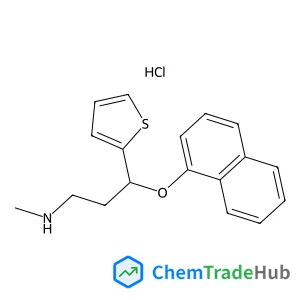
N-Methyl-3-(1-naphthyloxy)-3-(2-thienyl)-1-propanamine hydrochloride (1:1)
CAS Number:
1188266-11-6
Molecular Formula:
C18H20ClNOS

2-(4,4-Difluorobutyl)-1H-isoindole-1,3(2H)-dione
CAS Number:
1265341-14-7
Molecular Formula:
C12H11F2NO2
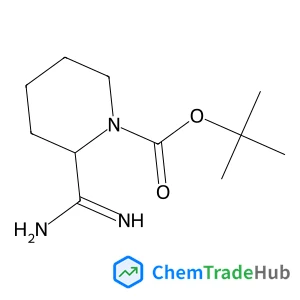
2-Methyl-2-propanyl 2-carbamimidoyl-1-piperidinecarboxylate
CAS Number:
1258640-98-0
Molecular Formula:
C11H21N3O2
Recommended Suppliers





Disclaimer
This page provides academic journal information for reference and research purposes only. We are not affiliated with any journal publishers and do not handle publication submissions. For publication-related inquiries, please contact the respective journal publishers directly.
If you notice any inaccuracies in the information displayed, please contact us at support@chemtradehub.com. We will promptly review and address your concerns.