












![(3R,4aR,7aS,9aR,10S,11R,13aR,13bS,15aS,15bR)-3,11-Dihydroxy-10-(hydroxymethyl)-4,4,7a,10,13a,15b-hexamethyl-1,2,3,4,4a,7,7a,8,9,9a,10,11,12,13,13a,13b,14,15,15a,15b-icosahydro-5H-naphtho[2',1':4,5]cyc
lohepta[1,2-a]naphthalen-5-one structure](https://static.chemtradehub.com/structs/538/53800-21-8-9f18.webp "(3R,4aR,7aS,9aR,10S,11R,13aR,13bS,15aS,15bR)-3,11-Dihydroxy-10-(hydroxymethyl)-4,4,7a,10,13a,15b-hexamethyl-1,2,3,4,4a,7,7a,8,9,9a,10,11,12,13,13a,13b,14,15,15a,15b-icosahydro-5H-naphtho[2',1':4,5]cyc
lohepta[1,2-a]naphthalen-5-one structure")
Density-functional calculations of the conversion of methane to methanol on platinum-decorated sheets of graphene oxide
Literature Information
Publication Date
2015-09-04
DOI
10.1039/C5CP03930D
Impact Factor
3.676
Authors
Shiuan-Yau Wu, Chien-Hao Lin, Jia-Jen Ho
View Original
Abstract
By means of calculations based on density-functional theory (DFT), we have investigated the conversion of methane on two platinum atoms supported with a graphene-oxide sheet (Pt2/GO). In our calculations, a CH4 molecule can be adsorbed around the Pt atoms of the Pt2/GO sheet with adsorption energies within −0.11 to −0.53 eV; an elongated C–H bond indicates that Pt atoms on that sheet can activate the C–H bond of a CH4 molecule. The role of the GO sheet in the activation of CH4 was identified according to an analysis of the electronic density: the GO sheet induces the d-band of Pt atoms to generate several specific dz2 state features above the Fermi level, which enabled the activation of the C–H bond of CH4 in generating an evident area of overlap with the hydrogen s orbital of the C–H bond. Upon a dioxygen molecule being added onto the Pt2/GO sheet, this molecule can react with activated CH4 according to mechanisms of form , and restore the original Pt2/GO sheet.
Related Literature
Critical universality and asymmetry of ionic solution {iodobenzene + 1-decyl-3-methyl-imidazolium bis(trifluorosulfonyl)imide}
Xiaoyi Tao, Tianxiang Yin
2017-07-26
Paper
DOI: 10.1039/C7CP03807K
Kinetics and dynamics of the C(3P) + H2O reaction on a full-dimensional accurate triplet state potential energy surface
Jun Li, Changjian Xie, Hua Guo
2017-08-10
Paper
DOI: 10.1039/C7CP04578F
Importance of non-intrinsic platinum dissolution in Pt/C composite fuel cell catalysts
Nejc Hodnik, Francisco Ruiz-Zepeda, Martin Šala, Vid Simon Šelih, Tim Patrick Fellinger
2017-07-19
Paper
DOI: 10.1039/C7CP03192K
A comparative VUV absorption mass-spectroscopy study on protonated peptides of different size
D. Egorov, R. Hoekstra, T. Schlathölter
2017-07-13
Paper
DOI: 10.1039/C7CP03203J
Long-range Li ion diffusion in NASICON-type Li1.5Al0.5Ge1.5(PO4)3 (LAGP) studied by 7Li pulsed-gradient spin-echo NMR
Kikuko Hayamizu
2017-08-14
Paper
DOI: 10.1039/C7CP03647G
Short bent-core molecules: X-ray, polarization, dielectricity, texture and electro-optics investigations
S. Torgova, S. P. Sreenilayam, O. Francescangeli, F. Vita, J. K. Vij, E. Pozhidaev, M. Minchenko, C. Ferrero
2017-07-26
Paper
DOI: 10.1039/C7CP03561F
Redox titration of gold and platinum surface oxides at porous microelectrodes
Mareike Haensch, Luis Balboa, Alexander Dyck, Gunther Wittstock
2017-08-09
Paper
DOI: 10.1039/C7CP04589A
A molecular dynamics study of conformations of beta-cyclodextrin and its eight derivatives in four different solvents
Mikko Karttunen
2017-08-14
Paper
DOI: 10.1039/C7CP04009A
Radical-driven processes within a peptidic sequence of type I collagen upon single-photon ionisation in the gas phase
Lucas Schwob, Mathieu Lalande, Dmitrii Egorov, Jimmy Rangama, Ronnie Hoekstra, Violaine Vizcaino, Thomas Schlathölter, Jean-Christophe Poully
2017-07-25
Paper
DOI: 10.1039/C7CP03376A
You might also like
Compound Q&A
Is 6-(3-Fluorophenyl)picolinic acid (CAS: 887982-40-3) safe?
6-(3-Fluorophenyl)picolinic acid is generally considered safe for laboratory use...
887982-40-36-(3-Fluorophenyl)pi...
Compound Q&A
What industries use (3R)-3-Pyrrolidinol (CAS: 2799-21-5)?
(3R)-3-Pyrrolidinol is used in the pharmaceutical industry as a precursor for dr...
2799-21-5(3R)-3-Pyrrolidinol
Compound Q&A
What precautions should be taken when handling (4R,5R)-4,5-Diethoxycarbonyl-2,2-dimethyldioxolane (CAS: 59779-75-8)?
When handling (4R,5R)-4,5-Diethoxycarbonyl-2,2-dimethyldioxolane (CAS: 59779-75-...
59779-75-8(4R,5R)-4,5-Diethoxy...
Compound Q&A
How is 1-(6-Chloroimidazo[1,2-b]pyridazin-3-yl)ethanone (CAS: 90734-71-7) typically synthesized?
1-(6-Chloroimidazo[1,2-b]pyridazin-3-yl)ethanone is often synthesized via a mult...
90734-71-71-(6-Chloroimidazo[1...
Compound Q&A
What is the market or research trend for N-Ethyl-3,4-dimethylbenzylamine (CAS: 39180-83-1)?
The market for N-Ethyl-3,4-dimethylbenzylamine (CAS: 39180-83-1) remains steady,...
39180-83-1N-Ethyl-3,4-dimethyl...
Compound Q&A
What is Tert-butyl 3-(pyrrolidin-1-yl)azetidine-1-carboxylate (CAS: 1019008-21-9)?
Tert-butyl 3-(pyrrolidin-1-yl)azetidine-1-carboxylate is a chemical compound wit...
1019008-21-9Tert-butyl 3-(pyrrol...
Compound Q&A
What regulatory guidelines apply to 1-Bromo-3-chloro-2,4-dimethoxybenzene (CAS: 1228956-93-1)?
1-Bromo-3-chloro-2,4-dimethoxybenzene (CAS: 1228956-93-1) falls under the classi...
1228956-93-11-Bromo-3-chloro-2,4...
Compound Q&A
Is 8-Bromo-2-methyl-3,4-dihydroisoquinolin-1(2H)-one (CAS: 1368622-07-4) safe?
The safety of 8-Bromo-2-methyl-3,4-dihydroisoquinolin-1(2H)-one (CAS: 1368622-07...
1368622-07-48-Bromo-2-methyl-3,4...
Compound Q&A
Is Benzyl [(3S)-2,6-dioxo-3-piperidinyl]carbamate (CAS: 22785-43-9) safe?
Benzyl [(3S)-2,6-dioxo-3-piperidinyl]carbamate is generally safe when handled wi...
22785-43-9Benzyl [(3S)-2,6-dio...
Compound Q&A
How should 1-{[4-(4,4,5,5-Tetramethyl-1,3,2-dioxaborolan-2-yl)phenyl]sulfonyl}pyrrolidine (CAS: 928657-21-0) be stored?
1-{[4-(4,4,5,5-Tetramethyl-1,3,2-dioxaborolan-2-yl)phenyl]sulfonyl}pyrrolidine s...
928657-21-01-{[4-(4,4,5,5-Tetra...
Source Journal
Physical Chemistry Chemical Physics

CiteScore:
5.5
Self-citation Rate:
10.3%
Articles per Year:
3036
Physical Chemistry Chemical Physics (PCCP) is an international journal co-owned by 19 physical chemistry and physics societies from around the world. This journal publishes original, cutting-edge research in physical chemistry, chemical physics and biophysical chemistry. To be suitable for publication in PCCP, articles must include significant innovation and/or insight into physical chemistry; this is the most important criterion that reviewers and Editors will judge against when evaluating submissions. The journal has a broad scope and welcomes contributions spanning experiment, theory, computation and data science. Topical coverage includes spectroscopy, dynamics, kinetics, statistical mechanics, thermodynamics, electrochemistry, catalysis, surface science, quantum mechanics, quantum computing and machine learning. Interdisciplinary research areas such as polymers and soft matter, materials, nanoscience, energy, surfaces/interfaces, and biophysical chemistry are welcomed if they demonstrate significant innovation and/or insight into physical chemistry. Joined experimental/theoretical studies are particularly appreciated when complementary and based on up-to-date approaches.
Recommended Compounds
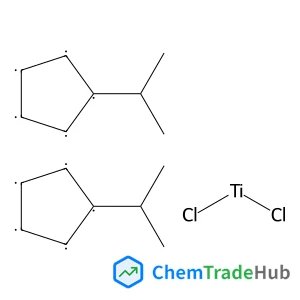
BIS(I-PROPYLCYCLOPENTADIENYL)TITANIUM DICHLORIDE
CAS Number:
12130-65-3
Molecular Formula:
C16H22Cl2Ti
Recommended Suppliers





Disclaimer
This page provides academic journal information for reference and research purposes only. We are not affiliated with any journal publishers and do not handle publication submissions. For publication-related inquiries, please contact the respective journal publishers directly.
If you notice any inaccuracies in the information displayed, please contact us at support@chemtradehub.com. We will promptly review and address your concerns.