












Assessing backbone solvation effects in the conformational propensities of amino acid residues in unfolded peptides
Literature Information
Publication Date
2015-08-27
DOI
10.1039/C5CP03646A
Impact Factor
3.676
Authors
Niranjan V. Ilawe, Alexandra E. Raeber, Reinhard Schweitzer-Stenner, Siobhan E. Toal, Bryan M. Wong
View Original
Abstract
Conformational ensembles of individual amino acid residues within model GxG peptides (x representing different amino acid residues) are dominated by a mixture of polyproline II (pPII) and β-strand like conformations. We recently discovered rather substantial differences between the enthalpic and entropic contributions to this equilibrium for different amino acid residues. Isoleucine and valine exceed all other amino acid residues in terms of their rather large enthalpic stabilization and entropic destabilization of polyproline II. In order to shed light on these underlying physical mechanisms, we performed high-level DFT calculations to explore the energetics of four representative GxG peptides where x = alanine (A), leucine (L), valine (V), and isoleucine (I) in explicit water (10 H2O molecules with a polarizable continuum water model) and in vacuo. We found that the large energetic contributions to the stabilization of pPII result, to a major extent, from peptide–water, water–water interactions, and changes of the solvent self-energy. Differences between the peptide–solvent interaction energies of hydration in pPII and β-strand peptides are particularly important for the pPII ⇌ β equilibria of the more aliphatic peptides GIG and GLG. Furthermore, we performed a vibrational analysis of the four peptides in both conformations and discovered a rather substantial mixing between water motions and peptide vibrations below 700 cm−1. We found that the respective vibrational entropies are substantially different for the considered conformations, and their contributions to the Gibbs/Helmholtz energy stabilize β-strand conformations. Taken together, our results underscore the notion of the solvent being the predominant determinant of peptide (and protein) conformations in the unfolded state.
Related Literature
Illuminating solid gas storage in confined spaces – methane hydrate formation in porous model carbons
Lars Borchardt, Winfried Nickel, Mirian Casco, Irena Senkovska, Volodymyr Bon, Dirk Wallacher, Nico Grimm, Simon Krause, Joaquín Silvestre-Albero
2016-07-07
Paper
DOI: 10.1039/C6CP03993F
Flexible band gap tuning of hexagonal boron nitride sheets interconnected by acetylenic bonds
Hongyu Zhang, Youhua Luo, Xiaojuan Feng, Lixia Zhao, Meng Zhang
2015-07-07
Paper
DOI: 10.1039/C5CP02346G
TEMPO-mediated oxidized winter melon-based carbonaceous aerogel as an ultralight 3D support for enhanced photodegradation of organic pollutants
Miao Miao, Gangling Wang, Shaomei Cao, Xin Feng, Jianhui Fang, Liyi Shi
2015-08-27
Paper
DOI: 10.1039/C5CP04679C
Mechano-switchable, luminescent gels derived from salts of a long-chained, fatty-acid gelator
Mohan Zhang
2016-07-12
Paper
DOI: 10.1039/C6CP03435G
Electrical impedance spectroscopy of a PET chip sandwiched between two disk electrodes: understanding the contribution of the polymer/electrode interface
L. Chaal, V. Vivier, B. Tribollet, J. Gamby
2016-06-29
Paper
DOI: 10.1039/C6CP03042D
Study of switching in spin transition compounds within the mechanoelastic model with realistic parameters
Cristian Enachescu, Andreas Hauser
2016-06-29
Paper
DOI: 10.1039/C6CP02806C
An advanced approach for measuring acidity of hydroxyls in confined space: a FTIR study of low-temperature CO and 15N2 adsorption on MOF samples from the MIL-53(Al) series
M. Mihaylov, S. Andonova, K. Chakarova, A. Vimont, E. Ivanova, N. Drenchev, K. Hadjiivanov
2015-08-17
Paper
DOI: 10.1039/C5CP04139B
Double deuterated acetylacetone in neon matrices: infrared spectroscopy, photoreactivity and the tunneling process
Michèle Chevalier, Claudine Crépin
2016-06-27
Paper
DOI: 10.1039/C6CP02796B
The role of alkoxy radicals in the heterogeneous reaction of two structural isomers of dimethylsuccinic acid
Chiu Tung Cheng, Kevin R. Wilson
2015-08-27
Paper
DOI: 10.1039/C5CP03791C
Aqueous biphasic systems composed of ionic liquids and polypropylene glycol: insights into their liquid–liquid demixing mechanisms
Catarina M. S. S. Neves, Jesus Lemus, Jorge F. B. Pereira, Mara G. Freire, João A. P. Coutinho
2016-06-24
Paper
DOI: 10.1039/C6CP04023C
You might also like
Compound Q&A
What precautions should be taken when handling 4-Methyl-6-(trifluoromethyl)quinoline (CAS: 40716-16-3)?
When handling 4-Methyl-6-(trifluoromethyl)quinoline (CAS: 40716-16-3), safety go...
40716-16-34-Methyl-6-(trifluor...
Compound Q&A
What is 4-(3,5-Difluorophenyl)aniline (CAS: 405058-00-6)?
4-(3,5-Difluorophenyl)aniline is an aromatic organic compound with the CAS numbe...
405058-00-64-(3,5-Difluoropheny...
Compound Q&A
How is 5-{[4-(Trifluoromethyl)phenyl]sulfanyl}-1,2,3-thiadiazole-4-carboxylic acid (CAS: 338982-07-3) typically synthesized?
5-{[4-(Trifluoromethyl)phenyl]sulfanyl}-1,2,3-thiadiazole-4-carboxylic acid can ...
338982-07-35-{[4-(Trifluorometh...
Compound Q&A
What is the market or research trend for 4-Benzylaniline hydrochloride (CAS: 6317-57-3)?
The market for 4-Benzylaniline hydrochloride (CAS: 6317-57-3) is steadily growin...
6317-57-34-Benzylaniline hydr...
Compound Q&A
Is [3-(Diethylsulfamoyl)phenyl]boronic acid (CAS: 871329-58-7) safe?
[3-(Diethylsulfamoyl)phenyl]boronic acid is generally considered safe when handl...
871329-58-7[3-(Diethylsulfamoyl...
Compound Q&A
What are the main uses of 3-Bromo-2,5-dimethoxyaniline (CAS: 115929-62-9)?
3-Bromo-2,5-dimethoxyaniline is mainly used in the pharmaceutical and chemical i...
115929-62-93-Bromo-2,5-dimethox...
Compound Q&A
What regulatory guidelines apply to N-Methyl-1-(5-methyl-1H-indol-3-yl)methanamine (CAS: 915922-67-7)?
N-Methyl-1-(5-methyl-1H-indol-3-yl)methanamine (CAS: 915922-67-7) is subject to ...
915922-67-7N-Methyl-1-(5-methyl...
Compound Q&A
What industries use Carbamic acid, N-[(5S)-5,6-diamino-6-oxohexyl]-, 1,1-dimethylethyl ester (CAS: 24828-96-4)?
This compound is primarily used in the pharmaceutical industry for the synthesis...
24828-96-4Carbamic acid, N-[(5...
Compound Q&A
How should 2-Methyl-2-propanyl [(1S,3R)-3-aminocyclohexyl]carbamate (CAS: 1298101-47-9) be stored?
2-Methyl-2-propanyl [(1S,3R)-3-aminocyclohexyl]carbamate (CAS: 1298101-47-9) sho...
1298101-47-92-Methyl-2-propanyl ...
Compound Q&A
What industries use Ethyl 2-bromo-4,4,4-trifluorobutanoate (CAS: 367-33-9)?
Ethyl 2-bromo-4,4,4-trifluorobutanoate (CAS: 367-33-9) is utilized in the pharma...
367-33-9Ethyl 2-bromo-4,4,4-...
Source Journal
Physical Chemistry Chemical Physics

CiteScore:
5.5
Self-citation Rate:
10.3%
Articles per Year:
3036
Physical Chemistry Chemical Physics (PCCP) is an international journal co-owned by 19 physical chemistry and physics societies from around the world. This journal publishes original, cutting-edge research in physical chemistry, chemical physics and biophysical chemistry. To be suitable for publication in PCCP, articles must include significant innovation and/or insight into physical chemistry; this is the most important criterion that reviewers and Editors will judge against when evaluating submissions. The journal has a broad scope and welcomes contributions spanning experiment, theory, computation and data science. Topical coverage includes spectroscopy, dynamics, kinetics, statistical mechanics, thermodynamics, electrochemistry, catalysis, surface science, quantum mechanics, quantum computing and machine learning. Interdisciplinary research areas such as polymers and soft matter, materials, nanoscience, energy, surfaces/interfaces, and biophysical chemistry are welcomed if they demonstrate significant innovation and/or insight into physical chemistry. Joined experimental/theoretical studies are particularly appreciated when complementary and based on up-to-date approaches.
Recommended Compounds
![(4aR,5S,6R,8aS)-5-[2-(3-Furyl)ethyl]-8a-(hydroxymethyl)-5,6-dimethyl-3,4,4a,5,6,7,8,8a-octahydro-1-naphthalenecarboxylic acid structure](https://static.chemtradehub.com/structs/184/18411-75-1-d4cd.webp "(4aR,5S,6R,8aS)-5-[2-(3-Furyl)ethyl]-8a-(hydroxymethyl)-5,6-dimethyl-3,4,4a,5,6,7,8,8a-octahydro-1-naphthalenecarboxylic acid structure")
(4aR,5S,6R,8aS)-5-[2-(3-Furyl)ethyl]-8a-(hydroxymethyl)-5,6-dimethyl-3,4,4a,5,6,7,8,8a-octahydro-1-naphthalenecarboxylic acid
CAS Number:
18411-75-1
Molecular Formula:
C20H28O4
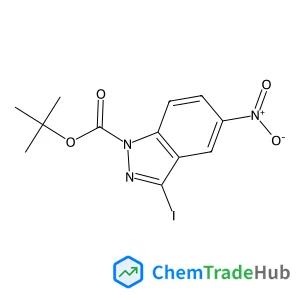
Tert-butyl 3-iodo-5-nitro-1H-indazole-1-carboxylate
CAS Number:
459133-69-8
Molecular Formula:
C12H12IN3O4
Recommended Suppliers





Disclaimer
This page provides academic journal information for reference and research purposes only. We are not affiliated with any journal publishers and do not handle publication submissions. For publication-related inquiries, please contact the respective journal publishers directly.
If you notice any inaccuracies in the information displayed, please contact us at support@chemtradehub.com. We will promptly review and address your concerns.