












Double deuterated acetylacetone in neon matrices: infrared spectroscopy, photoreactivity and the tunneling process
Literature Information
Publication Date
2016-06-27
DOI
10.1039/C6CP02796B
Impact Factor
3.676
Authors
Michèle Chevalier, Claudine Crépin
View Original
Abstract
The effect of deuteration of acetylacetone (C5O2H8) is explored by means of IR spectroscopy of its single and double deuterated isotopologues trapped in neon matrices. The whole vibrational spectra of chelated enols are very sensitive to the H–D exchange of the hydrogen atom involved in the internal hydrogen bond. UV excitation of double deuterated acetylacetone isolated in neon matrices induces the formation of four open enol isomers which can be divided into two groups of two conformers, depending on their formation kinetics. Within each group, one conformer is more stable than the other: slow conformer interconversion due to a tunneling process is observed in the dark at low temperature. Moreover, IR laser irradiation at the OD stretching overtone frequency is used to induce interconversion either from the most stable to the less stable conformer or the opposite, depending on the excitation wavelength. The interconversion process is of great help to assign conformers which are definitively identified by comparison between experimental and calculated IR spectra. Kinetic constants of the tunneling process at play are theoretically estimated and agree perfectly with experiments, including previous experiments with the totally hydrogenated acetylacetone [Lozada García et al., Phys. Chem. Chem. Phys., 2012, 14, 3450].
Related Literature
Regioselective synthesis of renewable bisphenols from 2,3-pentanedione and their application as plasticizers
Wouter Schutyser, Steven-Friso Koelewijn, Michiel Dusselier, Joice Thomas, Feng Yu, Maria Josefina Carbone, Mario Smet, Peter Van Puyvelde, Wim Dehaen, Bert F. Sels
2014-02-24
Paper
DOI: 10.1039/C4GC00250D
Enzymatic halogenation of the phenolic monoterpenes thymol and carvacrol with chloroperoxidase
Laura Getrey, Thomas Krieg, Frank Hollmann, Jens Schrader, Dirk Holtmann
2013-11-28
Communication
DOI: 10.1039/C3GC42269K
Ruthenium on chitosan: a recyclable heterogeneous catalyst for aqueous hydration of nitriles to amides
R. B. Nasir Baig, Mallikarjuna N. Nadagouda, Rajender S. Varma
2013-12-19
Communication
DOI: 10.1039/C3GC42004C
Synthesis of polyacrylonitrile copolymers as potential carbon fibre precursors in CO2
Vladimir V. Bagrov, Peter S. Timashev
2013-11-21
Paper
DOI: 10.1039/C3GC41677A
Vanillin, a promising biobased building-block for monomer synthesis
Maxence Fache, Emilie Darroman, Vincent Besse, Rémi Auvergne, Sylvain Caillol, Bernard Boutevin
2014-02-18
Paper
DOI: 10.1039/C3GC42613K
Heterocycle construction using the biomass-derived building block itaconic acid
Alexandra M. Medway, Jonathan Sperry
2014-02-05
Critical Review
DOI: 10.1039/C4GC00014E
Strategy of fabrication of controlled thermosetting gel based on soybean oil towards supercritical carbon dioxide foaming
Hong Liu, Zhong Yuan Lu
2013-10-15
Paper
DOI: 10.1039/C3GC41506F
Efficient and selective alcoholysis of furfuryl alcohol to alkyl levulinates catalyzed by double SO3H-functionalized ionic liquids
Guofeng Wang, Zhanquan Zhang, Linhua Song
2013-11-11
Paper
DOI: 10.1039/C3GC41693C
Journey on greener pathways: from the use of alternate energy inputs and benign reaction media to sustainable applications of nano-catalysts in synthesis and environmental remediation
2014-01-17
Perspective
DOI: 10.1039/C3GC42640H
Sustainable and selective synthesis of 3,4-dihydroquinolizin-2-one and quinolizin-2-one derivatives via the reactions of penta-3,4-dien-2-ones
Xuesen Fan, Yan He, Xinying Zhang, Jianji Wang
2013-11-27
Paper
DOI: 10.1039/C3GC42093K
You might also like
Compound Q&A
What precautions should be taken when handling 4-Methyl-6-(trifluoromethyl)quinoline (CAS: 40716-16-3)?
When handling 4-Methyl-6-(trifluoromethyl)quinoline (CAS: 40716-16-3), safety go...
40716-16-34-Methyl-6-(trifluor...
Compound Q&A
What is 4-(3,5-Difluorophenyl)aniline (CAS: 405058-00-6)?
4-(3,5-Difluorophenyl)aniline is an aromatic organic compound with the CAS numbe...
405058-00-64-(3,5-Difluoropheny...
Compound Q&A
How is 5-{[4-(Trifluoromethyl)phenyl]sulfanyl}-1,2,3-thiadiazole-4-carboxylic acid (CAS: 338982-07-3) typically synthesized?
5-{[4-(Trifluoromethyl)phenyl]sulfanyl}-1,2,3-thiadiazole-4-carboxylic acid can ...
338982-07-35-{[4-(Trifluorometh...
Compound Q&A
What is the market or research trend for 4-Benzylaniline hydrochloride (CAS: 6317-57-3)?
The market for 4-Benzylaniline hydrochloride (CAS: 6317-57-3) is steadily growin...
6317-57-34-Benzylaniline hydr...
Compound Q&A
Is [3-(Diethylsulfamoyl)phenyl]boronic acid (CAS: 871329-58-7) safe?
[3-(Diethylsulfamoyl)phenyl]boronic acid is generally considered safe when handl...
871329-58-7[3-(Diethylsulfamoyl...
Compound Q&A
What are the main uses of 3-Bromo-2,5-dimethoxyaniline (CAS: 115929-62-9)?
3-Bromo-2,5-dimethoxyaniline is mainly used in the pharmaceutical and chemical i...
115929-62-93-Bromo-2,5-dimethox...
Compound Q&A
What regulatory guidelines apply to N-Methyl-1-(5-methyl-1H-indol-3-yl)methanamine (CAS: 915922-67-7)?
N-Methyl-1-(5-methyl-1H-indol-3-yl)methanamine (CAS: 915922-67-7) is subject to ...
915922-67-7N-Methyl-1-(5-methyl...
Compound Q&A
What industries use Carbamic acid, N-[(5S)-5,6-diamino-6-oxohexyl]-, 1,1-dimethylethyl ester (CAS: 24828-96-4)?
This compound is primarily used in the pharmaceutical industry for the synthesis...
24828-96-4Carbamic acid, N-[(5...
Compound Q&A
How should 2-Methyl-2-propanyl [(1S,3R)-3-aminocyclohexyl]carbamate (CAS: 1298101-47-9) be stored?
2-Methyl-2-propanyl [(1S,3R)-3-aminocyclohexyl]carbamate (CAS: 1298101-47-9) sho...
1298101-47-92-Methyl-2-propanyl ...
Compound Q&A
What industries use Ethyl 2-bromo-4,4,4-trifluorobutanoate (CAS: 367-33-9)?
Ethyl 2-bromo-4,4,4-trifluorobutanoate (CAS: 367-33-9) is utilized in the pharma...
367-33-9Ethyl 2-bromo-4,4,4-...
Source Journal
Physical Chemistry Chemical Physics

CiteScore:
5.5
Self-citation Rate:
10.3%
Articles per Year:
3036
Physical Chemistry Chemical Physics (PCCP) is an international journal co-owned by 19 physical chemistry and physics societies from around the world. This journal publishes original, cutting-edge research in physical chemistry, chemical physics and biophysical chemistry. To be suitable for publication in PCCP, articles must include significant innovation and/or insight into physical chemistry; this is the most important criterion that reviewers and Editors will judge against when evaluating submissions. The journal has a broad scope and welcomes contributions spanning experiment, theory, computation and data science. Topical coverage includes spectroscopy, dynamics, kinetics, statistical mechanics, thermodynamics, electrochemistry, catalysis, surface science, quantum mechanics, quantum computing and machine learning. Interdisciplinary research areas such as polymers and soft matter, materials, nanoscience, energy, surfaces/interfaces, and biophysical chemistry are welcomed if they demonstrate significant innovation and/or insight into physical chemistry. Joined experimental/theoretical studies are particularly appreciated when complementary and based on up-to-date approaches.
Recommended Compounds
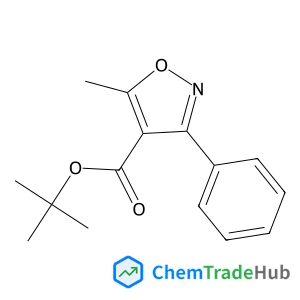
2-Methyl-2-propanyl 5-methyl-3-phenyl-1,2-oxazole-4-carboxylate
CAS Number:
211429-79-7
Molecular Formula:
C15H17NO3
![(4aR,5S,6R,8aS)-5-[2-(3-Furyl)ethyl]-8a-(hydroxymethyl)-5,6-dimethyl-3,4,4a,5,6,7,8,8a-octahydro-1-naphthalenecarboxylic acid structure](https://static.chemtradehub.com/structs/184/18411-75-1-d4cd.webp "(4aR,5S,6R,8aS)-5-[2-(3-Furyl)ethyl]-8a-(hydroxymethyl)-5,6-dimethyl-3,4,4a,5,6,7,8,8a-octahydro-1-naphthalenecarboxylic acid structure")
(4aR,5S,6R,8aS)-5-[2-(3-Furyl)ethyl]-8a-(hydroxymethyl)-5,6-dimethyl-3,4,4a,5,6,7,8,8a-octahydro-1-naphthalenecarboxylic acid
CAS Number:
18411-75-1
Molecular Formula:
C20H28O4
Recommended Suppliers




Disclaimer
This page provides academic journal information for reference and research purposes only. We are not affiliated with any journal publishers and do not handle publication submissions. For publication-related inquiries, please contact the respective journal publishers directly.
If you notice any inaccuracies in the information displayed, please contact us at support@chemtradehub.com. We will promptly review and address your concerns.