












TEMPO-mediated oxidized winter melon-based carbonaceous aerogel as an ultralight 3D support for enhanced photodegradation of organic pollutants
Literature Information
Publication Date
2015-08-27
DOI
10.1039/C5CP04679C
Impact Factor
3.676
Authors
Miao Miao, Gangling Wang, Shaomei Cao, Xin Feng, Jianhui Fang, Liyi Shi
View Original
Abstract
Natural biomass based carbonaceous aerogels are becoming promising lightweight, biodegradable matrices to supersede traditional support materials in realizing future sustainable photochemistry and environmental protection. Herein, flower-like BiOBr loaded onto an ultralight TEMPO-mediated oxidized carbonaceous aerogel (BOB@OWMCA) support was successfully prepared using the edible winter melon as source material via a simple solvothermal method. The three-dimensional sponge-like OWMCA with surface functionalization displayed an ultralow density (17.7 mg cm−3) and large special surface area (30.6 m2 g−1). The BiOBr was homogeneously anchored on the surface of the hierarchical porous OWMCA and the material exhibited synergetic properties of the BiOBr photocatalyst and OWMCA support to strengthen its photodegradation capacity. The results indicated that the as-prepared BOB@OWMCA composite demonstrated an outstanding adsorption and photodegradation capacity for organic pollutants (rhodamine B) under visible light irradiation. Of importance here, the BOB@OWMCA composite showed a prominent advantage for easy collection and separation from the aqueous system, making it a promising candidate as a robust visible light responsive photocatalyst for a range of applications.
Recommended Journals
Related Literature
The production of propionic acid, propanol and propylene via sugar fermentation: an industrial perspective on the progress, technical challenges and future outlook
Brandon A. Rodriguez, Chris C. Stowers, Viet Pham, Brad M. Cox
2013-12-10
Perspective
DOI: 10.1039/C3GC42000K
Catalyst-free transformation of levulinic acid into pyrrolidinones with formic acid
Yawen Wei, Chao Wang, Xue Jiang, Dong Xue, Zhao-Tie Liu
2013-11-11
Communication
DOI: 10.1039/C3GC42125B
A mechanochemical strategy for oxidative addition: remarkable yields and stereoselectivity in the halogenation of organometallic Re(i) complexes
José G. Hernández, Neil A. J. Macdonald, Cristina Mottillo, Ian S. Butler, Tomislav Friščić
2013-11-08
Communication
DOI: 10.1039/C3GC42104J
A PDMS membrane with high pervaporation performance for the separation of furfural and its potential in industrial application
Fan Qin, Shufeng Li, Peiyong Qin, M. Nazmul Karim, Tianwei Tan
2013-11-05
Paper
DOI: 10.1039/C3GC41867G
Asymmetric hydrogenation of unprotected indoles using iridium complexes derived from P–OP ligands and (reusable) Brønsted acids
José Luis Núñez-Rico, Héctor Fernández-Pérez
2013-12-19
Communication
DOI: 10.1039/C3GC42132E
Electrocarboxylation of acetophenone in ionic liquids: the influence of proton availability on product distribution
Mike Horne, Alan M. Bond, Jie Zhang
2014-01-06
Paper
DOI: 10.1039/C3GC42404A
Precipitation of chitosan from ionic liquid solution by the compressed CO2 anti-solvent method
Xiaofu Sun, Zhimin Xue, Tiancheng Mu
2014-01-10
Communication
DOI: 10.1039/C3GC42166J
The ionic liquid [EMIM]OAc as a solvent to fabricate stable polybenzimidazole membranes for organic solvent nanofiltration
Sui Yung Chan, Tai-Shung Chung
2013-11-26
Paper
DOI: 10.1039/C3GC41634H
Facile and efficient gold-catalyzed aerobic oxidative esterification of activated alcohols
Lianyue Wang, Jun Li, Ying Lv, Yi Zhang, Shuang Gao
2013-12-04
Paper
DOI: 10.1039/C3GC42075B
You might also like
Compound Q&A
What precautions should be taken when handling 4-Methyl-6-(trifluoromethyl)quinoline (CAS: 40716-16-3)?
When handling 4-Methyl-6-(trifluoromethyl)quinoline (CAS: 40716-16-3), safety go...
40716-16-34-Methyl-6-(trifluor...
Compound Q&A
What is 4-(3,5-Difluorophenyl)aniline (CAS: 405058-00-6)?
4-(3,5-Difluorophenyl)aniline is an aromatic organic compound with the CAS numbe...
405058-00-64-(3,5-Difluoropheny...
Compound Q&A
How is 5-{[4-(Trifluoromethyl)phenyl]sulfanyl}-1,2,3-thiadiazole-4-carboxylic acid (CAS: 338982-07-3) typically synthesized?
5-{[4-(Trifluoromethyl)phenyl]sulfanyl}-1,2,3-thiadiazole-4-carboxylic acid can ...
338982-07-35-{[4-(Trifluorometh...
Compound Q&A
What is the market or research trend for 4-Benzylaniline hydrochloride (CAS: 6317-57-3)?
The market for 4-Benzylaniline hydrochloride (CAS: 6317-57-3) is steadily growin...
6317-57-34-Benzylaniline hydr...
Compound Q&A
Is [3-(Diethylsulfamoyl)phenyl]boronic acid (CAS: 871329-58-7) safe?
[3-(Diethylsulfamoyl)phenyl]boronic acid is generally considered safe when handl...
871329-58-7[3-(Diethylsulfamoyl...
Compound Q&A
What are the main uses of 3-Bromo-2,5-dimethoxyaniline (CAS: 115929-62-9)?
3-Bromo-2,5-dimethoxyaniline is mainly used in the pharmaceutical and chemical i...
115929-62-93-Bromo-2,5-dimethox...
Compound Q&A
What regulatory guidelines apply to N-Methyl-1-(5-methyl-1H-indol-3-yl)methanamine (CAS: 915922-67-7)?
N-Methyl-1-(5-methyl-1H-indol-3-yl)methanamine (CAS: 915922-67-7) is subject to ...
915922-67-7N-Methyl-1-(5-methyl...
Compound Q&A
What industries use Carbamic acid, N-[(5S)-5,6-diamino-6-oxohexyl]-, 1,1-dimethylethyl ester (CAS: 24828-96-4)?
This compound is primarily used in the pharmaceutical industry for the synthesis...
24828-96-4Carbamic acid, N-[(5...
Compound Q&A
How should 2-Methyl-2-propanyl [(1S,3R)-3-aminocyclohexyl]carbamate (CAS: 1298101-47-9) be stored?
2-Methyl-2-propanyl [(1S,3R)-3-aminocyclohexyl]carbamate (CAS: 1298101-47-9) sho...
1298101-47-92-Methyl-2-propanyl ...
Compound Q&A
What industries use Ethyl 2-bromo-4,4,4-trifluorobutanoate (CAS: 367-33-9)?
Ethyl 2-bromo-4,4,4-trifluorobutanoate (CAS: 367-33-9) is utilized in the pharma...
367-33-9Ethyl 2-bromo-4,4,4-...
Source Journal
Physical Chemistry Chemical Physics

CiteScore:
5.5
Self-citation Rate:
10.3%
Articles per Year:
3036
Physical Chemistry Chemical Physics (PCCP) is an international journal co-owned by 19 physical chemistry and physics societies from around the world. This journal publishes original, cutting-edge research in physical chemistry, chemical physics and biophysical chemistry. To be suitable for publication in PCCP, articles must include significant innovation and/or insight into physical chemistry; this is the most important criterion that reviewers and Editors will judge against when evaluating submissions. The journal has a broad scope and welcomes contributions spanning experiment, theory, computation and data science. Topical coverage includes spectroscopy, dynamics, kinetics, statistical mechanics, thermodynamics, electrochemistry, catalysis, surface science, quantum mechanics, quantum computing and machine learning. Interdisciplinary research areas such as polymers and soft matter, materials, nanoscience, energy, surfaces/interfaces, and biophysical chemistry are welcomed if they demonstrate significant innovation and/or insight into physical chemistry. Joined experimental/theoretical studies are particularly appreciated when complementary and based on up-to-date approaches.
Recommended Compounds
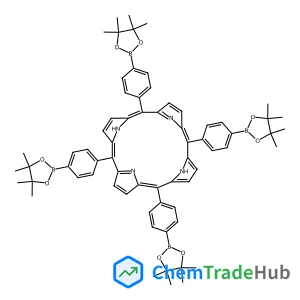
5,10,15,20-tetrakis(4-boronic acid pinacol ester phenyl) porphyrin
CAS Number:
1332748-00-1
Molecular Formula:
C68H74B4N4O8
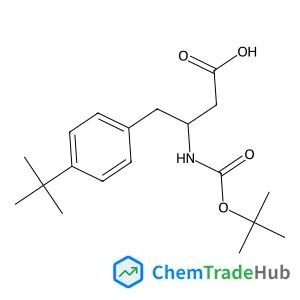
(S)-3-((tert-Butoxycarbonyl)amino)-4-(4-(tert-butyl)phenyl)butanoic acid
CAS Number:
403661-85-8
Molecular Formula:
C19H29NO4
Recommended Suppliers




Disclaimer
This page provides academic journal information for reference and research purposes only. We are not affiliated with any journal publishers and do not handle publication submissions. For publication-related inquiries, please contact the respective journal publishers directly.
If you notice any inaccuracies in the information displayed, please contact us at support@chemtradehub.com. We will promptly review and address your concerns.