



A plum-pudding like mesoporous SiO2/flake graphite nanocomposite with superior rate performance for LIB anode materials
Literature Information
Publication Date
2015-07-31
DOI
10.1039/C5CP03505H
Impact Factor
3.676
Authors
Huan-Huan Li, Lin-Lin Zhang, Chao-Ying Fan, Kang Wang, Xing-Long Wu, Hai-Zhu Sun, Jing-Ping Zhang
View Original
Abstract
A novel kind of plum-pudding like mesoporous SiO2 nanospheres (MSNs) and flake graphite (FG) nanocomposite (pp-MSNs/FG) was designed and fabricated via a facile and cost-effective hydrothermal method. Transmission electron microscopy (TEM) analysis showed that most of the MSNs were well anchored on FG. This special architecture has multiple advantages, including FG that offers a conductive framework and hinders the volume expansion effect. Moreover, the porous structure of MSNs could provide more available lithium storage sites and extra free space to accommodate the mechanical strain caused by the volume change during the repeated reversible reaction between Li+ and active materials. Due to the synergetic effects of its unique plum-pudding structure, the obtained pp-MSNs/FG nanocomposite exhibited a decent reversible capacity of 702 mA h g−1 (based on the weight of MSNs in the electrode material) after 100 cycles with high Coulombic efficiency above 99% under 100 mA g−1 and a charge capacity of 239.6 mA h g−1 could be obtained even under 5000 mA g−1. Their high rate performance is among the best-reported performances of SiO2-based anode materials.
Recommended Journals

Journal of Asian Natural Products Research

Critical Reviews in Solid State and Materials Sciences

Herald of the Russian Academy of Sciences

Medicinal Chemistry Research

Bioorganic & Medicinal Chemistry Letters

Heteroatom Chemistry

Chinese Journal of Chemistry

Topics in Catalysis

NDT & E International

Atomization and Sprays
Related Literature
Thermal oxidation of Ni films for p-type thin-film transistors
Jie Jiang, Xinghui Wang, Qing Zhang, Jingqi Li, X. X. Zhang
2013-03-15
Paper
DOI: 10.1039/C3CP50197C
Nature of proton transport in a water-filled carbon nanotube and in liquid water
Ji Chen, Qianfan Zhang, Angelos Michaelides, Enge Wang
2013-03-07
Paper
DOI: 10.1039/C3CP50218J
A statistical approach for analyzing the development of 1H multiple-quantum coherence in solids
Yuuki Mogami, Yasuto Noda, Hiroto Ishikawa, K. Takegoshi
2013-04-12
Paper
DOI: 10.1039/C3CP43778G
On the role of singlet versus triplet excited states in the uncaging of ortho-nitrobenzyl caged compounds
Jan-Michael Mewes, Andreas Dreuw
2013-03-01
Paper
DOI: 10.1039/C3CP44338H
Azidoacetylene – interpretation of gas phase infrared spectra based on high-level vibrational configuration interaction calculations
Dominik Oschetzki, Xiaoqing Zeng, Helmut Beckers, Klaus Banert, Guntram Rauhut
2013-03-14
Paper
DOI: 10.1039/C3CP50268F
Visible light initiated and collapsed resistive switching in TbMnO3/Nb:SrTiO3 heterojunctions
Yimin Cui, Wei Liu, Rongming Wang
2013-03-14
Paper
DOI: 10.1039/C3CP00132F
Synthesis of low-cost, rubbery amphiphilic comb-like copolymers and their use in the templated synthesis of mesoporous TiO2 films for solid-state dye-sensitized solar cells
Dong Jun Kim, Sang Jin Kim, Dong Kyu Roh, Jong Hak Kim
2013-03-25
Paper
DOI: 10.1039/C3CP44308F
Chelating ionic liquids for reversible zinc electrochemistry
Mega Kar, Bjorn Winther-Jensen, Maria Forsyth, Douglas R. MacFarlane
2013-03-22
Paper
DOI: 10.1039/C3CP51102B
You might also like
Compound Q&A
What precautions should be taken when handling 4-(2-Furylmethyl)thiomorpholine 1,1-dioxide (CAS: 79206-94-3)?
When handling 4-(2-Furylmethyl)thiomorpholine 1,1-dioxide (CAS: 79206-94-3), it ...
79206-94-34-(2-Furylmethyl)thi...
Compound Q&A
What precautions should be taken when handling 4-Chloro-N-[2-(4-morpholinyl)ethyl]benzamide (CAS: 71320-77-9)?
When handling 4-Chloro-N-[2-(4-morpholinyl)ethyl]benzamide (CAS: 71320-77-9), it...
71320-77-94-Chloro-N-[2-(4-mor...
Compound Q&A
How should waste containing 2-[2-(2-Methoxyethoxy)ethoxy]ethyl 4-methylbenzenesulfonate (CAS: 62921-74-8) be handled?
Waste containing this compound (CAS: 62921-74-8) should be handled according to ...
62921-74-82-[2-(2-Methoxyethox...
Compound Q&A
How should waste containing (S)-Methyl 2-amino-3-cyclohexylpropanoate be handled?
Waste containing (S)-Methyl 2-amino-3-cyclohexylpropanoate should be collected i...
40056-18-6(S)-Methyl 2-amino-3...
Compound Q&A
How is 5-({4-[(2S,4R)-4-Hydroxy-2-methyltetrahydro-2H-pyran-4-yl]-2-thienyl}sulfanyl)-1-methyl-1,3-dihydro-2H-indol-2-one (CAS: 166882-70-8) typically synthesized?
This compound can be synthesized using a multi-step process involving the conjug...
166882-70-85-({4-[(2S,4R)-4-Hyd...
Compound Q&A
Are there alternatives to (2E)-3-(3,4-Dichlorophenyl)acrylic acid (CAS: 7312-27-8) in synthesis?
There are several alternatives to (2E)-3-(3,4-Dichlorophenyl)acrylic acid in syn...
7312-27-8(2E)-3-(3,4-Dichloro...
Compound Q&A
How should Ethyl 6-(2-nitrophenyl)imidazo[2,1-b][1,3]thiazole-3-carboxylate (CAS: 925437-84-9) be stored?
Ethyl 6-(2-nitrophenyl)imidazo[2,1-b][1,3]thiazole-3-carboxylate (CAS: 925437-84...
925437-84-9Ethyl 6-(2-nitrophen...
Compound Q&A
How should waste containing 2-(1,3-Thiazol-2-yl)ethanamine (CAS: 18453-07-1) be handled?
Waste containing 2-(1,3-Thiazol-2-yl)ethanamine (CAS: 18453-07-1) should be coll...
18453-07-12-(1,3-Thiazol-2-yl)...
Compound Q&A
How is Methyl 5-iodo-2-methylbenzoate (CAS: 103440-54-6) typically synthesized?
Methyl 5-iodo-2-methylbenzoate can be synthesized through the iodination of meth...
103440-54-6Methyl 5-iodo-2-meth...
Compound Q&A
How is 5-Chloro[1,2,4]triazolo[1,5-a]pyridine (CAS: 1427399-34-5) typically synthesized?
5-Chloro[1,2,4]triazolo[1,5-a]pyridine is commonly synthesized via the condensat...
1427399-34-55-Chloro[1,2,4]triaz...
Source Journal
Physical Chemistry Chemical Physics

CiteScore:
5.5
Self-citation Rate:
10.3%
Articles per Year:
3036
Physical Chemistry Chemical Physics (PCCP) is an international journal co-owned by 19 physical chemistry and physics societies from around the world. This journal publishes original, cutting-edge research in physical chemistry, chemical physics and biophysical chemistry. To be suitable for publication in PCCP, articles must include significant innovation and/or insight into physical chemistry; this is the most important criterion that reviewers and Editors will judge against when evaluating submissions. The journal has a broad scope and welcomes contributions spanning experiment, theory, computation and data science. Topical coverage includes spectroscopy, dynamics, kinetics, statistical mechanics, thermodynamics, electrochemistry, catalysis, surface science, quantum mechanics, quantum computing and machine learning. Interdisciplinary research areas such as polymers and soft matter, materials, nanoscience, energy, surfaces/interfaces, and biophysical chemistry are welcomed if they demonstrate significant innovation and/or insight into physical chemistry. Joined experimental/theoretical studies are particularly appreciated when complementary and based on up-to-date approaches.
Recommended Compounds

![[4-(Heptyloxy)phenyl]boronic acid structure](https://static.chemtradehub.com/structs/136/136370-19-9-ad33.webp "[4-(Heptyloxy)phenyl]boronic acid structure")
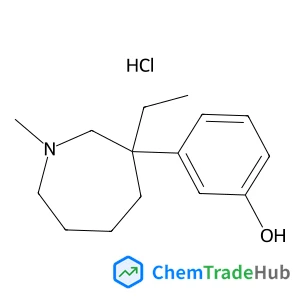
3-(3-Ethyl-1-methyl-3-azepanyl)phenol hydrochloride (1:1)
CAS Number:
59263-76-2
Molecular Formula:
C15H24ClNO
Recommended Suppliers






Disclaimer
This page provides academic journal information for reference and research purposes only. We are not affiliated with any journal publishers and do not handle publication submissions. For publication-related inquiries, please contact the respective journal publishers directly.
If you notice any inaccuracies in the information displayed, please contact us at support@chemtradehub.com. We will promptly review and address your concerns.