












External electric field control: driving the reactivity of metal-free azide–alkyne click reactions
Literature Information
Publication Date
2017-08-07
DOI
10.1039/C7CP04202G
Impact Factor
3.676
Authors
Kalishankar Bhattacharyya, Sharmistha Karmakar, Ayan Datta
View Original
Abstract
Recent reports have suggested that an external electric field (EEF) can assist and even control product selectivity. In this work, we have shown that the barrier for the Huisgen reaction between alkyl (aryl) azide and cyclooctyne(biflurocyclooctyne) is reduced by ∼3–4 kcal mol−1 when an oriented EEF is applied along the reaction axis. As a consequence of their inherently polar transition-states (TSs), a parallel orientation of the EEF results in enhancement of the charge transfer (CT) between the fragments and concomitant increase in the dipole moment along the reaction axes. This leads to an increase in the reaction rate for moderate EEFs in the range of 0.3–0.5 V Å−1. Since highly polar and directional environments are omnipresent in biological environments, metal-free click reactions can be further accelerated for non-invasive imaging of live-cells. Conceptually, electric field control appears to be a novel tool (catalyst) to drive, and possibly even tune, the reactivity of organic molecules.
Related Literature
Retraction: A miraculous chiral Ir–Rh bimetallic nanocatalyst for asymmetric hydrogenation of activated ketones
Xiuru Xue, Zhaohui Zhao, Yanhua Wang
2019-09-27
Retraction
DOI: 10.1039/C9QO90089F
Reagent-controlled regiodivergence in the [3,3]-sigmatropic rearrangement of N-(acyloxy)enamides
Norihiko Takeda, Narumi Arisawa, Misaki Miyamoto, Yukiko Kobori, Tetsuro Shinada, Masafumi Ueda
2019-09-27
Research Article
DOI: 10.1039/C9QO01109A
TFA-promoted sulfonation/cascade cyclization of 2-propynolphenols with sodium sulfinates to 4-sulfonyl 2H-chromenes under metal-free conditions
Tao Yang, Peihao Kou, Fengyan Jin, Xian-Rong Song, Jiang Bai, Haixin Ding, Qiang Xiao, Yong-Min Liang
2019-07-19
Research Article
DOI: 10.1039/C9QO00712A
Rh-Catalyzed C–C/C–N bond formation via C–H activation: synthesis of 2H-indazol-2-yl-benzo[a]carbazoles
Sundaravel Vivek Kumar, Sonbidya Banerjee, Tharmalingam Punniyamurthy
2019-10-14
Research Article
DOI: 10.1039/C9QO01120J
Synthesis of tri-substituted allyl alcohols via a copper/iron co-catalyzed cascade perfluoroalkylation/rearrangement of aryl propynyl ethers
Wei He, Jipan Yu, Dawei Wang, Guoxia Ran, Xiao-Feng Xia
2019-09-05
Research Article
DOI: 10.1039/C9QO00848A
You might also like
Compound Q&A
Is 6-(3-Fluorophenyl)picolinic acid (CAS: 887982-40-3) safe?
6-(3-Fluorophenyl)picolinic acid is generally considered safe for laboratory use...
887982-40-36-(3-Fluorophenyl)pi...
Compound Q&A
What industries use (3R)-3-Pyrrolidinol (CAS: 2799-21-5)?
(3R)-3-Pyrrolidinol is used in the pharmaceutical industry as a precursor for dr...
2799-21-5(3R)-3-Pyrrolidinol
Compound Q&A
What precautions should be taken when handling (4R,5R)-4,5-Diethoxycarbonyl-2,2-dimethyldioxolane (CAS: 59779-75-8)?
When handling (4R,5R)-4,5-Diethoxycarbonyl-2,2-dimethyldioxolane (CAS: 59779-75-...
59779-75-8(4R,5R)-4,5-Diethoxy...
Compound Q&A
How is 1-(6-Chloroimidazo[1,2-b]pyridazin-3-yl)ethanone (CAS: 90734-71-7) typically synthesized?
1-(6-Chloroimidazo[1,2-b]pyridazin-3-yl)ethanone is often synthesized via a mult...
90734-71-71-(6-Chloroimidazo[1...
Compound Q&A
What is the market or research trend for N-Ethyl-3,4-dimethylbenzylamine (CAS: 39180-83-1)?
The market for N-Ethyl-3,4-dimethylbenzylamine (CAS: 39180-83-1) remains steady,...
39180-83-1N-Ethyl-3,4-dimethyl...
Compound Q&A
What is Tert-butyl 3-(pyrrolidin-1-yl)azetidine-1-carboxylate (CAS: 1019008-21-9)?
Tert-butyl 3-(pyrrolidin-1-yl)azetidine-1-carboxylate is a chemical compound wit...
1019008-21-9Tert-butyl 3-(pyrrol...
Compound Q&A
What regulatory guidelines apply to 1-Bromo-3-chloro-2,4-dimethoxybenzene (CAS: 1228956-93-1)?
1-Bromo-3-chloro-2,4-dimethoxybenzene (CAS: 1228956-93-1) falls under the classi...
1228956-93-11-Bromo-3-chloro-2,4...
Compound Q&A
Is 8-Bromo-2-methyl-3,4-dihydroisoquinolin-1(2H)-one (CAS: 1368622-07-4) safe?
The safety of 8-Bromo-2-methyl-3,4-dihydroisoquinolin-1(2H)-one (CAS: 1368622-07...
1368622-07-48-Bromo-2-methyl-3,4...
Compound Q&A
Is Benzyl [(3S)-2,6-dioxo-3-piperidinyl]carbamate (CAS: 22785-43-9) safe?
Benzyl [(3S)-2,6-dioxo-3-piperidinyl]carbamate is generally safe when handled wi...
22785-43-9Benzyl [(3S)-2,6-dio...
Compound Q&A
How should 1-{[4-(4,4,5,5-Tetramethyl-1,3,2-dioxaborolan-2-yl)phenyl]sulfonyl}pyrrolidine (CAS: 928657-21-0) be stored?
1-{[4-(4,4,5,5-Tetramethyl-1,3,2-dioxaborolan-2-yl)phenyl]sulfonyl}pyrrolidine s...
928657-21-01-{[4-(4,4,5,5-Tetra...
Source Journal
Physical Chemistry Chemical Physics

CiteScore:
5.5
Self-citation Rate:
10.3%
Articles per Year:
3036
Physical Chemistry Chemical Physics (PCCP) is an international journal co-owned by 19 physical chemistry and physics societies from around the world. This journal publishes original, cutting-edge research in physical chemistry, chemical physics and biophysical chemistry. To be suitable for publication in PCCP, articles must include significant innovation and/or insight into physical chemistry; this is the most important criterion that reviewers and Editors will judge against when evaluating submissions. The journal has a broad scope and welcomes contributions spanning experiment, theory, computation and data science. Topical coverage includes spectroscopy, dynamics, kinetics, statistical mechanics, thermodynamics, electrochemistry, catalysis, surface science, quantum mechanics, quantum computing and machine learning. Interdisciplinary research areas such as polymers and soft matter, materials, nanoscience, energy, surfaces/interfaces, and biophysical chemistry are welcomed if they demonstrate significant innovation and/or insight into physical chemistry. Joined experimental/theoretical studies are particularly appreciated when complementary and based on up-to-date approaches.
Recommended Compounds

(S)-1-(3-(Benzyloxy)phenyl)-3-(dimethylamino)-2-methylpropan-1-one (2r,3r)-2,3-bis(benzoyloxy)succinate
CAS Number:
1004315-81-4
Molecular Formula:
C37H37NO10
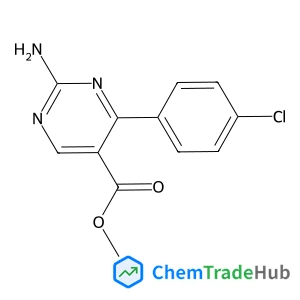
Methyl 2-amino-4-(4-chlorophenyl)-5-pyrimidinecarboxylate
CAS Number:
1133115-56-6
Molecular Formula:
C12H10ClN3O2
![Methyl 2-[5-(3-Phenoxyphenyl)-2H-tetrazol-2-yl]acetate structure](https://static.chemtradehub.com/structs/130/1305320-60-8-84b4.webp "Methyl 2-[5-(3-Phenoxyphenyl)-2H-tetrazol-2-yl]acetate structure")
Methyl 2-[5-(3-Phenoxyphenyl)-2H-tetrazol-2-yl]acetate
CAS Number:
1305320-60-8
Molecular Formula:
C16H14N4O3
![3-[(3R,4R)-3-[(6-aminopyrimidin-4-yl)-methyl-amino]-4-methyl-1-piperidyl]-3-oxo-propanenitrile structure](https://static.chemtradehub.com/structs/164/1640971-60-3-83a4.webp "3-[(3R,4R)-3-[(6-aminopyrimidin-4-yl)-methyl-amino]-4-methyl-1-piperidyl]-3-oxo-propanenitrile structure")
3-[(3R,4R)-3-[(6-aminopyrimidin-4-yl)-methyl-amino]-4-methyl-1-piperidyl]-3-oxo-propanenitrile
CAS Number:
1640971-60-3
Molecular Formula:
C14H20N6O
Recommended Suppliers




Disclaimer
This page provides academic journal information for reference and research purposes only. We are not affiliated with any journal publishers and do not handle publication submissions. For publication-related inquiries, please contact the respective journal publishers directly.
If you notice any inaccuracies in the information displayed, please contact us at support@chemtradehub.com. We will promptly review and address your concerns.