












Surface force at the nano-scale: observation of non-monotonic surface tension and disjoining pressure
Literature Information
Publication Date
2015-07-14
DOI
10.1039/C5CP03050A
Impact Factor
3.676
Authors
Mahshid Firouzi, Qibin Li, Kang Peng
View Original
Abstract
Nano bubbles and films are important in theory and various applications, such as the specific ion effect of bubble coalescence, flotation and porous medium seepage; these rely greatly on the fundamental aspects of extended-DLVO surface forces. However, the origin and validation of the non-DLVO forces are still obscure, especially at the nano scale (1–5 nm). Herein, we report the first determination of the disjoining pressures of aqueous electrolyte nano-films using molecular dynamics (MD) simulations. Our results showed that adding salt does not lead to a decrease in the disjoining pressure. On the contrary, higher concentrations results in greater disjoining pressures. In addition, the temperature was found to significantly change the pattern of the disjoining pressure isotherm. These results aid the understanding of a number of underlying mechanisms, involving nano solid–liquid–gas surfaces.
Related Literature
Polyoxygenated meroterpenoids and a bioactive illudalane derivative from a co-culture of Armillaria sp. and Epicoccum sp.
Hong-Tao Li, Linhuan Tang, Tao Liu, Ruining Yang, Yabin Yang, Hao Zhou, Zhong-Tao Ding
2019-10-14
Research Article
DOI: 10.1039/C9QO01087D
New synthetic approaches for hexacene and its application in thin-film transistors
Jian Han, Xinbang Liu, Yu Li, Zihao Lou, Mingdong Yi, Huihui Kong, Jun Luo
2019-06-20
Research Article
DOI: 10.1039/C9QO00708C
Recent advances in intramolecular C–O/C–N/C–S bond formation via C–H functionalization
Paran J. Borpatra, Bhaskar Deka, Mohit L. Deb, Pranjal K. Baruah
2019-09-10
Review Article
DOI: 10.1039/C9QO00863B
Regio- and stereo-selective decarbonylative alkylative arylation of terminal alkynes with aliphatic aldehydes and arenes via dual C–H bond functionalization
Yong Peng, Ting-Ting Qin, Cong-Ling Xu, Luo Yang
2019-09-10
Research Article
DOI: 10.1039/C9QO01009B
Chiral-at-metal rhodium(iii) complex catalyzed enantioselective synthesis of C2-substituted benzofuran derivatives
Qiang Kang, Yu Du
2019-09-18
Research Article
DOI: 10.1039/C9QO01022J
Enantioselective rearrangement of indolyl carbonates catalyzed by chiral DMAP-N-oxides
Meng Shan, Tao Liang, Ye-Fei Zhang, Ming-Sheng Xie, Gui-Rong Qu, Hai-Ming Guo
2019-10-12
Research Article
DOI: 10.1039/C9QO01146C
More than a CO source: palladium-catalyzed carbonylative synthesis of butenolides from propargyl alcohols and TFBen
Zhengjie Le, Jun Ying
2019-07-19
Research Article
DOI: 10.1039/C9QO00779B
C(sp3)–H hydroxylation of fluorenes, oxindoles and benzofuranones with a Mg(NO3)2–HP(O)Ph2 oxidation system
Chen Hu, Gang Hong, Pradip D. Nahide, Yuchen He, Chen Zhou, Marisa C. Kozlowski, Limin Wang
2019-07-19
Research Article
DOI: 10.1039/C9QO00778D
You might also like
Compound Q&A
Is 6-(3-Fluorophenyl)picolinic acid (CAS: 887982-40-3) safe?
6-(3-Fluorophenyl)picolinic acid is generally considered safe for laboratory use...
887982-40-36-(3-Fluorophenyl)pi...
Compound Q&A
What industries use (3R)-3-Pyrrolidinol (CAS: 2799-21-5)?
(3R)-3-Pyrrolidinol is used in the pharmaceutical industry as a precursor for dr...
2799-21-5(3R)-3-Pyrrolidinol
Compound Q&A
What precautions should be taken when handling (4R,5R)-4,5-Diethoxycarbonyl-2,2-dimethyldioxolane (CAS: 59779-75-8)?
When handling (4R,5R)-4,5-Diethoxycarbonyl-2,2-dimethyldioxolane (CAS: 59779-75-...
59779-75-8(4R,5R)-4,5-Diethoxy...
Compound Q&A
How is 1-(6-Chloroimidazo[1,2-b]pyridazin-3-yl)ethanone (CAS: 90734-71-7) typically synthesized?
1-(6-Chloroimidazo[1,2-b]pyridazin-3-yl)ethanone is often synthesized via a mult...
90734-71-71-(6-Chloroimidazo[1...
Compound Q&A
What is the market or research trend for N-Ethyl-3,4-dimethylbenzylamine (CAS: 39180-83-1)?
The market for N-Ethyl-3,4-dimethylbenzylamine (CAS: 39180-83-1) remains steady,...
39180-83-1N-Ethyl-3,4-dimethyl...
Compound Q&A
What is Tert-butyl 3-(pyrrolidin-1-yl)azetidine-1-carboxylate (CAS: 1019008-21-9)?
Tert-butyl 3-(pyrrolidin-1-yl)azetidine-1-carboxylate is a chemical compound wit...
1019008-21-9Tert-butyl 3-(pyrrol...
Compound Q&A
What regulatory guidelines apply to 1-Bromo-3-chloro-2,4-dimethoxybenzene (CAS: 1228956-93-1)?
1-Bromo-3-chloro-2,4-dimethoxybenzene (CAS: 1228956-93-1) falls under the classi...
1228956-93-11-Bromo-3-chloro-2,4...
Compound Q&A
Is 8-Bromo-2-methyl-3,4-dihydroisoquinolin-1(2H)-one (CAS: 1368622-07-4) safe?
The safety of 8-Bromo-2-methyl-3,4-dihydroisoquinolin-1(2H)-one (CAS: 1368622-07...
1368622-07-48-Bromo-2-methyl-3,4...
Compound Q&A
Is Benzyl [(3S)-2,6-dioxo-3-piperidinyl]carbamate (CAS: 22785-43-9) safe?
Benzyl [(3S)-2,6-dioxo-3-piperidinyl]carbamate is generally safe when handled wi...
22785-43-9Benzyl [(3S)-2,6-dio...
Compound Q&A
How should 1-{[4-(4,4,5,5-Tetramethyl-1,3,2-dioxaborolan-2-yl)phenyl]sulfonyl}pyrrolidine (CAS: 928657-21-0) be stored?
1-{[4-(4,4,5,5-Tetramethyl-1,3,2-dioxaborolan-2-yl)phenyl]sulfonyl}pyrrolidine s...
928657-21-01-{[4-(4,4,5,5-Tetra...
Source Journal
Physical Chemistry Chemical Physics

CiteScore:
5.5
Self-citation Rate:
10.3%
Articles per Year:
3036
Physical Chemistry Chemical Physics (PCCP) is an international journal co-owned by 19 physical chemistry and physics societies from around the world. This journal publishes original, cutting-edge research in physical chemistry, chemical physics and biophysical chemistry. To be suitable for publication in PCCP, articles must include significant innovation and/or insight into physical chemistry; this is the most important criterion that reviewers and Editors will judge against when evaluating submissions. The journal has a broad scope and welcomes contributions spanning experiment, theory, computation and data science. Topical coverage includes spectroscopy, dynamics, kinetics, statistical mechanics, thermodynamics, electrochemistry, catalysis, surface science, quantum mechanics, quantum computing and machine learning. Interdisciplinary research areas such as polymers and soft matter, materials, nanoscience, energy, surfaces/interfaces, and biophysical chemistry are welcomed if they demonstrate significant innovation and/or insight into physical chemistry. Joined experimental/theoretical studies are particularly appreciated when complementary and based on up-to-date approaches.
Recommended Compounds

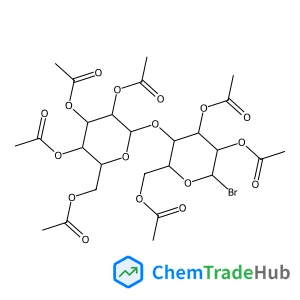
2,3,6-Tri-O-acetyl-4-O-(2,3,4,6-tetra-O-acetyl-beta-D-galactopyranosyl)-alpha-D-glucopyranosyl bromide
CAS Number:
4753-07-5
Molecular Formula:
C26H35BrO17
Recommended Suppliers






Disclaimer
This page provides academic journal information for reference and research purposes only. We are not affiliated with any journal publishers and do not handle publication submissions. For publication-related inquiries, please contact the respective journal publishers directly.
If you notice any inaccuracies in the information displayed, please contact us at support@chemtradehub.com. We will promptly review and address your concerns.