












![(3R,4aR,7aS,9aR,10S,11R,13aR,13bS,15aS,15bR)-3,11-Dihydroxy-10-(hydroxymethyl)-4,4,7a,10,13a,15b-hexamethyl-1,2,3,4,4a,7,7a,8,9,9a,10,11,12,13,13a,13b,14,15,15a,15b-icosahydro-5H-naphtho[2',1':4,5]cyc
lohepta[1,2-a]naphthalen-5-one structure](https://static.chemtradehub.com/structs/538/53800-21-8-9f18.webp "(3R,4aR,7aS,9aR,10S,11R,13aR,13bS,15aS,15bR)-3,11-Dihydroxy-10-(hydroxymethyl)-4,4,7a,10,13a,15b-hexamethyl-1,2,3,4,4a,7,7a,8,9,9a,10,11,12,13,13a,13b,14,15,15a,15b-icosahydro-5H-naphtho[2',1':4,5]cyc
lohepta[1,2-a]naphthalen-5-one structure")
Magnetism tuned by the charge states of defects in bulk C-doped SnO2 materials‡
Literature Information
Publication Date
2015-09-07
DOI
10.1039/C5CP02577J
Impact Factor
3.676
Authors
Ying-Bo Lu, Z. C. Ling, Wei-Yan Cong, Peng Zhang
View Original
Abstract
To analyze the controversial conclusions on the magnetism of C-doped SnO2 (SnO2:C) bulk materials between theoretical calculations and experimental observations, we propose the critical role of the charge states of defects in the geometric structures and magnetism, and carry out a series of first principle calculations. By changing the charge states, we can influence Bader charge distributions and atomic orbital occupancies in bulk SnO2:C systems, which consequently conduct magnetism. In all charged SnO2:C supercells, C-2px/py/pz electron occupancies are significantly changed by the charge self-regulation, and thus they make the C-2p orbitals spin polarized, which contribute to the dominant magnetic moment of the system. When the concentration of C dopant in the SnO2 supercell increases, the charge redistribution assigns extra electrons averagely to each dopant, and thus effectively modulates the magnetism. These findings provide an experimentally viable way for controlling the magnetism in these systems.
Recommended Journals
Related Literature
Hydrophilic and hydrophobic interactions in concentrated aqueous imidazole solutions: a neutron diffraction and total X-ray scattering study
Samantha K. Callear
2020-02-18
Paper
DOI: 10.1039/C9CP05993H
Zn-Doped Cu(100) facet with efficient catalytic ability for the CO2 electroreduction to ethylene
Yuefeng Zhang, Yong Zhao, Caiyun Wang, Zengxi Wei, Junliang Yang
2019-08-30
Paper
DOI: 10.1039/C9CP03692J
CO2 as an auto-catalyst for the oxidation of CO by a Criegee intermediate (CH2OO)
Amit Kumar, Pradeep Kumar
2020-03-06
Paper
DOI: 10.1039/D0CP00027B
Impact of effective polarisability models on the near-field interaction of dissolved greenhouse gases at ice and air interfaces
Drew F. Parsons, Friedrich Anton Burger, Priyadarshini Thiyam, I. Brevik, Clas Persson
2019-09-16
Paper
DOI: 10.1039/C9CP03165K
A quantum chemical study of hydrogen adsorption on carbon-supported palladium clusters
Lisa Warczinski, Christof Hättig
2019-09-10
Paper
DOI: 10.1039/C9CP04606B
Two-dimensional infrared spectroscopy from the gas to liquid phase: density dependent J-scrambling, vibrational relaxation, and the onset of liquid character
Aritra Mandal
2019-09-13
Paper
DOI: 10.1039/C9CP04101J
Mechanistic insight into photocrosslinking reaction between triplet state 4-thiopyrimidine and thymine
Xiaoran Zou, Zhonghua Sun, Hongmei Zhao, Chun-yang Zhang
2019-09-06
Paper
DOI: 10.1039/C9CP04089G
Gas adsorption and light interaction mechanism in phosphorene-based field-effect transistors
Manthila Rajapakse, George Anderson, Congyan Zhang, Rajib Musa, Jackson Walter, Ming Yu, Jacek B. Jasinski
2020-02-21
Paper
DOI: 10.1039/C9CP06547D
2Ch–2N square and hexagon interactions: a combined crystallographic data analysis and computational study
Yunxiang Lu, Wenxia Li, Weiwei Yang, Zhengdan Zhu, Zhijian Xu, Honglai Liu
2019-09-05
Paper
DOI: 10.1039/C9CP04562G
You might also like
Compound Q&A
Is 6-(3-Fluorophenyl)picolinic acid (CAS: 887982-40-3) safe?
6-(3-Fluorophenyl)picolinic acid is generally considered safe for laboratory use...
887982-40-36-(3-Fluorophenyl)pi...
Compound Q&A
What industries use (3R)-3-Pyrrolidinol (CAS: 2799-21-5)?
(3R)-3-Pyrrolidinol is used in the pharmaceutical industry as a precursor for dr...
2799-21-5(3R)-3-Pyrrolidinol
Compound Q&A
What precautions should be taken when handling (4R,5R)-4,5-Diethoxycarbonyl-2,2-dimethyldioxolane (CAS: 59779-75-8)?
When handling (4R,5R)-4,5-Diethoxycarbonyl-2,2-dimethyldioxolane (CAS: 59779-75-...
59779-75-8(4R,5R)-4,5-Diethoxy...
Compound Q&A
How is 1-(6-Chloroimidazo[1,2-b]pyridazin-3-yl)ethanone (CAS: 90734-71-7) typically synthesized?
1-(6-Chloroimidazo[1,2-b]pyridazin-3-yl)ethanone is often synthesized via a mult...
90734-71-71-(6-Chloroimidazo[1...
Compound Q&A
What is the market or research trend for N-Ethyl-3,4-dimethylbenzylamine (CAS: 39180-83-1)?
The market for N-Ethyl-3,4-dimethylbenzylamine (CAS: 39180-83-1) remains steady,...
39180-83-1N-Ethyl-3,4-dimethyl...
Compound Q&A
What is Tert-butyl 3-(pyrrolidin-1-yl)azetidine-1-carboxylate (CAS: 1019008-21-9)?
Tert-butyl 3-(pyrrolidin-1-yl)azetidine-1-carboxylate is a chemical compound wit...
1019008-21-9Tert-butyl 3-(pyrrol...
Compound Q&A
What regulatory guidelines apply to 1-Bromo-3-chloro-2,4-dimethoxybenzene (CAS: 1228956-93-1)?
1-Bromo-3-chloro-2,4-dimethoxybenzene (CAS: 1228956-93-1) falls under the classi...
1228956-93-11-Bromo-3-chloro-2,4...
Compound Q&A
Is 8-Bromo-2-methyl-3,4-dihydroisoquinolin-1(2H)-one (CAS: 1368622-07-4) safe?
The safety of 8-Bromo-2-methyl-3,4-dihydroisoquinolin-1(2H)-one (CAS: 1368622-07...
1368622-07-48-Bromo-2-methyl-3,4...
Compound Q&A
Is Benzyl [(3S)-2,6-dioxo-3-piperidinyl]carbamate (CAS: 22785-43-9) safe?
Benzyl [(3S)-2,6-dioxo-3-piperidinyl]carbamate is generally safe when handled wi...
22785-43-9Benzyl [(3S)-2,6-dio...
Compound Q&A
How should 1-{[4-(4,4,5,5-Tetramethyl-1,3,2-dioxaborolan-2-yl)phenyl]sulfonyl}pyrrolidine (CAS: 928657-21-0) be stored?
1-{[4-(4,4,5,5-Tetramethyl-1,3,2-dioxaborolan-2-yl)phenyl]sulfonyl}pyrrolidine s...
928657-21-01-{[4-(4,4,5,5-Tetra...
Source Journal
Physical Chemistry Chemical Physics

CiteScore:
5.5
Self-citation Rate:
10.3%
Articles per Year:
3036
Physical Chemistry Chemical Physics (PCCP) is an international journal co-owned by 19 physical chemistry and physics societies from around the world. This journal publishes original, cutting-edge research in physical chemistry, chemical physics and biophysical chemistry. To be suitable for publication in PCCP, articles must include significant innovation and/or insight into physical chemistry; this is the most important criterion that reviewers and Editors will judge against when evaluating submissions. The journal has a broad scope and welcomes contributions spanning experiment, theory, computation and data science. Topical coverage includes spectroscopy, dynamics, kinetics, statistical mechanics, thermodynamics, electrochemistry, catalysis, surface science, quantum mechanics, quantum computing and machine learning. Interdisciplinary research areas such as polymers and soft matter, materials, nanoscience, energy, surfaces/interfaces, and biophysical chemistry are welcomed if they demonstrate significant innovation and/or insight into physical chemistry. Joined experimental/theoretical studies are particularly appreciated when complementary and based on up-to-date approaches.
Recommended Compounds
![1H-Imidazo[4,5-c]pyridine-7-carboxylic acid structure](https://static.chemtradehub.com/structs/123/1234616-39-7-1344.webp "1H-Imidazo[4,5-c]pyridine-7-carboxylic acid structure")
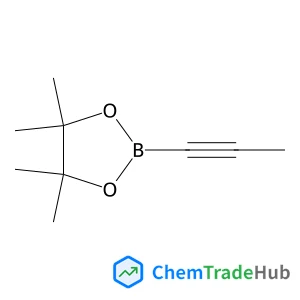
4,4,5,5-Tetramethyl-2-(1-propyn-1-YL)-1,3,2-dioxaborolane
CAS Number:
347389-75-7
Molecular Formula:
C9H15BO2
Recommended Suppliers





Disclaimer
This page provides academic journal information for reference and research purposes only. We are not affiliated with any journal publishers and do not handle publication submissions. For publication-related inquiries, please contact the respective journal publishers directly.
If you notice any inaccuracies in the information displayed, please contact us at support@chemtradehub.com. We will promptly review and address your concerns.