













Mechanistic insight into photocrosslinking reaction between triplet state 4-thiopyrimidine and thymine
Literature Information
Publication Date
2019-09-06
DOI
10.1039/C9CP04089G
Impact Factor
3.676
Authors
Xiaoran Zou, Zhonghua Sun, Hongmei Zhao, Chun-yang Zhang
View Original
Abstract
4-Thiopyrimidine (e.g., 4-thiouracil (4-TU) and 4-thiothymine (4-TT)) is a typical kind of thiobase. With the sulfur substitution at the C4 position of the canonical pyrimidine nucleobase, 4-thiopyrimidine displays unique photophysical and photochemical properties such as red-shifted maximum absorption peaks and efficient triplet state populations. One of the properties is the photocrosslinking reaction between 4-thiopyrimidine and pyrimidine base, which plays important roles in photochemotherapy and photolabeling applications. By using density functional theory (M06-2X), we have explored the potential energy profiles of the photocrosslinking reaction between 4-thiopyrimidine (4-TU and 4-TT) and thymine in the S0 and T1 states as well as the interaction between the two states. For both (6-4) and (5-4) photocrosslinking reactions, multiple nonadiabatic pathways via minimum energy crossing points (MECPs) between potential surfaces (PESs) of the T1 and S0 states greatly facilitate the proceeding of photocrosslinking reactions and lead to the relatively stable thietane intermediate in the S0 state. The subsequent H migration in the thietane intermediate takes place solely in the S0 state with surmountable energy barriers in bulk solution, resulting in the formation of the photocrosslinked product. This research provides not only a new mechanistic insight into the photocrosslinking reaction for 4-thiopyrimidines but also a rational explanation for the experiments of UVA irradiated Tp4ST dinucleotide and 4-thiothymidine-containing oligonucleotides, facilitating the deep understanding of the synergistic cytotoxicity of 4-thiopyrimidines and UVA as well as the development of alternative phototherapeutic agents and photolabeling probes.
Related Literature
Fabrication of superhydrophilic–underwater superoleophobic inorganic anti-corrosive membranes for high-efficiency oil/water separation
Luyan Liu, Chen Chen, Siyu Yang, Hua Xie, MaoGang Gong, Xiaoliang Xu
2015-11-24
Paper
DOI: 10.1039/C5CP06305A
Proton transport mechanism of imidazole, triazole and phosphoric acid mixtures from ab initio molecular dynamics simulations
Swagata Pahari, Sudip Roy
2015-10-22
Paper
DOI: 10.1039/C5CP05735C
Characterizing the nanoclay induced constrained amorphous region in model segmented polyurethane–urea/clay nanocomposites and its implications on gas barrier properties
Sangram K. Rath, Kathi Sudarshan, Rupesh S. Bhavsar, Ulhas K. Kharul, Pradeep K. Pujari, Manoranjan Patri, Devang V. Khakhar
2015-11-17
Paper
DOI: 10.1039/C5CP05260B
Theoretical modeling of the L2,3-edge X-ray absorption spectra of Mn(acac)2 and Co(acac)2 complexes‡
Silvia Carlotto, Mauro Sambi, Andrea Vittadini
2015-12-07
Paper
DOI: 10.1039/C5CP06844D
Spectral lineshapes in nonlinear electronic spectroscopy
Artur Nenov, Angelo Giussani, Benjamin P. Fingerhut, Ivan Rivalta, Elise Dumont, Shaul Mukamel
2015-06-02
Paper
DOI: 10.1039/C5CP01167A
The general base in the thymidylate synthase catalyzed proton abstraction
Ananda K. Ghosh, Zahidul Islam, Jonathan Krueger, Thelma Abeysinghe, Amnon Kohen
2015-04-15
Paper
DOI: 10.1039/C5CP01246E
Inorganic–organic solar cells based on quaternary sulfide as absorber materials
Tiantian Hong, Zhifeng Liu, Weiguo Yan, Junqi Liu, Xueqi Zhang
2015-10-29
Communication
DOI: 10.1039/C5CP05742F
Spectroscopic evidence of ‘jumping and pecking’ of cholinium and H-bond enhanced cation–cation interaction in ionic liquids
Anne Knorr, Koichi Fumino, Anne-Marie Bonsa
2015-08-11
Communication
DOI: 10.1039/C5CP03412D
Cryogenic abnormal thermal expansion properties of carbon-doped La(Fe,Si)13 compounds
Rongjin Huang, Wei Wang, Laifeng Li
2015-10-26
Communication
DOI: 10.1039/C5CP03948G
You might also like
Compound Q&A
Is 6-(3-Fluorophenyl)picolinic acid (CAS: 887982-40-3) safe?
6-(3-Fluorophenyl)picolinic acid is generally considered safe for laboratory use...
887982-40-36-(3-Fluorophenyl)pi...
Compound Q&A
What industries use (3R)-3-Pyrrolidinol (CAS: 2799-21-5)?
(3R)-3-Pyrrolidinol is used in the pharmaceutical industry as a precursor for dr...
2799-21-5(3R)-3-Pyrrolidinol
Compound Q&A
What precautions should be taken when handling (4R,5R)-4,5-Diethoxycarbonyl-2,2-dimethyldioxolane (CAS: 59779-75-8)?
When handling (4R,5R)-4,5-Diethoxycarbonyl-2,2-dimethyldioxolane (CAS: 59779-75-...
59779-75-8(4R,5R)-4,5-Diethoxy...
Compound Q&A
How is 1-(6-Chloroimidazo[1,2-b]pyridazin-3-yl)ethanone (CAS: 90734-71-7) typically synthesized?
1-(6-Chloroimidazo[1,2-b]pyridazin-3-yl)ethanone is often synthesized via a mult...
90734-71-71-(6-Chloroimidazo[1...
Compound Q&A
What is the market or research trend for N-Ethyl-3,4-dimethylbenzylamine (CAS: 39180-83-1)?
The market for N-Ethyl-3,4-dimethylbenzylamine (CAS: 39180-83-1) remains steady,...
39180-83-1N-Ethyl-3,4-dimethyl...
Compound Q&A
What is Tert-butyl 3-(pyrrolidin-1-yl)azetidine-1-carboxylate (CAS: 1019008-21-9)?
Tert-butyl 3-(pyrrolidin-1-yl)azetidine-1-carboxylate is a chemical compound wit...
1019008-21-9Tert-butyl 3-(pyrrol...
Compound Q&A
What regulatory guidelines apply to 1-Bromo-3-chloro-2,4-dimethoxybenzene (CAS: 1228956-93-1)?
1-Bromo-3-chloro-2,4-dimethoxybenzene (CAS: 1228956-93-1) falls under the classi...
1228956-93-11-Bromo-3-chloro-2,4...
Compound Q&A
Is 8-Bromo-2-methyl-3,4-dihydroisoquinolin-1(2H)-one (CAS: 1368622-07-4) safe?
The safety of 8-Bromo-2-methyl-3,4-dihydroisoquinolin-1(2H)-one (CAS: 1368622-07...
1368622-07-48-Bromo-2-methyl-3,4...
Compound Q&A
Is Benzyl [(3S)-2,6-dioxo-3-piperidinyl]carbamate (CAS: 22785-43-9) safe?
Benzyl [(3S)-2,6-dioxo-3-piperidinyl]carbamate is generally safe when handled wi...
22785-43-9Benzyl [(3S)-2,6-dio...
Compound Q&A
How should 1-{[4-(4,4,5,5-Tetramethyl-1,3,2-dioxaborolan-2-yl)phenyl]sulfonyl}pyrrolidine (CAS: 928657-21-0) be stored?
1-{[4-(4,4,5,5-Tetramethyl-1,3,2-dioxaborolan-2-yl)phenyl]sulfonyl}pyrrolidine s...
928657-21-01-{[4-(4,4,5,5-Tetra...
Source Journal
Physical Chemistry Chemical Physics

CiteScore:
5.5
Self-citation Rate:
10.3%
Articles per Year:
3036
Physical Chemistry Chemical Physics (PCCP) is an international journal co-owned by 19 physical chemistry and physics societies from around the world. This journal publishes original, cutting-edge research in physical chemistry, chemical physics and biophysical chemistry. To be suitable for publication in PCCP, articles must include significant innovation and/or insight into physical chemistry; this is the most important criterion that reviewers and Editors will judge against when evaluating submissions. The journal has a broad scope and welcomes contributions spanning experiment, theory, computation and data science. Topical coverage includes spectroscopy, dynamics, kinetics, statistical mechanics, thermodynamics, electrochemistry, catalysis, surface science, quantum mechanics, quantum computing and machine learning. Interdisciplinary research areas such as polymers and soft matter, materials, nanoscience, energy, surfaces/interfaces, and biophysical chemistry are welcomed if they demonstrate significant innovation and/or insight into physical chemistry. Joined experimental/theoretical studies are particularly appreciated when complementary and based on up-to-date approaches.
Recommended Compounds

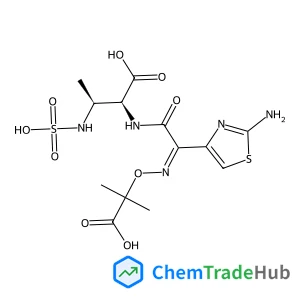
Aztreonam USP Related Compound A (Open-ring Aztreonam)
CAS Number:
87500-74-1
Molecular Formula:
C13H19N5O9S2
![2-[({[(2-Methyl-2-propanyl)oxy]carbonyl}amino)methyl]isonicotinic acid structure](https://static.chemtradehub.com/structs/473/473924-63-9-973b.webp "2-[({[(2-Methyl-2-propanyl)oxy]carbonyl}amino)methyl]isonicotinic acid structure")
2-[({[(2-Methyl-2-propanyl)oxy]carbonyl}amino)methyl]isonicotinic acid
CAS Number:
473924-63-9
Molecular Formula:
C12H16N2O4
Recommended Suppliers






Disclaimer
This page provides academic journal information for reference and research purposes only. We are not affiliated with any journal publishers and do not handle publication submissions. For publication-related inquiries, please contact the respective journal publishers directly.
If you notice any inaccuracies in the information displayed, please contact us at support@chemtradehub.com. We will promptly review and address your concerns.