












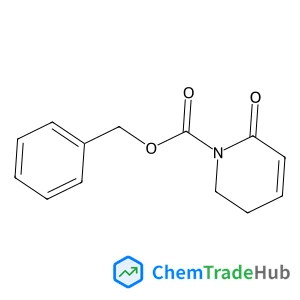
Benzyl 6-oxo-3,6-dihydro-1(2H)-pyridinecarboxylate
CAS Number:
725746-35-0
Molecular Formula:
C13H13NO3
Two recent experimental and theoretical studies (Proc. Natl. Acad. Sci. U. S. A., 2014, 111, 1282–1287; Phys. Chem. Chem. Phys., 2014, 16, 25942–25949) have addressed the problem of tuning the molecular charge and vibrational properties of single molecules embedded in nanojunctions. These are molecular characteristics escaping so far from an efficient experimental control in broad ranges. Here, we present a general argument demonstrating why, out of various experimental platforms possible, those wherein active molecules are asymmetrically coupled to electrodes are to be preferred to those symmetrically coupled for achieving a(n almost) complete redox process, and why an electrochemical environment has advantages over “dry” setups. This study aims at helping to nanofabricate molecular junctions using the most appropriate platforms allowing the broadest possible bias-driven control over the redox state and vibrational modes of single molecules linked to electrodes.
Kun Rui, Zhaoyin Wen, Xiao Huang, Yan Lu, Jun Jin, Chen Shen
DOI: 10.1039/C5CP07361H
Pravin S. Shinde, Sun Hee Choi, Yongsam Kim, Jungho Ryu, Jum Suk Jang
DOI: 10.1039/C5CP06669G
Robin P. Sagar, David G. Tempel, Alán Aspuru-Guzik
DOI: 10.1039/C5CP05927E
Yunkun Zhang, Lailei Wu, Biao Wan, Yan Zhao, Rui Gao, Zhiping Li, Jingwu Zhang
DOI: 10.1039/C5CP06745F
Elijah G. Schnitzler, Brandi L. M. Zenchyzen, Wolfgang Jäger
DOI: 10.1039/C5CP06073G
Silvia Orlandi, Erika Benini, Isabella Miglioli, Dean R. Evans, Victor Reshetnyak, Claudio Zannoni
DOI: 10.1039/C5CP05754J
Vira Agieienko, Richard Buchner
DOI: 10.1039/C5CP07604H
Thomas Verheyen, Ekaterina I. Izgorodina, R. Vijayaraghavan, Scott Young, Douglas R. MacFarlane
DOI: 10.1039/C5CP05200A
M. Patange, S. Biswas, A. K. Yadav, S. N. Jha, D. Bhattacharyya
DOI: 10.1039/C5CP05830A
Chang-Eun Kim, Aloysius Soon, Catherine Stampfl
DOI: 10.1039/C5CP06163F
Waste containing 6-Chloro-5-(2'-hydroxy-3'-methoxy-4-biphenylyl)-3-(3-methoxyphe...
(3alpha,5alpha)-3-Hydroxypregnane-11,20-dione is primarily used in the pharmaceu...
The market for 4-Amino-6-chloro-2-pyridinecarboxylic acid (CAS: 546141-56-4) is ...
Alternatives to (2-Benzoylethyl)trimethylammonium chloride (CAS: 24472-88-6) in ...
N-[4-Nitro-3-(trifluoromethyl)phenyl]acetamide (CAS: 393-12-4) is generally safe...
Alternative reagents such as other phosphates or similar functional groups can b...
There are alternatives to N,N'-Bis(3-aminopropyl)-1,3-propanediamine (CAS: 4605-...
When handling Aluminium trihexadecanoate, it is important to use appropriate per...
(1,1-Dioxido-3-oxo-1,2-benzothiazol-2(3H)-yl)acetic acid is a chemical compound ...
Several alternatives to 5,5-dimethyloxolan-2-one (CAS: 3123-97-5) can be used in...

Physical Chemistry Chemical Physics (PCCP) is an international journal co-owned by 19 physical chemistry and physics societies from around the world. This journal publishes original, cutting-edge research in physical chemistry, chemical physics and biophysical chemistry. To be suitable for publication in PCCP, articles must include significant innovation and/or insight into physical chemistry; this is the most important criterion that reviewers and Editors will judge against when evaluating submissions. The journal has a broad scope and welcomes contributions spanning experiment, theory, computation and data science. Topical coverage includes spectroscopy, dynamics, kinetics, statistical mechanics, thermodynamics, electrochemistry, catalysis, surface science, quantum mechanics, quantum computing and machine learning. Interdisciplinary research areas such as polymers and soft matter, materials, nanoscience, energy, surfaces/interfaces, and biophysical chemistry are welcomed if they demonstrate significant innovation and/or insight into physical chemistry. Joined experimental/theoretical studies are particularly appreciated when complementary and based on up-to-date approaches.
![N-{[(2-Methyl-2-propanyl)oxy]carbonyl}-L-methionylglycine structure](https://static.chemtradehub.com/structs/234/23446-03-9-e1e5.webp "N-{[(2-Methyl-2-propanyl)oxy]carbonyl}-L-methionylglycine structure")
![5'-Fluoro-[2,3'-biindolinylidene]-2',3-dione structure](https://static.chemtradehub.com/structs/251/251903-00-1-9cb1.webp "5'-Fluoro-[2,3'-biindolinylidene]-2',3-dione structure")




