












Onset potential behavior in α-Fe2O3 photoanodes: the influence of surface and diffusion Sn doping on the surface states
Literature Information
Publication Date
2015-12-07
DOI
10.1039/C5CP06669G
Impact Factor
3.676
Authors
Pravin S. Shinde, Sun Hee Choi, Yongsam Kim, Jungho Ryu, Jum Suk Jang
View Original
Abstract
The onset potential is an important parameter that affects the water oxidation performance of photoanodes. Herein, we investigated the behavior of the photocurrent onset potential of hematite (α-Fe2O3) photoanodes by incorporating Sn4+ cations via external (surface overlayer) or self (underlying FTO substrate) doping. The α-Fe2O3/FTO photoanodes fabricated at both low (550 °C) and high (800 °C) temperatures were chosen for surface Sn4+ doping (0–10 mM SnCl4). At the lower temperature, Sn4+ doping enriched the conductivity of α-Fe2O3/FTO, thereby improving the photocurrent response at higher applied potentials. In addition, the surface incorporation of Sn4+ shifted the onset of the water oxidation reaction in the positive direction. In the case of high temperature-annealed photoanodes, Sn leaching (resulting from FTO deformation) also affected the water oxidation performance of the photoanodes. This was caused by the loss of FTO conductivity as well as by the unfavourable surface properties due to the excessive incorporation of Sn ions (SnOx) into the hematite matrix. The anodic shift of the onset potential in both cases was due to the decreased surface state capacitance, as revealed by electrochemical impedance spectroscopy (EIS). The different annealing conditions, where lattice distortion and deformation-directed Sn diffusion-doping occur, were also found to affect the surface states associated with hematite and its water oxidation onset potential. Crystallographic analyses made by synchrotron XRD further support the results obtained from the EIS study. Sn doping was found to be concurrent with the respective changes in the (104) and (110) planes of hematite, which are associated with the onset potential-driving surface states and the photocurrent-boosting electron mobility, respectively.
Related Literature
Comprehensive theoretical and experimental study of near infrared absorbing copolymers based on dithienosilole
Katarzyna Brymora, Wissem Khelifi, Hussein Awada, Sylvie Blanc, Lionel Hirsch, Antoine Bousquet, Christine Lartigau-Dagron, Frédéric Castet
2020-04-30
Paper
DOI: 10.1039/D0PY00330A
Photo-controlled RAFT polymerization mediated by organic/inorganic hybrid photoredox catalysts: enhanced catalytic efficiency
Wulong Wang, Sheng Zhong, Guicheng Wang, Hongliang Cao, Yun Gao, Weian Zhang
2020-04-21
Paper
DOI: 10.1039/D0PY00171F
Controlling the crystal structure of precisely spaced polyethylene-like polyphosphoesters
Tobias Haider, Oksana Suraeva, Miriam L. O'Duill, Julian Mars, Markus Mezger, Ingo Lieberwirth, Frederik R. Wurm
2020-05-05
Paper
DOI: 10.1039/D0PY00272K
Stereoselective cationic polymerization of vinyl ethers by easily and finely tunable titanium complexes prepared from tartrate-derived diols: isospecific polymerization and recognition of chiral side chains
Hironobu Watanabe, Takuya Yamamoto, Arihiro Kanazawa, Sadahito Aoshima
2020-05-11
Communication
DOI: 10.1039/D0PY00343C
Superacid-catalyzed Friedel–Crafts polyhydroxyalkylation: a straightforward method to construct sky-blue thermally activated delayed fluorescence polymers
Manli Huang, Xuan Zeng, Cheng Zhong, Guohua Xie, Xiaosong Cao, Changan Yang
2020-05-12
Paper
DOI: 10.1039/D0PY00469C
Double-click synthesis of polysiloxane third-order nonlinear optical polymers with donor–acceptor chromophores
Zhitao Li, Dong Wang, Daniele Ramella, Hong Gao, Hui Cao, Yuzhen Zhao, Zongcheng Miao, Zhou Yang, Wanli He
2020-04-03
Paper
DOI: 10.1039/C9PY01771B
Aromatic thioketone-mediated radical polymerization of methacrylates and the preparation of amphiphilic quasi-block copolymers
2020-04-17
Paper
DOI: 10.1039/D0PY00322K
You might also like
Compound Q&A
How should waste containing 6-Chloro-5-(2'-hydroxy-3'-methoxy-4-biphenylyl)-3-(3-methoxyphenyl)-1H-pyrrolo[3,2-d]pyrimidine-2,4(3H,5H)-dione (CAS: 1346607-05-3) be handled?
Waste containing 6-Chloro-5-(2'-hydroxy-3'-methoxy-4-biphenylyl)-3-(3-methoxyphe...
1346607-05-36-Chloro-5-(2'-hydro...
Compound Q&A
What are the main uses of (3alpha,5alpha)-3-Hydroxypregnane-11,20-dione (CAS: 23930-19-0)?
(3alpha,5alpha)-3-Hydroxypregnane-11,20-dione is primarily used in the pharmaceu...
23930-19-0(3alpha,5alpha)-3-Hy...
Compound Q&A
What is the market or research trend for 4-Amino-6-chloro-2-pyridinecarboxylic acid (CAS: 546141-56-4)?
The market for 4-Amino-6-chloro-2-pyridinecarboxylic acid (CAS: 546141-56-4) is ...
546141-56-44-Amino-6-chloro-2-p...
Compound Q&A
Are there alternatives to (2-Benzoylethyl)trimethylammonium chloride (CAS: 24472-88-6) in synthesis?
Alternatives to (2-Benzoylethyl)trimethylammonium chloride (CAS: 24472-88-6) in ...
24472-88-6(2-Benzoylethyl)trim...
Compound Q&A
Is N-[4-Nitro-3-(trifluoromethyl)phenyl]acetamide (CAS: 393-12-4) safe?
N-[4-Nitro-3-(trifluoromethyl)phenyl]acetamide (CAS: 393-12-4) is generally safe...
393-12-4N-[4-Nitro-3-(triflu...
Compound Q&A
Are there alternatives to [(4R,5R,6S)-5-hydroxy-10-imino-3,7-dioxa-1,9-diazatricyclo[6.4.0.02,6]dodeca-8,11-dien-4-yl]methyl dihydrogen phosphate (CAS: 39679-56-6) in synthesis?
Alternative reagents such as other phosphates or similar functional groups can b...
39679-56-6[(4R,5R,6S)-5-hydrox...
Compound Q&A
Are there alternatives to N,N'-Bis(3-aminopropyl)-1,3-propanediamine (CAS: 4605-14-5) in synthesis?
There are alternatives to N,N'-Bis(3-aminopropyl)-1,3-propanediamine (CAS: 4605-...
4605-14-5N,N'-Bis(3-aminoprop...
Compound Q&A
What precautions should be taken when handling Aluminium trihexadecanoate (CAS: 555-35-1)?
When handling Aluminium trihexadecanoate, it is important to use appropriate per...
555-35-1Aluminium trihexadec...
Compound Q&A
What is (1,1-Dioxido-3-oxo-1,2-benzothiazol-2(3H)-yl)acetic acid (CAS: 52188-11-1)?
(1,1-Dioxido-3-oxo-1,2-benzothiazol-2(3H)-yl)acetic acid is a chemical compound ...
52188-11-1(1,1-Dioxido-3-oxo-1...
Compound Q&A
Are there alternatives to 5,5-dimethyloxolan-2-one (CAS: 3123-97-5) in synthesis?
Several alternatives to 5,5-dimethyloxolan-2-one (CAS: 3123-97-5) can be used in...
3123-97-55,5-dimethyloxolan-2...
Source Journal
Physical Chemistry Chemical Physics

CiteScore:
5.5
Self-citation Rate:
10.3%
Articles per Year:
3036
Physical Chemistry Chemical Physics (PCCP) is an international journal co-owned by 19 physical chemistry and physics societies from around the world. This journal publishes original, cutting-edge research in physical chemistry, chemical physics and biophysical chemistry. To be suitable for publication in PCCP, articles must include significant innovation and/or insight into physical chemistry; this is the most important criterion that reviewers and Editors will judge against when evaluating submissions. The journal has a broad scope and welcomes contributions spanning experiment, theory, computation and data science. Topical coverage includes spectroscopy, dynamics, kinetics, statistical mechanics, thermodynamics, electrochemistry, catalysis, surface science, quantum mechanics, quantum computing and machine learning. Interdisciplinary research areas such as polymers and soft matter, materials, nanoscience, energy, surfaces/interfaces, and biophysical chemistry are welcomed if they demonstrate significant innovation and/or insight into physical chemistry. Joined experimental/theoretical studies are particularly appreciated when complementary and based on up-to-date approaches.
Recommended Compounds
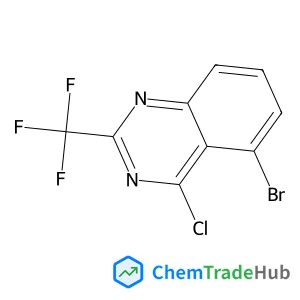
5-Bromo-4-chloro-2-(trifluoromethyl)quinazoline
CAS Number:
2089311-03-3
Molecular Formula:
C9H3BrClF3N2
![Benzyl 2-{[(tert-butoxy)carbonyl]amino}acetate structure](https://static.chemtradehub.com/structs/542/54244-69-8-6399.webp "Benzyl 2-{[(tert-butoxy)carbonyl]amino}acetate structure")
Recommended Suppliers






Disclaimer
This page provides academic journal information for reference and research purposes only. We are not affiliated with any journal publishers and do not handle publication submissions. For publication-related inquiries, please contact the respective journal publishers directly.
If you notice any inaccuracies in the information displayed, please contact us at support@chemtradehub.com. We will promptly review and address your concerns.