


Specific ion effects on the hydrophobic interaction of benzene self-assembled monolayers
Literature Information
Publication Date
2015-07-22
DOI
10.1039/C5CP01803J
Impact Factor
3.676
Authors
S. Dobberschütz, M. Rimmen, T. Hassenkam, M. P. Andersson, S. L. S. Stipp
View Original
Abstract
The interaction of aromatic compounds with various ions in aqueous solutions plays a role in a number of fields, as diverse as protein folding and enhanced oil recovery, among others. Therefore, we have investigated the effect of the four electrolytes, KCl, NaCl, MgCl2 and CaCl2, on the hydrophobic interaction of benzene self-assembled monolayers. Using the jump to contact phenomenon of an atomic force microscope (AFM) tip as an indicator of attractive forces between the surfaces of a sample and the tip, we discovered lower frequencies in the snap in as well as narrower distributions for the snap in distance for the monovalent ions, especially for K+, compared with the behaviour for the divalent ions. These observations are explained by the accumulation of charge at the surface by cation–π interactions and an influence of the ions on the formation of capillaries that bridge the tip to the surface. Bridging capillaries, i.e. nanometre scale gas bubbles, are some of the factors contributing to the long range hydrophobic interaction. The results demonstrate how ions influence the attraction of hydrophobic entities in aqueous solutions.
Recommended Journals

Proceedings of the National Academy of Sciences of the United States of America

Russian Chemical Reviews

Journal of Physics and Chemistry of Solids

Science

Journal of Catalysis

Journal of Medicinal Chemistry

Journal of Organometallic Chemistry

European Journal of Wood and Wood Products

Science Progress

Journal of Heterocyclic Chemistry
Related Literature
Kinetics of the BrO + HO2 reaction over the temperature range T = 246–314 K
Michael K. M. Ward, David M. Rowley
2017-08-15
Paper
DOI: 10.1039/C7CP03854B
X-ray spectroscopy on the active ion in laser crystals
P. S. Miedema, R. Mitzner, S. Ganschow, M. Beye
2017-07-26
Paper
DOI: 10.1039/C7CP03026F
Spin dynamics of light-induced charge separation in composites of semiconducting polymers and PC60BM revealed using Q-band pulse EPR
E. Suturina, E. Reijerse, W. Lubitz
2017-07-26
Paper
DOI: 10.1039/C7CP03680A
New insights into water photooxidation on reductively pretreated hematite photoanodes
Dejan Cibrev, Massimo Tallarida, Chittaranjan Das, Teresa Lana-Villarreal, Dieter Schmeisser, Roberto Gómez
2017-07-31
Paper
DOI: 10.1039/C7CP03958A
Interpretation of the à ← transition of hydrated protons in aqueous solutions observed in the far-UV region with quantum chemical calculations
Takeyoshi Goto, Krzysztof B. Beć, Yukihiro Ozaki
2017-07-20
Paper
DOI: 10.1039/C7CP01766A
Nonlinear behavior and fluctuation-induced dynamics in the photosensitive Belousov–Zhabotinsky reaction
Ioannis G. Kevrekidis
2017-08-04
Paper
DOI: 10.1039/C7CP03260A
Ergothioneine and related histidine derivatives in the gas phase: tautomer structures determined by IRMPD spectroscopy and theory
Katrin Peckelsen, Jonathan Martens, Lisa Czympiel, Giel Berden, Dirk Gründemann, Anthony J. H. M. Meijer, Mathias Schäfer
2017-08-14
Paper
DOI: 10.1039/C7CP03843G
Sum frequency generation vibrational spectroscopy of methacrylate-based functional monomers at the hydrophilic solid–liquid interface
Narendra M. Adhikari, Uvinduni I. Premadasa, Katherine L. A. Cimatu
2017-07-26
Paper
DOI: 10.1039/C7CP03113K
A complicated biocomputing system based on multi-responsive P(NIPAM-co-APBA) copolymer film electrodes and electrocatalysis of NADH
Jiying Liang, Xue Yu, Tiangang Yang, Menglu Li, Li Shen, Yue Jin, Hongyun Liu
2017-07-25
Paper
DOI: 10.1039/C7CP04030J
Quantification of nucleobases/gold nanoparticles interactions: energetics of the interactions through apparent binding constants determination
J. M. Carnerero, A. Sánchez-Coronilla, E. I. Martín, A. Jimenez-Ruiz, R. Prado-Gotor
2017-08-02
Paper
DOI: 10.1039/C7CP03692B
You might also like
Compound Q&A
Is 6-(3-Fluorophenyl)picolinic acid (CAS: 887982-40-3) safe?
6-(3-Fluorophenyl)picolinic acid is generally considered safe for laboratory use...
887982-40-36-(3-Fluorophenyl)pi...
Compound Q&A
What industries use (3R)-3-Pyrrolidinol (CAS: 2799-21-5)?
(3R)-3-Pyrrolidinol is used in the pharmaceutical industry as a precursor for dr...
2799-21-5(3R)-3-Pyrrolidinol
Compound Q&A
What precautions should be taken when handling (4R,5R)-4,5-Diethoxycarbonyl-2,2-dimethyldioxolane (CAS: 59779-75-8)?
When handling (4R,5R)-4,5-Diethoxycarbonyl-2,2-dimethyldioxolane (CAS: 59779-75-...
59779-75-8(4R,5R)-4,5-Diethoxy...
Compound Q&A
How is 1-(6-Chloroimidazo[1,2-b]pyridazin-3-yl)ethanone (CAS: 90734-71-7) typically synthesized?
1-(6-Chloroimidazo[1,2-b]pyridazin-3-yl)ethanone is often synthesized via a mult...
90734-71-71-(6-Chloroimidazo[1...
Compound Q&A
What is the market or research trend for N-Ethyl-3,4-dimethylbenzylamine (CAS: 39180-83-1)?
The market for N-Ethyl-3,4-dimethylbenzylamine (CAS: 39180-83-1) remains steady,...
39180-83-1N-Ethyl-3,4-dimethyl...
Compound Q&A
What is Tert-butyl 3-(pyrrolidin-1-yl)azetidine-1-carboxylate (CAS: 1019008-21-9)?
Tert-butyl 3-(pyrrolidin-1-yl)azetidine-1-carboxylate is a chemical compound wit...
1019008-21-9Tert-butyl 3-(pyrrol...
Compound Q&A
What regulatory guidelines apply to 1-Bromo-3-chloro-2,4-dimethoxybenzene (CAS: 1228956-93-1)?
1-Bromo-3-chloro-2,4-dimethoxybenzene (CAS: 1228956-93-1) falls under the classi...
1228956-93-11-Bromo-3-chloro-2,4...
Compound Q&A
Is 8-Bromo-2-methyl-3,4-dihydroisoquinolin-1(2H)-one (CAS: 1368622-07-4) safe?
The safety of 8-Bromo-2-methyl-3,4-dihydroisoquinolin-1(2H)-one (CAS: 1368622-07...
1368622-07-48-Bromo-2-methyl-3,4...
Compound Q&A
Is Benzyl [(3S)-2,6-dioxo-3-piperidinyl]carbamate (CAS: 22785-43-9) safe?
Benzyl [(3S)-2,6-dioxo-3-piperidinyl]carbamate is generally safe when handled wi...
22785-43-9Benzyl [(3S)-2,6-dio...
Compound Q&A
How should 1-{[4-(4,4,5,5-Tetramethyl-1,3,2-dioxaborolan-2-yl)phenyl]sulfonyl}pyrrolidine (CAS: 928657-21-0) be stored?
1-{[4-(4,4,5,5-Tetramethyl-1,3,2-dioxaborolan-2-yl)phenyl]sulfonyl}pyrrolidine s...
928657-21-01-{[4-(4,4,5,5-Tetra...
Source Journal
Physical Chemistry Chemical Physics

CiteScore:
5.5
Self-citation Rate:
10.3%
Articles per Year:
3036
Physical Chemistry Chemical Physics (PCCP) is an international journal co-owned by 19 physical chemistry and physics societies from around the world. This journal publishes original, cutting-edge research in physical chemistry, chemical physics and biophysical chemistry. To be suitable for publication in PCCP, articles must include significant innovation and/or insight into physical chemistry; this is the most important criterion that reviewers and Editors will judge against when evaluating submissions. The journal has a broad scope and welcomes contributions spanning experiment, theory, computation and data science. Topical coverage includes spectroscopy, dynamics, kinetics, statistical mechanics, thermodynamics, electrochemistry, catalysis, surface science, quantum mechanics, quantum computing and machine learning. Interdisciplinary research areas such as polymers and soft matter, materials, nanoscience, energy, surfaces/interfaces, and biophysical chemistry are welcomed if they demonstrate significant innovation and/or insight into physical chemistry. Joined experimental/theoretical studies are particularly appreciated when complementary and based on up-to-date approaches.
Recommended Compounds

2,3,6-Tri-O-acetyl-4-O-(2,3,4,6-tetra-O-acetyl-beta-D-galactopyranosyl)-alpha-D-glucopyranosyl bromide
CAS Number:
4753-07-5
Molecular Formula:
C26H35BrO17
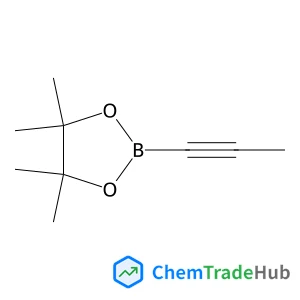
4,4,5,5-Tetramethyl-2-(1-propyn-1-YL)-1,3,2-dioxaborolane
CAS Number:
347389-75-7
Molecular Formula:
C9H15BO2
Recommended Suppliers







Disclaimer
This page provides academic journal information for reference and research purposes only. We are not affiliated with any journal publishers and do not handle publication submissions. For publication-related inquiries, please contact the respective journal publishers directly.
If you notice any inaccuracies in the information displayed, please contact us at support@chemtradehub.com. We will promptly review and address your concerns.