


How do random superficial defects influence the electro-oxidation of glycerol on Pt(111) surfaces?
Literature Information
Publication Date
2016-08-16
DOI
10.1039/C6CP04768H
Impact Factor
3.676
Authors
Pablo S. Fernández, Polina Tereshchuk, Camilo A. Angelucci, Janaina F. Gomes, Amanda C. Garcia, Cauê A. Martins, Giuseppe A. Camara, María E. Martins, Juarez L. F. Da Silva, Germano Tremiliosi-Filho
View Original
Abstract
The glycerol electrooxidation reaction (GEOR) has attracted huge interest in the last decade due to the very low price and availability of this polyol. In this work, we studied the GEOR on Pt(111) electrodes by introducing different densities of random defects. Our results showed that the generation of defects on Pt(111) slightly modified the GEOR onset potential, however it generates changes in the voltammetric oxidation charges and also in the relative production of CO2 to carbonyl containing compounds, CO. The voltammetric profiles in the forward scan show two oxidation peaks. FTIR data show that the first one is connected with the GlOH dissociative adsorption to form CO (and others intermediates) while the second one, at higher potentials, matches the onsets of the CO oxidation to CO2 and the CO production. FTIR also confirms that the lower activity of defected electrodes at lower potentials is connected to a higher CO poisoning. DFT calculations show that the presence of CO molecules on a Pt defected surface keeps water and GlOH molecules far from the surface and linked by H bonds. This paper is the last of a series of three works where we explore the GEOR on an important number of different Pt surfaces. These works show that it is difficult to oxidize GlOH at potentials lower than 0.6 V (under our experimental conditions) without suffering an important electrode poisoning (mainly by CO). Since the structure of nanoparticles might be mimicked by defected single crystals, these sets of reports provide a considerable amount of information concerning the influence of such surfaces towards GlOH reaction in acidic media. Therefore, if the well-known “nano”-effect does not produce substantial changes in the activity of Pt materials, they are not useful to be applied in a Direct Glycerol Fuel Cell (DGFC). On the other hand, it is very interesting that the density of electrode defects permits us to tune the relative production of CO2 to CO.
Recommended Journals

Journal of Enzyme inhibition and Medicinal Chemistry

Foundations of Chemistry

Advanced Engineering Materials

Journal of Medical Biochemistry

Faraday Discussions

Physical Chemistry Chemical Physics

Photochemical & Photobiological Sciences

Coloration Technology

European Journal of Organic Chemistry

Angewandte Chemie International Edition
Related Literature
Engineering Pt nanoclusters on CeO2 surface with abundant point defects by in situ confined-domain encapsulation strategy for the catalytic elimination of VOCs
Weiliang Han, Weigao Han, Zhicheng Tang
2023-10-09
Paper
DOI: 10.1039/D3LF00147D
Life cycle optimisation tool development for process systems and centralised supply chain design
Xinyang Sun, Alex Durkin, Miao Guo
2023-10-16
Paper
DOI: 10.1039/D3SU00251A
Exploring the potential of mosambi peel and sago powder in developing edible spoons
Bareera Siddiqui, Alisha Ahmad, Owais Yousuf, Kaiser Younis
2023-09-27
Paper
DOI: 10.1039/D3FB00111C
Exploring sustenance: cereal legume combinations for vegan meat development
Kannan Vignesh, Dev Kumar Yadav, D. D. Wadikar, A. D. Semwal
2023-10-26
Review Article
DOI: 10.1039/D3FB00074E
Effect of chloride salts and microwaves on polyethylene terephthalate (PET) hydrolysis by iron chloride/acetic acid Lewis/Brønsted acidic deep eutectic solvent
Marco Rollo, Massimo A. G. Perini, Alessandro Sanzone, Lorenzo Polastri, Matteo Tiecco, Alejandro Torregrosa-Chinillach, Elisa Martinelli, Gianluca Ciancaleoni
2023-11-21
Paper
DOI: 10.1039/D3SU00205E
Digitalization of the agro-food sector for achieving sustainable development goals: a review
Adithya Sridhar, Muthamilselvi Ponnuchamy, P. Senthil Kumar, Ashish Kapoor, Dai-Viet Nguyen Vo
2023-10-27
Review Article
DOI: 10.1039/D3FB00124E
In situ crosslinked Schiff base biohydrogels containing Carica papaya peel extract: application in the packaging of fresh berries
Ganeswar Dalei, Swagat Kumar Das, Susri Sangita Mohapatra
2023-09-13
Paper
DOI: 10.1039/D3FB00096F
You might also like
Compound Q&A
Is 2-(2-chloroacetamido)-3-phenylpropanoic acid (CAS: 7765-11-9) safe?
2-(2-Chloroacetamido)-3-phenylpropanoic acid (CAS: 7765-11-9) is generally consi...
7765-11-92-(2-chloroacetamido...
Compound Q&A
Is 2-(Benzyloxy)-5-bromobenzoic acid (CAS: 62176-31-2) safe?
2-(Benzyloxy)-5-bromobenzoic acid can be handled safely if appropriate precautio...
62176-31-22-(Benzyloxy)-5-brom...
Compound Q&A
What is (4-Methyl-1,2,5-oxadiazol-3-yl)methanamine hydrochloride (CAS: 1159825-48-5)?
(4-Methyl-1,2,5-oxadiazol-3-yl)methanamine hydrochloride is a chemical compound ...
1159825-48-5(4-Methyl-1,2,5-oxad...
Compound Q&A
What is 2-(5-Hexylthiophen-2-yl)-4,4,5,5-tetramethyl-1,3,2-dioxaborolane (CAS: 917985-54-7)?
2-(5-Hexylthiophen-2-yl)-4,4,5,5-tetramethyl-1,3,2-dioxaborolane (CAS: 917985-54...
917985-54-72-(5-Hexylthiophen-2...
Compound Q&A
Are there alternatives to 4-(8-Methyl-9H-1,3-dioxolo[4,5-h][2,3]benzodiazepin-5-yl)benzenamine (CAS: 102771-26-6) in synthesis?
While 4-(8-Methyl-9H-1,3-dioxolo[4,5-h][2,3]benzodiazepin-5-yl)benzenamine (CAS:...
102771-26-64-(8-Methyl-9H-1,3-d...
Compound Q&A
What is the market or research trend for tert-butyl 3-hydroxy-4,5,7,8-tetrahydro-2H-pyrazolo[3,4-d]azepine-6-carboxylate (CAS: 851376-80-2)?
The market for tert-butyl 3-hydroxy-4,5,7,8-tetrahydro-2H-pyrazolo[3,4-d]azepine...
851376-80-2tert-butyl 3-hydroxy...
Compound Q&A
How should waste containing 3,5-Diamino-1H-pyrazole-4-carbonitrile (CAS: 6844-58-2) be handled?
Waste containing 3,5-Diamino-1H-pyrazole-4-carbonitrile (CAS: 6844-58-2) should ...
6844-58-23,5-Diamino-1H-pyraz...
Compound Q&A
How is (6-Fluoro-3-pyridinyl)boronic acid (CAS: 351019-18-6) typically synthesized?
(6-Fluoro-3-pyridinyl)boronic acid can be synthesized through the reaction of 6-...
351019-18-6(6-Fluoro-3-pyridiny...
Compound Q&A
What industries use Dibenzyl carbonimidoylbiscarbamate (CAS: 10065-79-9)?
Dibenzyl carbonimidoylbiscarbamate (CAS: 10065-79-9) finds applications in vario...
10065-79-9Dibenzyl carbonimido...
Compound Q&A
What is the market or research trend for (beta,beta,2,3,4,5,6-~2~H_7_)Phenylalanine (CAS: 74228-83-4)?
The market for (beta,beta,2,3,4,5,6-~2~H_7_)Phenylalanine (CAS: 74228-83-4) is g...
74228-83-4(beta,beta,2,3,4,5,6...
Source Journal
Physical Chemistry Chemical Physics
CiteScore:
5.5
Self-citation Rate:
10.3%
Articles per Year:
3036
Physical Chemistry Chemical Physics (PCCP) is an international journal co-owned by 19 physical chemistry and physics societies from around the world. This journal publishes original, cutting-edge research in physical chemistry, chemical physics and biophysical chemistry. To be suitable for publication in PCCP, articles must include significant innovation and/or insight into physical chemistry; this is the most important criterion that reviewers and Editors will judge against when evaluating submissions. The journal has a broad scope and welcomes contributions spanning experiment, theory, computation and data science. Topical coverage includes spectroscopy, dynamics, kinetics, statistical mechanics, thermodynamics, electrochemistry, catalysis, surface science, quantum mechanics, quantum computing and machine learning. Interdisciplinary research areas such as polymers and soft matter, materials, nanoscience, energy, surfaces/interfaces, and biophysical chemistry are welcomed if they demonstrate significant innovation and/or insight into physical chemistry. Joined experimental/theoretical studies are particularly appreciated when complementary and based on up-to-date approaches.
Recommended Compounds
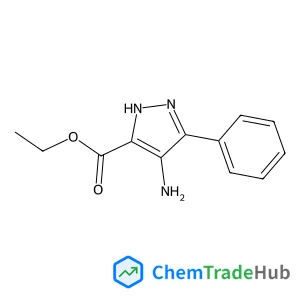
![Ethyl ({[(2-methyl-2-propanyl)oxy]carbonyl}amino)(2-pyridinyl)acetate structure](https://static.chemtradehub.com/structs/313/313490-90-3-dd15.webp "Ethyl ({[(2-methyl-2-propanyl)oxy]carbonyl}amino)(2-pyridinyl)acetate structure")
Ethyl ({[(2-methyl-2-propanyl)oxy]carbonyl}amino)(2-pyridinyl)acetate
CAS Number:
313490-90-3
Molecular Formula:
C14H20N2O4
![3-[4-(difluoromethoxy)phenyl]-2-({[(9H-fluoren-9-yl)methoxy]carbonyl}amino)propanoic acid structure](https://static.chemtradehub.com/structs/149/1496564-27-2-952e.webp "3-[4-(difluoromethoxy)phenyl]-2-({[(9H-fluoren-9-yl)methoxy]carbonyl}amino)propanoic acid structure")
3-[4-(difluoromethoxy)phenyl]-2-({[(9H-fluoren-9-yl)methoxy]carbonyl}amino)propanoic acid
CAS Number:
1496564-27-2
Molecular Formula:
C25H21F2NO5
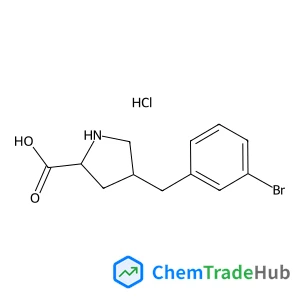
(2S,4R)-4-(3-Bromobenzyl)pyrrolidine-2-carboxylic acid hydrochloride
CAS Number:
1049734-10-2
Molecular Formula:
C12H15BrClNO2
Recommended Suppliers






Disclaimer
This page provides academic journal information for reference and research purposes only. We are not affiliated with any journal publishers and do not handle publication submissions. For publication-related inquiries, please contact the respective journal publishers directly.
If you notice any inaccuracies in the information displayed, please contact us at support@chemtradehub.com. We will promptly review and address your concerns.