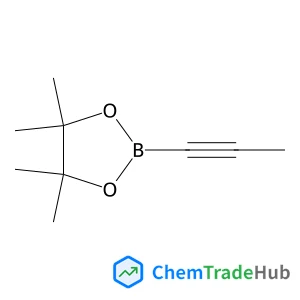
4,4,5,5-Tetramethyl-2-(1-propyn-1-YL)-1,3,2-dioxaborolane
CAS Number:
347389-75-7
Molecular Formula:
C9H15BO2
Zhenzhen Feng, Yuli Yan, Guangbiao Zhang, Jueming Yang, Chao Wang
Band engineering is one of the effective approaches for designing ideal thermoelectric materials. Introducing an intermediate band in the band gap of semiconducting thermoelectric compounds may largely increase the carrier concentration and improve the electrical conductivity of these compounds. We test this hypothesis by Pb doping in Zintl Ca5In2Sb6. In the current work, we have systematically investigated the electronic structure and thermoelectric performances of substitutional doping with Pb on In sites at a doping level of 5% (0.2 e per cell) for Ca5In2Sb6 by using density functional theory combined with semi-classical Boltzmann theory. It is found that in contrast to Zn doping, Pb doping introduces a partially filled intermediate band in the band gap of Ca5In2Sb6, which originates from the Pb s states by weakly hybridizing with the Sb p states. Such an intermediate band dramatically increases the electrical conductivity of Ca5In2Sb6 and has little detrimental effect on its Seebeck coefficient, which may increase its thermoelectric figure of merit, ZT. Interestingly, a maximum ZT value of 2.46 may be achieved at 900 K for crystalline Pb-doped Ca5In2Sb6 when the carrier concentration is optimized. Therefore, Pb-doped Ca5In2Sb6 may be a promising thermoelectric material.
Xiaojing Chen, Mathias Steglich, Varun Gupta, Corey A. Rice, John P. Maier
DOI: 10.1039/C3CP54299H
Oliver Potzel, Gerhard Taubmann
DOI: 10.1039/C3CP53680G
Ismail Khay, Lydie Tzanis, T. Jean Daou, Habiba Nouali, Andrey Ryzhikov, Joël Patarin
DOI: 10.1039/C3CP53570C
H. Surya Prakash Rao, Avinash Desai, Ivy Sarkar, Monalisa Mohapatra, Ashok Kumar Mishra
DOI: 10.1039/C3CP53895H
Alessandro A. Carmona-Martínez, Mélanie Pierra, Eric Trably, Nicolas Bernet
DOI: 10.1039/C3CP54045F
Md Mokhlesur Rahman, Alexey M. Glushenkov, Zhiqiang Chen, Xiujuan J. Dai, Thrinathreddy Ramireddy, Ying Chen
DOI: 10.1039/C3CP53605J
Alexander J. Pak, Eunsu Paek, Gyeong S. Hwang
DOI: 10.1039/C3CP52590B
Beniamino Iandolo, Brian Seger, Ib Chorkendorff, Igor Zorić, Anders Hellman
DOI: 10.1039/C3CP54288B
Myung Won Lee, Markus Meuwly
DOI: 10.1039/C3CP52713A
2-Methylbenzene-1,4-diamine dihydrochloride (CAS: 615-45-2) should be stored in ...
(1S,4S)-2,5-Diazabicyclo[2.2.1]heptane dihydrobromide is generally considered sa...
(6-Chloropyridazin-3-YL)methanamine finds applications in the pharmaceutical ind...
2-Fluoro-3-methylphenol is primarily used in the synthesis of pharmaceuticals, p...
When handling 3-Methoxy-4-nitrobenzonitrile, it is important to wear appropriate...
When handling 1,3-Oxazolo[4,5-b]pyridine-2(3H)-thione (CAS: 211949-57-4), it is ...
4-Ethynylbenzamide (CAS: 90347-86-7) falls under various regulatory guidelines i...
3-(2-Ethylphenyl)-2-thioxo-4-imidazolidinone is primarily used as an intermediat...
(2-Fluoro-6-methoxyphenyl)acetic acid, also known as 4-fluoro-3-methoxybenzoic a...
Market trends for 2-[4-(Hydroxymethyl)phenoxy]ethanol (CAS: 102196-18-9) indicat...

Physical Chemistry Chemical Physics (PCCP) is an international journal co-owned by 19 physical chemistry and physics societies from around the world. This journal publishes original, cutting-edge research in physical chemistry, chemical physics and biophysical chemistry. To be suitable for publication in PCCP, articles must include significant innovation and/or insight into physical chemistry; this is the most important criterion that reviewers and Editors will judge against when evaluating submissions. The journal has a broad scope and welcomes contributions spanning experiment, theory, computation and data science. Topical coverage includes spectroscopy, dynamics, kinetics, statistical mechanics, thermodynamics, electrochemistry, catalysis, surface science, quantum mechanics, quantum computing and machine learning. Interdisciplinary research areas such as polymers and soft matter, materials, nanoscience, energy, surfaces/interfaces, and biophysical chemistry are welcomed if they demonstrate significant innovation and/or insight into physical chemistry. Joined experimental/theoretical studies are particularly appreciated when complementary and based on up-to-date approaches.
![Methyl 2-[5-(3-Phenoxyphenyl)-2H-tetrazol-2-yl]acetate structure](https://static.chemtradehub.com/structs/130/1305320-60-8-84b4.webp "Methyl 2-[5-(3-Phenoxyphenyl)-2H-tetrazol-2-yl]acetate structure")
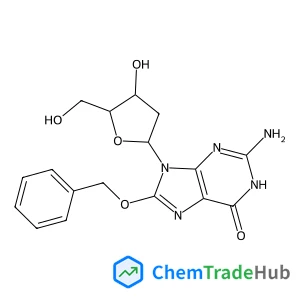
![(3R,4aR,7aS,9aR,10S,11R,13aR,13bS,15aS,15bR)-3,11-Dihydroxy-10-(hydroxymethyl)-4,4,7a,10,13a,15b-hexamethyl-1,2,3,4,4a,7,7a,8,9,9a,10,11,12,13,13a,13b,14,15,15a,15b-icosahydro-5H-naphtho[2',1':4,5]cyc
lohepta[1,2-a]naphthalen-5-one structure](https://static.chemtradehub.com/structs/538/53800-21-8-9f18.webp "(3R,4aR,7aS,9aR,10S,11R,13aR,13bS,15aS,15bR)-3,11-Dihydroxy-10-(hydroxymethyl)-4,4,7a,10,13a,15b-hexamethyl-1,2,3,4,4a,7,7a,8,9,9a,10,11,12,13,13a,13b,14,15,15a,15b-icosahydro-5H-naphtho[2',1':4,5]cyc
lohepta[1,2-a]naphthalen-5-one structure")