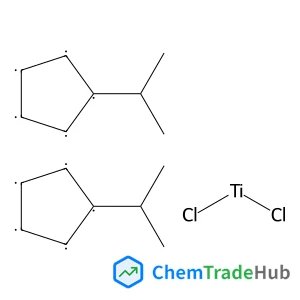
BIS(I-PROPYLCYCLOPENTADIENYL)TITANIUM DICHLORIDE
CAS Number:
12130-65-3
Molecular Formula:
C16H22Cl2Ti
Alexander J. Pak, Eunsu Paek, Gyeong S. Hwang
Motivated by promising demonstrations of carbon nanotube (CNT) electrodes in supercapacitors, we evaluate the capacitive performance of a (6,6) CNT in [BMIM][PF6] ionic liquid (IL), with particular attention to the relative contributions of the electric double layer (EDL) capacitance (CD) at the CNT/IL interface and the quantum capacitance (CQ) of the CNT. Our classical molecular dynamics simulations reveal that the use of the CNT improves CD when compared to planar graphene, which we discuss in terms of how the electrode curvature affects both the electric field strength and IL packing density. In addition, according to density functional theory calculations, the CQ of the CNT is constant and significantly larger than that of graphene near the Fermi level, which is a consequence of the larger number of available electron states in the CNT. Our study also shows that the relative performance of the CNT- and graphene-based electrodes can be a strong function of applied voltage, which we attribute to the shifting contributions of CQ and CD.

Russian Journal of Organic Chemistry

Chemistry Education Research and Practice

Russian Journal of Applied Chemistry

New Journal of Chemistry

Russian Journal of Bioorganic Chemistry

Drug Discovery Today

Journal of Saudi Chemical Society

Russian Journal of General Chemistry

Crystallography Reports

Current Opinion in Solid State & Materials Science
Delin Kong, Feng Tian, Yingying Xu, Shaoqun Zhu, Zetong Yu, Lefeng Xiong, Peipei Li, Huiyun Wei, Xinhe Zheng, Mingzeng Peng
DOI: 10.1039/D3CP02137H
Loukas Belles, Christos Dimitriou, Constantinos Moularas, Maria Solakidou, Marinos Theorodakopoulos, Maria Louloudi, Yiannis Deligiannakis
DOI: 10.1039/D3CP02974C
Ryuichi Okamoto
DOI: 10.1039/D3CP03799A
Ugo Jacovella, Branko Ruscic, Ning L. Chen, Hai-Linh Le, Séverine Boyé-Péronne, Sebastian Hartweg, Madhusree Roy Chowdhury, Gustavo A. Garcia, Jean-Christophe Loison, Bérenger Gans
DOI: 10.1039/D3CP04244H
Reman Rana, Dilip K. Maity
DOI: 10.1039/D3CP04403C
Xia Mu, Dinglin Zhang, Rui Lai, Chenyi Liao, Guohui Li
DOI: 10.1039/D3CP02887A
Nikolaj Lopatik, Ankita De, Silvia Paasch, Andreas Schneemann, Eike Brunner
DOI: 10.1039/D3CP04144A
Qin Zheng, Jianping Xu, Shaobo Shi, Jing Chen, Jianghua Xu, Lina Kong, Xiaosong Zhang, Lan Li
DOI: 10.1039/D3CP04100J
Bo Chen, Lin Xue, Yan Han, Zhi Yang, Yong-Jia Zhang
DOI: 10.1039/D3CP04069K
Ryo Yamane, Hongyi Li, Tetsu Ichitsubo, Kazumasa Sugiyama
DOI: 10.1039/D3CP02463F
2-Methylbenzene-1,4-diamine dihydrochloride (CAS: 615-45-2) should be stored in ...
(1S,4S)-2,5-Diazabicyclo[2.2.1]heptane dihydrobromide is generally considered sa...
(6-Chloropyridazin-3-YL)methanamine finds applications in the pharmaceutical ind...
2-Fluoro-3-methylphenol is primarily used in the synthesis of pharmaceuticals, p...
When handling 3-Methoxy-4-nitrobenzonitrile, it is important to wear appropriate...
When handling 1,3-Oxazolo[4,5-b]pyridine-2(3H)-thione (CAS: 211949-57-4), it is ...
4-Ethynylbenzamide (CAS: 90347-86-7) falls under various regulatory guidelines i...
3-(2-Ethylphenyl)-2-thioxo-4-imidazolidinone is primarily used as an intermediat...
(2-Fluoro-6-methoxyphenyl)acetic acid, also known as 4-fluoro-3-methoxybenzoic a...
Market trends for 2-[4-(Hydroxymethyl)phenoxy]ethanol (CAS: 102196-18-9) indicat...

Physical Chemistry Chemical Physics (PCCP) is an international journal co-owned by 19 physical chemistry and physics societies from around the world. This journal publishes original, cutting-edge research in physical chemistry, chemical physics and biophysical chemistry. To be suitable for publication in PCCP, articles must include significant innovation and/or insight into physical chemistry; this is the most important criterion that reviewers and Editors will judge against when evaluating submissions. The journal has a broad scope and welcomes contributions spanning experiment, theory, computation and data science. Topical coverage includes spectroscopy, dynamics, kinetics, statistical mechanics, thermodynamics, electrochemistry, catalysis, surface science, quantum mechanics, quantum computing and machine learning. Interdisciplinary research areas such as polymers and soft matter, materials, nanoscience, energy, surfaces/interfaces, and biophysical chemistry are welcomed if they demonstrate significant innovation and/or insight into physical chemistry. Joined experimental/theoretical studies are particularly appreciated when complementary and based on up-to-date approaches.