












![5-Bromoimidazo[1,2-a]pyridine structure](https://static.chemtradehub.com/structs/692/69214-09-1-d8e2.webp "5-Bromoimidazo[1,2-a]pyridine structure")
High current density via direct electron transfer by the halophilic anode respiring bacterium Geoalkalibacter subterraneus
Literature Information
Publication Date
2013-10-04
DOI
10.1039/C3CP54045F
Impact Factor
3.676
Authors
Alessandro A. Carmona-Martínez, Mélanie Pierra, Eric Trably, Nicolas Bernet
View Original
Abstract
In this study the characterization of Geoalkalibacter subterraneus is presented, which is a novel halophilic anode respiring bacterium (ARB) previously selected and identified in a potentiostatically controlled bioelectrochemical system (BES) inoculated with sediments from a salt plant. Pure culture electroactive biofilms of Glk. subterraneus were grown during chronoamperometric batch experiments at a graphite electrode poised at +200 mV (vs. SCE) with 10 mM acetate as the electron donor. These biofilms exhibited the highest current density (4.68 ± 0.54 A m−2) reported on a planar material with a pure culture under saline conditions (3.5% NaCl). To investigate possible anodic electron transfer (ET) mechanisms, cyclic voltammetry (CV) of mature visible apparent reddish biofilms was performed under bioelectrocatalytic substrate consumption (turnover) and in the absence of the substrate (non-turnover). CV evidenced a well defined typical sigmoidal shape and a pair of clear redox couples under turnover and non-turnover conditions, respectively. Moreover, the calculation of their formal potentials indicated the presence of a common ET mechanism present in both CV conditions between −427.6 ± 0.5 (Ef,2) and −364.8 ± 4.5 mV (Ef,3). Confocal laser scanning microscopy inspection showed a biofilm structure composed of several layers of metabolically active bacteria that spread all over the electrode material within a biofilm up to 76 ± 7 μm thick. Such high value compared to the thickness values normally reported in the literature for pure culture electroactive bacteria justifies further investigations. Taken together, these results suggest that Glk. subterraneus performs a direct ET mechanism in contact with the electrode material. Furthermore, direct current generation from saline wastewater significantly expands the application of BESs.
Related Literature
Nonvolatile transistor memory devices based on high-k electrets of polyimide/TiO2 hybrids
Ying-Hsuan Chou, Chia-Liang Tsai, Guey-Sheng Liou
2014-08-05
Paper
DOI: 10.1039/C4PY00825A
One-pot controllable synthesis of oligo(carbonate-ether) triol using a Zn-Co-DMC catalyst: the special role of trimesic acid as an initiation-transfer agent
Yusheng Qin, Xuesi Chen, Xianhong Wang, Fosong Wang
2014-06-30
Paper
DOI: 10.1039/C4PY00578C
Doubly-dynamic-covalent polymers composed of oxime and oxanorbornene links
Soma Mukherjee, William. L. A. Brooks, Yuqiong Dai, Brent S. Sumerlin
2016-02-17
Paper
DOI: 10.1039/C5PY02046H
Thiol-Michael “click” chemistry: another efficient tool for head functionalization of giant surfactants
Yiwen Li, Hao Su, Xueyan Feng, Zhao Wang, Kai Guo, Qiang Fu, Stephen Z. D. Cheng
2014-08-21
Paper
DOI: 10.1039/C4PY01103A
Diindenocarbazole-based large bandgap copolymers for high-performance organic solar cells with large open circuit voltages
Dongdong Cai, Zhigang Yin, Changquan Tang, Shan-Ci Chen, Qingdong Zheng
2014-08-20
Paper
DOI: 10.1039/C4PY00951G
Synthesis, morphology, and electrical memory application of oligosaccharide-based block copolymers with π-conjugated pyrene moieties and their supramolecules
Han-Sheng Sun, Yougen Chen, Wen-Ya Lee, Yu-Cheng Chiu, Takuya Isono, Toshifumi Satoh, Toyoji Kakuchi, Wen-Chang Chen
2015-12-09
Paper
DOI: 10.1039/C5PY01697E
CdS nanorods assisted thermal oxidation of polythiol segments of PS-b-polythiols to produce core cross-linking micellar clusters
Chengsha Wei, Mingming Chen, Jiaojiao Tao, Xibo Wu, Majid Khan, Dong Liu, Ningdong Huang
2014-08-26
Paper
DOI: 10.1039/C4PY00946K
Studies on homologous random and alternating segmented conjugated polymers with and without silicon synthesized by ADMET‡
Hamid Ardolic
2015-11-20
Paper
DOI: 10.1039/C5PY01455G
You might also like
Compound Q&A
How should waste containing (6-Bromo-2-naphthyl)oxy](dimethyl)(2-methyl-2-propanyl)silane be handled?
Waste containing (6-Bromo-2-naphthyl)oxy](dimethyl)(2-methyl-2-propanyl)silane (...
100751-65-3[(6-Bromo-2-naphthyl...
Compound Q&A
How is 7-Fluoro-4-isoquinolinecarboxylic acid (CAS: 1841081-40-0) typically synthesized?
7-Fluoro-4-isoquinolinecarboxylic acid can be synthesized via a multi-step proce...
1841081-40-07-Fluoro-4-isoquinol...
Compound Q&A
What are the physical and chemical properties of 2,3,5,6-Tetrabromothieno[3,2-b]thiophene (CAS: 124638-53-5)?
2,3,5,6-Tetrabromothieno[3,2-b]thiophene is a crystalline compound with a high m...
124638-53-52,3,5,6-Tetrabromoth...
Compound Q&A
Is 1-[4-(Benzylamino)-7,8-dihydro-5H-pyrano[4,3-d]pyrimidin-2-yl]-2-methyl-1H-indole-4-carboxamide (CAS: 1542705-92-9) safe?
1-[4-(Benzylamino)-7,8-dihydro-5H-pyrano[4,3-d]pyrimidin-2-yl]-2-methyl-1H-indol...
1542705-92-91-[4-(Benzylamino)-7...
Compound Q&A
What is the market or research trend for imidazo[5,1-d]-1,2,3,5-tetrazine-8-carboxylic acid, 3,4-dihydro-3-methyl-4-oxo- (CAS: 113942-30-6)?
The market for imidazo[5,1-d]-1,2,3,5-tetrazine-8-carboxylic acid, 3,4-dihydro-3...
113942-30-6Imidazo[5,1-d]-1,2,3...
Compound Q&A
What is 3-(Triisopropylsilyl)propiolaldehyde (CAS: 163271-80-5)?
3-(Triisopropylsilyl)propiolaldehyde is a synthetic organic compound with the CA...
163271-80-53-(Triisopropylsilyl...
Compound Q&A
What regulatory guidelines apply to 6-Nitro-2H-1,4-benzoxazin-3(4H)-one (CAS: 81721-87-1)?
6-Nitro-2H-1,4-benzoxazin-3(4H)-one (CAS: 81721-87-1) is subject to various regu...
81721-87-16-Nitro-2H-1,4-benzo...
Compound Q&A
How should waste containing (3-Fluorophenyl)(4-{[(2-methyl-2-propanyl)oxy]carbonyl}-1-piperazinyl)acetic acid (CAS: 885272-91-3) be handled?
Waste containing (3-Fluorophenyl)(4-{[(2-methyl-2-propanyl)oxy]carbonyl}-1-piper...
885272-91-3(3-Fluorophenyl)(4-{...
Compound Q&A
What are the physical and chemical properties of N,N'-4,4'-Biphenyldiyldiisonicotinamide (CAS: 55119-40-9)?
N,N'-4,4'-Biphenyldiyldiisonicotinamide is a white crystalline solid with a mole...
55119-40-9N,N'-4,4'-Biphenyldi...
Compound Q&A
What industries use 6-Bromo-8-fluoro-2-quinazolinol (CAS: 1036756-15-6)?
6-Bromo-8-fluoro-2-quinazolinol is primarily used in the pharmaceutical industry...
1036756-15-66-Bromo-8-fluoro-2-q...
Source Journal
Physical Chemistry Chemical Physics

CiteScore:
5.5
Self-citation Rate:
10.3%
Articles per Year:
3036
Physical Chemistry Chemical Physics (PCCP) is an international journal co-owned by 19 physical chemistry and physics societies from around the world. This journal publishes original, cutting-edge research in physical chemistry, chemical physics and biophysical chemistry. To be suitable for publication in PCCP, articles must include significant innovation and/or insight into physical chemistry; this is the most important criterion that reviewers and Editors will judge against when evaluating submissions. The journal has a broad scope and welcomes contributions spanning experiment, theory, computation and data science. Topical coverage includes spectroscopy, dynamics, kinetics, statistical mechanics, thermodynamics, electrochemistry, catalysis, surface science, quantum mechanics, quantum computing and machine learning. Interdisciplinary research areas such as polymers and soft matter, materials, nanoscience, energy, surfaces/interfaces, and biophysical chemistry are welcomed if they demonstrate significant innovation and/or insight into physical chemistry. Joined experimental/theoretical studies are particularly appreciated when complementary and based on up-to-date approaches.
Recommended Compounds
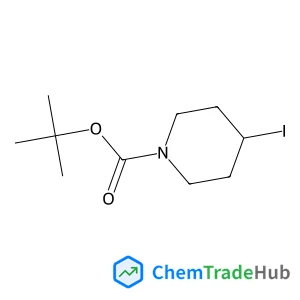
2-Methyl-2-propanyl 4-iodo-1-piperidinecarboxylate
CAS Number:
301673-14-3
Molecular Formula:
C10H18INO2
Recommended Suppliers





Disclaimer
This page provides academic journal information for reference and research purposes only. We are not affiliated with any journal publishers and do not handle publication submissions. For publication-related inquiries, please contact the respective journal publishers directly.
If you notice any inaccuracies in the information displayed, please contact us at support@chemtradehub.com. We will promptly review and address your concerns.