



Are intramolecular frustrated Lewis pairs also intramolecular catalysts? A theoretical study on H2 activation
Literature Information
Publication Date
2015-03-06
DOI
10.1039/C5CP00368G
Impact Factor
3.676
Authors
Lei Liu Zeonjuk, Petko St. Petkov, Thomas Heine, Gerd-Volker Röschenthaler, Johannes Eicher, Nina Vankova
View Original
Abstract
We investigate computationally a series of intramolecular frustrated Lewis pairs (FLPs), with the general formula Mes2PCHRCH2B(C6F5)2, that are known from the literature to either activate molecular hydrogen (FLPs with R = H (1) or Me (4)), or remain inert (FLPs with R = Ph (2) or SiMe3 (3)). The prototypical system Mes2PCH2CH2B(C6F5)2 (1) has been described in the literature (Grimme et al., Angew. Chem., Int. Ed., 2010; Rokob et al., J. Am. Chem. Soc., 2013) as an intramolecular reactant that triggers the reaction with H2 in a bimolecular concerted fashion. In the current study, we show that the concept of intramolecular H2 activation by linked FLPs is not able to explain the inertness of the derivative compounds 2 and 3 towards H2. To cope with this, we propose an alternative intermolecular mechanism for the investigated reaction, assuming stacking of two open-chain FLP conformers, and formation of a dimeric reactant with two Lewis acid–base domains, that can split up to two hydrogen molecules. Using quantum-chemical methods, we compute the reaction profiles describing these alternative mechanisms, and compare the derived predictions with earlier reported experimental results. We show that only the concept of intermolecular H2 activation could explain both the activity of the FLPs having small substituents in the bridging molecular region, and the inertness of the FLPs with a bulkier substitution, in a consistent way. Importantly, the intermolecular H2 activation driven by intramolecular FLPs indicates the key role of steric factors and noncovalent interactions for the design of metal-free systems that can efficiently split H2, and possibly serve as metal-free hydrogenation catalysts.
Recommended Journals

Journal of Natural Medicines

Nature Medicine

Current Opinion in Solid State & Materials Science

Saudi Pharmaceutical Journal

Crystallography Reports

Organic Process Research & Development

Russian Chemical Bulletin

Journal of Peptide Science

Current Opinion in Colloid & Interface Science

Russian Journal of General Chemistry
Related Literature
Toward an absolute NMR shielding scale using the spin-rotation tensor within a relativistic framework
I. Agustín Aucar, Sergio S. Gomez, Claudia G. Giribet, Gustavo A. Aucar
2016-07-19
Paper
DOI: 10.1039/C6CP03355E
Lithium intercalation and diffusion in TiO2 nanotubes: a first-principles investigation
Ke Liang, Xue Chen, Zhenyu Guo, Tingjun Hou, Xiaohong Zhang, Youyong Li
2016-08-05
Paper
DOI: 10.1039/C6CP03830A
Rotational dynamics of water molecules near biological surfaces with implications for nuclear quadrupole relaxation
Daniel Braun, Michael Schmollngruber, Othmar Steinhauser
2016-08-18
Paper
DOI: 10.1039/C6CP04000D
Mechanistic insights into ozone-initiated oxidative degradation of saturated hydrocarbons and polymers
Richmond Lee, Michelle L. Coote
2016-08-16
Paper
DOI: 10.1039/C6CP05064F
Biaxial nematic phase stability and demixing behaviour in monolayers of rod–plate mixtures
Yuri Martínez-Ratón, Miguel González-Pinto, Enrique Velasco
2016-08-15
Paper
DOI: 10.1039/C6CP05022K
Impact of the Si/Al ratio on the selective capture of iodine compounds in silver-mordenite: a periodic DFT study
Siwar Chibani, Mouheb Chebbi, Sébastien Lebègue, Laurent Cantrel, Michael Badawi
2016-08-19
Paper
DOI: 10.1039/C6CP05015H
Hydrated forms of fluoroacetic acid: a rotational study
Luca Evangelisti, Lorenzo Spada, Susana Blanco, Walther Caminati
2016-07-30
Paper
DOI: 10.1039/C6CP04735A
Tuning the thermal conductivity of methylammonium lead halide by the molecular substructure
Claudia Caddeo, Claudio Melis, Maria Ilenia Saba, Alessio Filippetti, Luciano Colombo, Alessandro Mattoni
2016-07-29
Paper
DOI: 10.1039/C6CP04246E
A new class of N–H excited-state intramolecular proton transfer (ESIPT) molecules bearing localized zwitterionic tautomers
Anton J. Stasyuk, Yi-Ting Chen, Chi-Lin Chen, Pei-Jhen Wu, Pi-Tai Chou
2016-08-11
Paper
DOI: 10.1039/C6CP05236C
You might also like
Compound Q&A
Is 2-(2-chloroacetamido)-3-phenylpropanoic acid (CAS: 7765-11-9) safe?
2-(2-Chloroacetamido)-3-phenylpropanoic acid (CAS: 7765-11-9) is generally consi...
7765-11-92-(2-chloroacetamido...
Compound Q&A
Is 2-(Benzyloxy)-5-bromobenzoic acid (CAS: 62176-31-2) safe?
2-(Benzyloxy)-5-bromobenzoic acid can be handled safely if appropriate precautio...
62176-31-22-(Benzyloxy)-5-brom...
Compound Q&A
What is (4-Methyl-1,2,5-oxadiazol-3-yl)methanamine hydrochloride (CAS: 1159825-48-5)?
(4-Methyl-1,2,5-oxadiazol-3-yl)methanamine hydrochloride is a chemical compound ...
1159825-48-5(4-Methyl-1,2,5-oxad...
Compound Q&A
What is 2-(5-Hexylthiophen-2-yl)-4,4,5,5-tetramethyl-1,3,2-dioxaborolane (CAS: 917985-54-7)?
2-(5-Hexylthiophen-2-yl)-4,4,5,5-tetramethyl-1,3,2-dioxaborolane (CAS: 917985-54...
917985-54-72-(5-Hexylthiophen-2...
Compound Q&A
Are there alternatives to 4-(8-Methyl-9H-1,3-dioxolo[4,5-h][2,3]benzodiazepin-5-yl)benzenamine (CAS: 102771-26-6) in synthesis?
While 4-(8-Methyl-9H-1,3-dioxolo[4,5-h][2,3]benzodiazepin-5-yl)benzenamine (CAS:...
102771-26-64-(8-Methyl-9H-1,3-d...
Compound Q&A
What is the market or research trend for tert-butyl 3-hydroxy-4,5,7,8-tetrahydro-2H-pyrazolo[3,4-d]azepine-6-carboxylate (CAS: 851376-80-2)?
The market for tert-butyl 3-hydroxy-4,5,7,8-tetrahydro-2H-pyrazolo[3,4-d]azepine...
851376-80-2tert-butyl 3-hydroxy...
Compound Q&A
How should waste containing 3,5-Diamino-1H-pyrazole-4-carbonitrile (CAS: 6844-58-2) be handled?
Waste containing 3,5-Diamino-1H-pyrazole-4-carbonitrile (CAS: 6844-58-2) should ...
6844-58-23,5-Diamino-1H-pyraz...
Compound Q&A
How is (6-Fluoro-3-pyridinyl)boronic acid (CAS: 351019-18-6) typically synthesized?
(6-Fluoro-3-pyridinyl)boronic acid can be synthesized through the reaction of 6-...
351019-18-6(6-Fluoro-3-pyridiny...
Compound Q&A
What industries use Dibenzyl carbonimidoylbiscarbamate (CAS: 10065-79-9)?
Dibenzyl carbonimidoylbiscarbamate (CAS: 10065-79-9) finds applications in vario...
10065-79-9Dibenzyl carbonimido...
Compound Q&A
What is the market or research trend for (beta,beta,2,3,4,5,6-~2~H_7_)Phenylalanine (CAS: 74228-83-4)?
The market for (beta,beta,2,3,4,5,6-~2~H_7_)Phenylalanine (CAS: 74228-83-4) is g...
74228-83-4(beta,beta,2,3,4,5,6...
Source Journal
Physical Chemistry Chemical Physics

CiteScore:
5.5
Self-citation Rate:
10.3%
Articles per Year:
3036
Physical Chemistry Chemical Physics (PCCP) is an international journal co-owned by 19 physical chemistry and physics societies from around the world. This journal publishes original, cutting-edge research in physical chemistry, chemical physics and biophysical chemistry. To be suitable for publication in PCCP, articles must include significant innovation and/or insight into physical chemistry; this is the most important criterion that reviewers and Editors will judge against when evaluating submissions. The journal has a broad scope and welcomes contributions spanning experiment, theory, computation and data science. Topical coverage includes spectroscopy, dynamics, kinetics, statistical mechanics, thermodynamics, electrochemistry, catalysis, surface science, quantum mechanics, quantum computing and machine learning. Interdisciplinary research areas such as polymers and soft matter, materials, nanoscience, energy, surfaces/interfaces, and biophysical chemistry are welcomed if they demonstrate significant innovation and/or insight into physical chemistry. Joined experimental/theoretical studies are particularly appreciated when complementary and based on up-to-date approaches.
Recommended Compounds
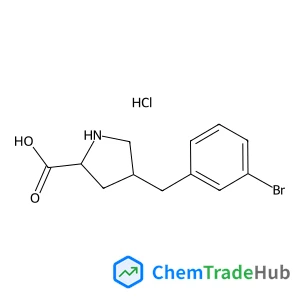
(2S,4R)-4-(3-Bromobenzyl)pyrrolidine-2-carboxylic acid hydrochloride
CAS Number:
1049734-10-2
Molecular Formula:
C12H15BrClNO2
![2-[(E)-(2-Methoxyphenyl)diazenyl]-3-oxo-N-(2-oxo-2,3-dihydro-1H-benzimidazol-5-yl)butanamide structure](https://static.chemtradehub.com/structs/821/82199-12-0-f1d0.webp "2-[(E)-(2-Methoxyphenyl)diazenyl]-3-oxo-N-(2-oxo-2,3-dihydro-1H-benzimidazol-5-yl)butanamide structure")
2-[(E)-(2-Methoxyphenyl)diazenyl]-3-oxo-N-(2-oxo-2,3-dihydro-1H-benzimidazol-5-yl)butanamide
CAS Number:
82199-12-0
Molecular Formula:
C18H17N5O4
Recommended Suppliers





Disclaimer
This page provides academic journal information for reference and research purposes only. We are not affiliated with any journal publishers and do not handle publication submissions. For publication-related inquiries, please contact the respective journal publishers directly.
If you notice any inaccuracies in the information displayed, please contact us at support@chemtradehub.com. We will promptly review and address your concerns.