












Investigating the relationship between changes in collagen fiber orientation during skin aging and collagen/water interactions by polarized-FTIR microimaging
Literature Information
Publication Date
2015-06-09
DOI
10.1039/C5AN00278H
Impact Factor
4.616
Authors
View Original
Abstract
Upon chronological aging, human skin undergoes structural and molecular modifications, especially at the level of type I collagen. This macromolecule is one of the main dermal structural proteins and presents several age-related alterations. It exhibits a triple helical structure and assembles itself to form fibrils and fibers. In addition, water plays an important role in stabilizing the collagen triple helix by forming hydrogen-bonds between collagen residues. However, the influence of water on changes of dermal collagen fiber orientation with age has not been yet understood. Polarized-Fourier Transform Infrared (P-FTIR) imaging is an interesting biophotonic approach to determine in situ the orientation of type I collagen fibers, as we have recently shown by comparing skin samples of different ages. In this work, P-FTIR spectral imaging was performed on skin samples from two age groups (35- and 38-year-old on the one hand, 60- and 66-year-old on the other hand), and our analyses were focused on the effect of H2O/D2O substitution. Spectral data were processed with fuzzy C-means (FCM) clustering in order to distinguish different orientations of collagen fibers. We demonstrated that the orientation was altered with aging, and that D2O treatment, affecting primarily highly bound water molecules, is more marked for the youngest skin samples. Collagen-bound water-related spectral markers were also highlighted. Our results suggest a weakening of water/collagen interactions with age. This non-destructive and label-free methodology allows us to understand better the importance of bound water in collagen fiber orientation alterations occurring with skin aging. Obtaining such structural information could find benefits in dermatology as well as in cosmetics.
Related Literature
Diisopropylethylamine-triggered, highly efficient, self-catalyzed regioselective acylation of carbohydrates and diols
Bo Ren, Lu Gan, Li Zhang, Ningning Yan, Hai Dong
2018-07-18
Paper
DOI: 10.1039/C8OB01464G
Efficient syntheses and anti-cancer activity of xenortides A–D including ent/epi-stereoisomers
N. Esmati, A. R. Maddirala, N. Hussein, H. Amawi, A. K. Tiwari, P. R. Andreana
2018-07-05
Paper
DOI: 10.1039/C8OB00452H
Base controlled diverse reactivity of allyl cyanide for synthesis of multi-substituted benzenes
Pratik Yadav, Ranjay Shaw, Amr Elagamy, Abhinav Kumar, Ramendra Pratap
2018-07-10
Paper
DOI: 10.1039/C8OB01270A
Correction: Hydrazone-Pd-catalyzed direct intermolecular reaction of o-alkynylphenols with allylic acetates
Kohei Watanabe, Eri Ishikawa, Chihiro Masuda
2018-07-11
Correction
DOI: 10.1039/C8OB90094A
Dibenzofuran-4,6-bis(oxazoline) (DBFOX). A novel trans-chelating bis(oxazoline) ligand for asymmetric reactions
Kennosuke Itoh, Mukund P. Sibi
2018-06-18
Review Article
DOI: 10.1039/C8OB01010B
Visible-light-promoted divergent functionalizations of methylenecyclopropanes
Baoxiang Zhu, Zhao Wang, Hui Xi, Zengqiang Feng, Binglei Wang, Wenyang Jiao, Zhongxian Li, Zechao Wang, Junliang Wu
2021-09-09
Research Article
DOI: 10.1039/D1QO01187A
Bioinspired cyclization of in situ generated γ-indolyl β,γ-unsaturated α-keto esters via an oxidative enamine process: facile approaches to pyrano[2,3-b]indoles
Man Wang, Qirui Xiang, Wen Si, Ran Song, Daoshan Yang, Ming Li, Jian Lv
2021-09-17
Research Article
DOI: 10.1039/D1QO00996F
Regio- and stereoselective cobalt-catalyzed hydrosilylation of 1,3-diynes with primary and secondary silanes
Shaocong Shen, Zhijian Zong, Nan Sun, Baoxiang Hu, Zhenlu Shen, Xinquan Hu
2021-09-15
Research Article
DOI: 10.1039/D1QO00939G
Stereoselective synthesis of fluoroalkylated (Z)-alkene via nickel-catalyzed and iron-mediated hydrofluoroalkylation of alkynes
Xiang-Rui Li, Wen-Xin Li, Zhuo-Wen Zhang, Chuanji Shen, Xiaocong Zhou, Xue-Qiang Chu, Weidong Rao, Zhi-Liang Shen
2021-09-24
Research Article
DOI: 10.1039/D1QO00983D
You might also like
Compound Q&A
What are the main uses of 4-Nitrophenyl phosphate disodium salt hexahydrate (CAS: 333338-18-4)?
4-Nitrophenyl phosphate disodium salt hexahydrate is primarily used as a substra...
333338-18-44-Nitrophenyl phosph...
Compound Q&A
What are the main uses of 2-(Trifluoromethyl)-1,3-oxazole-4-carboxylic Acid (CAS: 1060816-01-4)?
2-(Trifluoromethyl)-1,3-oxazole-4-carboxylic Acid (CAS: 1060816-01-4) is widely ...
1060816-01-42-(Trifluoromethyl)-...
Compound Q&A
How should 2-Fluoro-4-biphenylcarboxylic acid (CAS: 137045-30-8) be stored?
2-Fluoro-4-biphenylcarboxylic acid should be stored in a cool, dry place at room...
137045-30-82-Fluoro-4-biphenylc...
Compound Q&A
What industries use Prednisolone-21-Carboxylic Acid (CAS: 61549-70-0)?
Prednisolone-21-Carboxylic Acid is primarily used in the pharmaceutical industry...
61549-70-0Prednisolone-21-Carb...
Compound Q&A
How should 4-(Hydrazinomethyl)-1,2,3-benzenetriol (CAS: 3614-72-0) be stored?
4-(Hydrazinomethyl)-1,2,3-benzenetriol (CAS: 3614-72-0) should be stored in a co...
3614-72-04-(Hydrazinomethyl)-...
Compound Q&A
What industries use 4-Amino-1-methyl-1H-pyrazole-5-carboxylic acid hydrochloride (CAS: 92534-70-8)?
4-Amino-1-methyl-1H-pyrazole-5-carboxylic acid hydrochloride (CAS: 92534-70-8) i...
92534-70-84-Amino-1-methyl-1H-...
Compound Q&A
What regulatory guidelines apply to dehydropachymic acid (CAS: 77012-31-8)?
Dehydropachymic acid (CAS: 77012-31-8) is regulated by various agencies. It fall...
77012-31-8Dehydropachymic acid
Compound Q&A
What is the market or research trend for 6-[(2,2-Dimethylpropanoyl)amino]nicotinic acid (CAS: 898561-66-5)?
The market and research trends for 6-[(2,2-Dimethylpropanoyl)amino]nicotinic aci...
898561-66-56-[(2,2-Dimethylprop...
Compound Q&A
How should 1,10-Phenanthroline-2,9-dicarbaldehyde (CAS: 57709-62-3) be stored?
1,10-Phenanthroline-2,9-dicarbaldehyde should be stored in a cool, dry place awa...
57709-62-31,10-Phenanthroline-...
Compound Q&A
How is 5-Carbamoyl-11-oxo-10,11-dihydro-5H-dibenzo[b,f]azepin-10-yl acetate (CAS: 113952-21-9) typically synthesized?
5-Carbamoyl-11-oxo-10,11-dihydro-5H-dibenzo[b,f]azepin-10-yl acetate can be synt...
113952-21-95-Carbamoyl-11-oxo-1...
Source Journal
Analyst

CiteScore:
7.8
Self-citation Rate:
5.6%
Articles per Year:
653
Analyst publishes analytical and bioanalytical research that reports premier fundamental discoveries and inventions, and the applications of those discoveries, unconfined by traditional discipline barriers.
Recommended Compounds
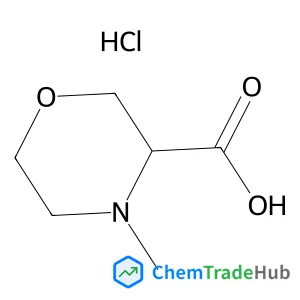
4-Methyl-3-morpholinecarboxylic acid hydrochloride (1:1)
CAS Number:
1240518-90-4
Molecular Formula:
C6H12ClNO3
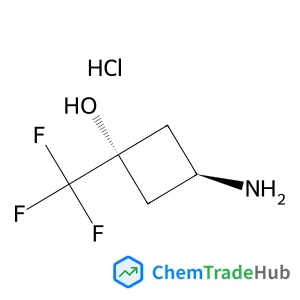
cis-3-Amino-1-(trifluoromethyl)cyclobutanol hydrochloride (1:1)
CAS Number:
1408075-16-0
Molecular Formula:
C5H9ClF3NO
Recommended Suppliers






Disclaimer
This page provides academic journal information for reference and research purposes only. We are not affiliated with any journal publishers and do not handle publication submissions. For publication-related inquiries, please contact the respective journal publishers directly.
If you notice any inaccuracies in the information displayed, please contact us at support@chemtradehub.com. We will promptly review and address your concerns.