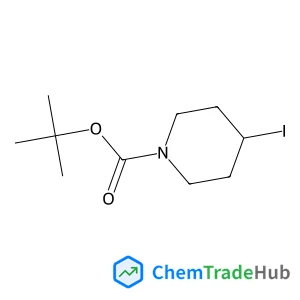
2-Methyl-2-propanyl 4-iodo-1-piperidinecarboxylate
CAS Number:
301673-14-3
Molecular Formula:
C10H18INO2
Tingting Zhao, Xiaoping Song, Wen Zhong, Lei Yu, Wenxi Hua, Malcolm M. Q. Xing, Xiaozhong Qiu
We report a 3D tumor spheroid model to study epithelial-to-mesenchymal transition (EMT) using ultra-thin matrix coated single cancer cells. The spheroid was characterized by light microscopy, fluorescence imaging, SEM, TEM and zeta potential. We then studied EMT related cellular CD47, mTOR, ERK, and HIF signaling. We compared (1) cells inside a multicellular tumor spheroid (3Dis), (2) cells migrated from the multicellular tumor spheroid (3Dms), and (3) 2D monolayer-cultured cells (2Ds) in EMT. 3Dis exhibited an abnormal nucleus with the occurrence of cell damage and accumulation of lipid droplets, and higher expression of the integrin-associated protein and dissociation of the mTOR complex than those of 2Ds and 3Dms. We examined the expressions of E- and N-cadherin, two EMT related factors, and found over-expression of E-cadherin in 2Ds, high N-cadherin in 3Dis, and high E- and weak N-cadherin in 3Dms. This implied that our model could trigger EMT. By injecting cells into a xenograft model, we found transitions of 2Ds from N-cadherin negative to positive and transitions of 3Dis from positive to negative, but not in 3Dms. 2D cells exhibited higher progression than other cells. This suggests that the in vivo 3D tumorigenesis environment could limit the capacity of cancer metastases for 3Dis but trigger the EMT process quickly for 2Ds and 3Dms.
Keigo Yosida, Kazunari Suzuki, Shun-ichi Ishiuchi, Makoto Sakai, Masaaki Fujii, Caroline E. H. Dessent, Klaus Müller-Dethlefs
DOI: 10.1039/B201107G
DOI: 10.1039/B110503E
A. Morresi, M. Ombelli, P. Sassi
DOI: 10.1039/B110225G
DOI: 10.1039/B110713E
Yoshiteru Itagaki, Peng Wang, Nobuyuki Isamoto, Masaru Shiotani, Akinori Hasegawa, Magnus Jansson, Sten Lunell
DOI: 10.1039/B200437B
DOI: 10.1039/B111437A
M. Benjelloun, P. Cool, P. Van Der Voort, E. F. Vansant
DOI: 10.1039/B108361A
DOI: 10.1039/B111335F
J. D. Barr, A. J. Bell, D. O. Konn, J. Murrell, C. M. Timperley, M. J. Waters, P. Watts
DOI: 10.1039/B111192M
Dominique M. Roberge, Heike Hausmann, Wolfgang F. Hölderich
DOI: 10.1039/B110679C
Waste containing (6-Bromo-2-naphthyl)oxy](dimethyl)(2-methyl-2-propanyl)silane (...
7-Fluoro-4-isoquinolinecarboxylic acid can be synthesized via a multi-step proce...
2,3,5,6-Tetrabromothieno[3,2-b]thiophene is a crystalline compound with a high m...
1-[4-(Benzylamino)-7,8-dihydro-5H-pyrano[4,3-d]pyrimidin-2-yl]-2-methyl-1H-indol...
The market for imidazo[5,1-d]-1,2,3,5-tetrazine-8-carboxylic acid, 3,4-dihydro-3...
3-(Triisopropylsilyl)propiolaldehyde is a synthetic organic compound with the CA...
6-Nitro-2H-1,4-benzoxazin-3(4H)-one (CAS: 81721-87-1) is subject to various regu...
Waste containing (3-Fluorophenyl)(4-{[(2-methyl-2-propanyl)oxy]carbonyl}-1-piper...
N,N'-4,4'-Biphenyldiyldiisonicotinamide is a white crystalline solid with a mole...
6-Bromo-8-fluoro-2-quinazolinol is primarily used in the pharmaceutical industry...

Polymer Chemistry welcomes submissions in all areas of polymer science that have a strong focus on macromolecular chemistry. Manuscripts may cover a broad range of fields, yet no direct application focus is required.
![2-{[4-(2-Methoxyethyl)phenoxy]methyl}oxirane structure](https://static.chemtradehub.com/structs/567/56718-70-8-f037.webp "2-{[4-(2-Methoxyethyl)phenoxy]methyl}oxirane structure")