












Template extraction from porous clay heterostructures: Influence on the porosity and the hydrothermal stability of the materials
Literature Information
Publication Date
2002-05-13
DOI
10.1039/B108361A
Impact Factor
3.676
Authors
M. Benjelloun, P. Cool, P. Van Der Voort, E. F. Vansant
View Original
Abstract
The template extraction of two porous clay heterostructures (PCHs), derived from natural montmorillonite (PMH) and synthetic saponite (PSH), has been studied. Extraction in methanol solvent in the presence of cations (H+) removes up to 90% of the templates in a reproducible way without a subsequent calcination step for both PMH and PSH. The extracted materials have a high surface area (896 m2 g−1 for PMH and 1122 m2 g−1 for PSH) and pore volume (0.84 cm3 g−1 for PMH and 1.13 cm3 g−1 for PSH) and are structurally very stable when exposed to hydrothermal conditions. The number of silanol groups on the surface of PCH materials have been titrated by a surface reaction with hexamethyldisilazane, followed by quantification of the liberated NH3. Based on this method both extracted PMH and PSH have slightly higher silanol numbers than their calcined forms, a very important feature with respect to the amount of catalytic sites that can eventually be grafted onto the surface. The hydrothermal stability under a N2 flow containing 25% steam for 5 days at different temperatures between 400 °C and 700 °C for both calcined and extracted PMH and PSH was investigated using X-ray diffraction and N2-adsorption data. A remarkable hydrothermal stability was observed for all samples until 600 °C, a promising characteristic for applications of porous clay heterostructures.
Related Literature
A review on polyhydroxyalkanoate (PHA) production through the use of lignocellulosic biomass
Deepak Kumar, B. V. Ramarao
2023-09-20
Critical Review
DOI: 10.1039/D3SU00126A
Highly selective Ag foam gas diffusion electrodes for CO2 electroreduction by pulsed hydrogen bubble templation
Hendrik Hoffmann, Maximilian Kutter, Jens Osiewacz, Melanie-Cornelia Paulisch-Rinke, Steffen Lechner, Barbara Ellendorff, Annika Hilgert, Ingo Manke, Thomas Turek, Christina Roth
2023-10-09
Paper
DOI: 10.1039/D3EY00220A
Separation of coal combustion residue for critical element extraction and other bulk uses
Siddharth Bari
2023-11-14
Paper
DOI: 10.1039/D3VA00186E
Thermoresponsive polymers with LCST transition: synthesis, characterization, and their impact on biomedical frontiers
Yichun Yuan, Konpal Raheja, Nathalie B. Milbrandt, Sophia Beilharz, Steffy Tene, Solomon Oshabaheebwa, Anna Cristina S. Samia, Metin Karayilan
2023-08-29
Review Article
DOI: 10.1039/D3LP00114H
Polybrominated diphenyl ethers in the grey-headed gull (Larus cirrocephalus) and African sacred ibis (Threskiornis aethiopicus)
C. Emereole, R. Jansen, O. J. Okonkwo
2023-10-04
Paper
DOI: 10.1039/D3VA00119A
Superior single- and multi-component siloxane removal from water using a faulted silica DON zeolite adsorbent
Dariana R. Vega-Santander, Rodinson Arrieta-Pérez, Daniela Rivera-Mirabal, Gabriela Del Valle-Pérez, Miguel Sepúlveda-Pagán, Juan C. Muñoz-Senmache, Yomaira J. Pagán-Torres, Arturo J. Hernández-Maldonado
2023-11-10
Paper
DOI: 10.1039/D3VA00282A
Subambient passive radiative cooling effects of barium sulfate and calcium carbonate paints under Malaysia's tropical climate
William Raphael Joseph, Jun Yeang Tan, Apurav Krishna Koyande, Ianatul Khoiroh, Jerry Joynson, Steve Willis
2023-10-24
Paper
DOI: 10.1039/D3VA00161J
Radical polymers in optoelectronic and spintronic applications
Hyunki Yeo, Suman Debnath, Baiju P. Krishnan
2023-12-20
Perspective
DOI: 10.1039/D3LP00213F
You might also like
Compound Q&A
How should waste containing (6-Bromo-2-naphthyl)oxy](dimethyl)(2-methyl-2-propanyl)silane be handled?
Waste containing (6-Bromo-2-naphthyl)oxy](dimethyl)(2-methyl-2-propanyl)silane (...
100751-65-3[(6-Bromo-2-naphthyl...
Compound Q&A
How is 7-Fluoro-4-isoquinolinecarboxylic acid (CAS: 1841081-40-0) typically synthesized?
7-Fluoro-4-isoquinolinecarboxylic acid can be synthesized via a multi-step proce...
1841081-40-07-Fluoro-4-isoquinol...
Compound Q&A
What are the physical and chemical properties of 2,3,5,6-Tetrabromothieno[3,2-b]thiophene (CAS: 124638-53-5)?
2,3,5,6-Tetrabromothieno[3,2-b]thiophene is a crystalline compound with a high m...
124638-53-52,3,5,6-Tetrabromoth...
Compound Q&A
Is 1-[4-(Benzylamino)-7,8-dihydro-5H-pyrano[4,3-d]pyrimidin-2-yl]-2-methyl-1H-indole-4-carboxamide (CAS: 1542705-92-9) safe?
1-[4-(Benzylamino)-7,8-dihydro-5H-pyrano[4,3-d]pyrimidin-2-yl]-2-methyl-1H-indol...
1542705-92-91-[4-(Benzylamino)-7...
Compound Q&A
What is the market or research trend for imidazo[5,1-d]-1,2,3,5-tetrazine-8-carboxylic acid, 3,4-dihydro-3-methyl-4-oxo- (CAS: 113942-30-6)?
The market for imidazo[5,1-d]-1,2,3,5-tetrazine-8-carboxylic acid, 3,4-dihydro-3...
113942-30-6Imidazo[5,1-d]-1,2,3...
Compound Q&A
What is 3-(Triisopropylsilyl)propiolaldehyde (CAS: 163271-80-5)?
3-(Triisopropylsilyl)propiolaldehyde is a synthetic organic compound with the CA...
163271-80-53-(Triisopropylsilyl...
Compound Q&A
What regulatory guidelines apply to 6-Nitro-2H-1,4-benzoxazin-3(4H)-one (CAS: 81721-87-1)?
6-Nitro-2H-1,4-benzoxazin-3(4H)-one (CAS: 81721-87-1) is subject to various regu...
81721-87-16-Nitro-2H-1,4-benzo...
Compound Q&A
How should waste containing (3-Fluorophenyl)(4-{[(2-methyl-2-propanyl)oxy]carbonyl}-1-piperazinyl)acetic acid (CAS: 885272-91-3) be handled?
Waste containing (3-Fluorophenyl)(4-{[(2-methyl-2-propanyl)oxy]carbonyl}-1-piper...
885272-91-3(3-Fluorophenyl)(4-{...
Compound Q&A
What are the physical and chemical properties of N,N'-4,4'-Biphenyldiyldiisonicotinamide (CAS: 55119-40-9)?
N,N'-4,4'-Biphenyldiyldiisonicotinamide is a white crystalline solid with a mole...
55119-40-9N,N'-4,4'-Biphenyldi...
Compound Q&A
What industries use 6-Bromo-8-fluoro-2-quinazolinol (CAS: 1036756-15-6)?
6-Bromo-8-fluoro-2-quinazolinol is primarily used in the pharmaceutical industry...
1036756-15-66-Bromo-8-fluoro-2-q...
Source Journal
Physical Chemistry Chemical Physics

CiteScore:
5.5
Self-citation Rate:
10.3%
Articles per Year:
3036
Physical Chemistry Chemical Physics (PCCP) is an international journal co-owned by 19 physical chemistry and physics societies from around the world. This journal publishes original, cutting-edge research in physical chemistry, chemical physics and biophysical chemistry. To be suitable for publication in PCCP, articles must include significant innovation and/or insight into physical chemistry; this is the most important criterion that reviewers and Editors will judge against when evaluating submissions. The journal has a broad scope and welcomes contributions spanning experiment, theory, computation and data science. Topical coverage includes spectroscopy, dynamics, kinetics, statistical mechanics, thermodynamics, electrochemistry, catalysis, surface science, quantum mechanics, quantum computing and machine learning. Interdisciplinary research areas such as polymers and soft matter, materials, nanoscience, energy, surfaces/interfaces, and biophysical chemistry are welcomed if they demonstrate significant innovation and/or insight into physical chemistry. Joined experimental/theoretical studies are particularly appreciated when complementary and based on up-to-date approaches.
Recommended Compounds
![N-[(E)-Phenylmethylene]benzenesulfonamide structure](https://static.chemtradehub.com/structs/139/13909-34-7-8167.webp "N-[(E)-Phenylmethylene]benzenesulfonamide structure")

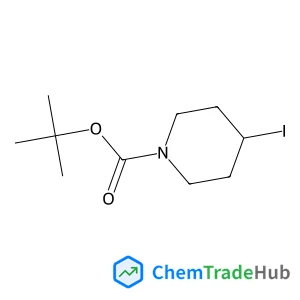
2-Methyl-2-propanyl 4-iodo-1-piperidinecarboxylate
CAS Number:
301673-14-3
Molecular Formula:
C10H18INO2
Recommended Suppliers



Disclaimer
This page provides academic journal information for reference and research purposes only. We are not affiliated with any journal publishers and do not handle publication submissions. For publication-related inquiries, please contact the respective journal publishers directly.
If you notice any inaccuracies in the information displayed, please contact us at support@chemtradehub.com. We will promptly review and address your concerns.