












Construction of reverse vesicles from pseudo-graft poly(glycerol methacrylate)s via cyclodextrin–cholesterol interactions
Literature Information
Publication Date
2014-07-15
DOI
10.1039/C4PY00848K
Impact Factor
5.582
Authors
Wen-Xing Gu, Ying-Wei Yang, Jijie Wen, Hongguang Lu, Hui Gao
View Original
Abstract
A new type of reverse vesicle was successfully constructed from pseudo-graft amphiphilic copolymers in dichloromethane, by dint of the host–guest inclusion complexation between β-cyclodextrins and cholesterols. Pseudo-graft copolymers were constructed from β-cyclodextrin conjugated linear or star-shaped poly(glycerol methacrylate)s (PGMAs) of different molecular weights and a cholesterol-ended linear polylactide. The Z-average diameter of reverse vesicles was in the range of 150–350 nm with an ideal narrow polydispersity, and could be tuned by adjusting the molecular weight and branching of backbone PGMAs. Interestingly, these reverse vesicles could be transformed into organogels under specified conditions, i.e. the concentration of reverse vesicles was >1.5 g L−1, and the DCM–H2O ratio (v/v) was 8 : 1. Extraction of Congo red from the aqueous phase to the organic phase showed good cargo encapsulation capability of reverse vesicles, demonstrating their great potential as carriers or nanoreactors.
Related Literature
Flatbands in 2D boroxine-linked covalent organic frameworks
Rui-Ning Wang, Xin-Ran Zhang, Shu-Fang Wang, Guang-Sheng Fu, Jiang-Long Wang
2015-11-27
Paper
DOI: 10.1039/C5CP05313G
Size-dependent strain and surface energies of gold nanoclusters
S. Ali, V. S. Myasnichenko, E. C. Neyts
2015-11-18
Paper
DOI: 10.1039/C5CP06153A
Spontaneous transition of a water droplet from the Wenzel state to the Cassie state: a molecular dynamics simulation study
Jiadao Wang, Shuai Chen, Darong Chen
2015-10-22
Paper
DOI: 10.1039/C5CP05045F
Methane partial oxidation using FeOx@La0.8Sr0.2FeO3−δ core–shell catalyst – transient pulse studies
Arya Shafiefarhood, Joseph Clay Hamill, Luke Michael Neal, Fanxing Li
2015-11-02
Paper
DOI: 10.1039/C5CP05583K
TD-DFT study of the light-induced spin crossover of Fe(iii) complexes
Sergi Saureu
2015-12-02
Paper
DOI: 10.1039/C5CP06620D
The electrochemical oxidation of toluene catalysed by Co(ii) in N-butyl-N-methylpyrrolidinium bis(trifluoromethylsulfonyl)imide‡
S. Balaji, K. Kannan, I. S. Moon
2015-10-29
Communication
DOI: 10.1039/C5CP04151A
Testing the transferability of a coarse-grained model to intrinsically disordered proteins
Gil O. Rutter, David Quigley, Tiffany R. Walsh
2015-11-05
Paper
DOI: 10.1039/C5CP05652G
The pH dependence of OH radical formation in photo-electrochemical water oxidation with rutile TiO2 single crystals
Yukihiro Nakabayashi, Yoshio Nosaka
2015-10-23
Paper
DOI: 10.1039/C5CP04531B
Precursor-route ZnO films from a mixed casting solvent for high performance aqueous electrolyte-gated transistors
Talal M. Althagafi, Saud A. Algarni, Abdullah Al Naim, Javed Mazher, Martin Grell
2015-10-26
Paper
DOI: 10.1039/C5CP03326H
Proton transport mechanism of imidazole, triazole and phosphoric acid mixtures from ab initio molecular dynamics simulations
Swagata Pahari, Sudip Roy
2015-10-22
Paper
DOI: 10.1039/C5CP05735C
You might also like
Compound Q&A
What is 3-Fluoro-2-methylbenzylamine (CAS: 771573-36-5)?
3-Fluoro-2-methylbenzylamine is an organic compound with the CAS number 771573-3...
771573-36-53-Fluoro-2-methylben...
Compound Q&A
Is Tert-butyl 2-(oxetan-3-ylidene)acetate (CAS: 1207175-03-8) safe?
Tert-butyl 2-(oxetan-3-ylidene)acetate is considered safe for its intended uses ...
1207175-03-8Tert-butyl 2-(oxetan...
Compound Q&A
What precautions should be taken when handling 4-Acetyl-2-fluorobenzonitrile (CAS: 214760-18-6)?
Proper personal protective equipment (PPE) such as gloves, goggles, and a lab co...
214760-18-64-Acetyl-2-fluoroben...
Compound Q&A
How is 2-Ethyl-4-methyl-1,3-thiazole (CAS: 15679-12-6) typically synthesized?
2-Ethyl-4-methyl-1,3-thiazole is commonly synthesized via the reaction of thiour...
15679-12-62-Ethyl-4-methyl-1,3...
Compound Q&A
How should 5',5''-([2,2'-Bithiophene]-5,5'-diyl)bis(([1,1':3',1''-terphenyl]-4,4''-dicarboxylic acid)) (CAS: 1227780-71-3) be stored?
This compound should be stored in a cool, dry place away from direct sunlight an...
1227780-71-35',5''''-([2,2'-Bith...
Compound Q&A
What regulatory guidelines apply to L-Lysine Acetate Salt (CAS: 52315-92-1)?
L-Lysine Acetate Salt (CAS: 52315-92-1) is subject to various regulatory guideli...
52315-92-1L-LYSINE ACETATE SAL...
Compound Q&A
Is 6-Fluoro-3-hydroxy-2-pyrazinecarboxamide (CAS: 259793-96-9) safe?
6-Fluoro-3-hydroxy-2-pyrazinecarboxamide (CAS: 259793-96-9) is generally conside...
259793-96-96-Fluoro-3-hydroxy-2...
Compound Q&A
What are the physical and chemical properties of 1,1'-Sulfonylbis(1H-imidazole) (CAS: 7189-69-7)?
1,1'-Sulfonylbis(1H-imidazole) is a crystalline solid with a molecular weight of...
7189-69-71,1'-Sulfonylbis(1H-...
Compound Q&A
What industries use 4-methyl-7-nitro-1H-indole-3-carbonitrile (CAS: 289483-82-5)?
4-Methyl-7-nitro-1H-indole-3-carbonitrile (CAS: 289483-82-5) is primarily used i...
289483-82-54-methyl-7-nitro-1H-...
Compound Q&A
How should waste containing 5-Bromo-3-indolyl-beta-galactoside (CAS: 97753-82-7) be handled?
Waste containing 5-Bromo-3-indolyl-beta-galactoside (CAS: 97753-82-7) should be ...
97753-82-75-Bromo-3-indolyl-be...
Source Journal
Polymer Chemistry

CiteScore:
8.6
Self-citation Rate:
7.3%
Articles per Year:
457
Polymer Chemistry welcomes submissions in all areas of polymer science that have a strong focus on macromolecular chemistry. Manuscripts may cover a broad range of fields, yet no direct application focus is required.
Recommended Compounds
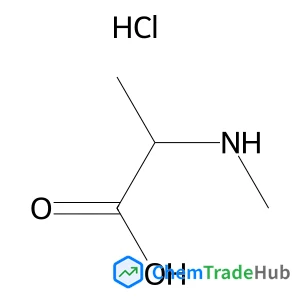
(R)-2-(Methylamino)propanoic acid hydrochloride
CAS Number:
1155878-14-0
Molecular Formula:
C4H10ClNO2
Recommended Suppliers




Disclaimer
This page provides academic journal information for reference and research purposes only. We are not affiliated with any journal publishers and do not handle publication submissions. For publication-related inquiries, please contact the respective journal publishers directly.
If you notice any inaccuracies in the information displayed, please contact us at support@chemtradehub.com. We will promptly review and address your concerns.