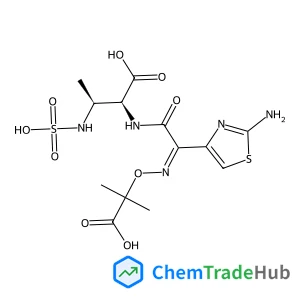
Aztreonam USP Related Compound A (Open-ring Aztreonam)
CAS Number:
87500-74-1
Molecular Formula:
C13H19N5O9S2
Shiyang Shao, Junqiao Ding, Lixiang Wang, Xiabin Jing, Fosong Wang
A series of blue-emitting poly(spirobifluorene)s (PSFs), namely, Cz-PSF, 4RO-PSF and DPA-PSF, have been designed and synthesized by incorporating 2,7-bis(3,6-di-tert-butyl-9H-carbazol-9-yl)-9H-fluorene (CzF), 2,3,6,7-tetraoctyloxyfluorene (4ROF) and N,N′,N′′,N′′′-tetrakis(4-butylphenyl)-9H-fluorene-2,7-diamine (DPAF) as their electron-rich side chains, respectively. Consistent with their measured HOMO levels (CzF: −5.40 eV; 4ROF: −5.17 eV; DPAF: −4.86 eV), the donor strength of the pendant is enhanced in the sequence CzF < 4ROF < DPAF. As a result, the charge transfer (CT) effect from the pendant to the backbone is found to be gradually intensified on going from Cz-PSF to 4RO-PSF and DPA-PSF. The emission maximum is accordingly red-shifted from 423 nm for Cz-PSF to 452 nm for 4RO-PSF and 482 nm for DPA-PSF, which is associated with a significant decrease in the photoluminescent quantum yields. Compared with 4RO-PSF, the copolymer Cz-PSF containing a weaker donor shows deep-blue emission with CIE coordinates of (0.16, 0.09–0.12) and a peak luminous efficiency of 2.21 cd A−1. These results indicate that the CT effect can be effectively tuned to realize high-performance deep-blue-emitting PSFs by the manipulation of the electron-donating ability of their spiro-conjugated side chains.
Chad M. Amb, Justin A. Kerszulis, Emily J. Thompson, Aubrey L. Dyer, John R. Reynolds
DOI: 10.1039/C0PY00405G
Peisheng Zhang, Gang Fang, Chao Weng, Jia Hu, Pinggui Yi, Xianyong Yu, Xiaofang Li
DOI: 10.1039/C2PY00525E
Debasis Pati, Ashif Y. Shaikh, Sayam Sen Gupta
DOI: 10.1039/C0PY00412J
Robert Luxenhofer, Rudolf Zentel, María J. Vicent
DOI: 10.1039/C0PY00406E
Xingjie Zan, Bo Peng, David A. Hoagland, Zhaohui Su
DOI: 10.1039/C1PY00280E
Lian R. Hutchings, Richard L. Thompson
DOI: 10.1039/C0PY00362J
Mark Long, Suzanne H. Rogers, David W. Thornthwaite, Francis R. Livens, Steve P. Rannard
DOI: 10.1039/C0PY00275E
Chaoliang He, Xiuli Zhuang, Xuesi Chen
DOI: 10.1039/C1PY00281C
Rohidas Bhoi, Sanjay Mahajani
DOI: 10.1039/C7RE00205J
3-Fluoro-2-methylbenzylamine is an organic compound with the CAS number 771573-3...
Tert-butyl 2-(oxetan-3-ylidene)acetate is considered safe for its intended uses ...
Proper personal protective equipment (PPE) such as gloves, goggles, and a lab co...
2-Ethyl-4-methyl-1,3-thiazole is commonly synthesized via the reaction of thiour...
This compound should be stored in a cool, dry place away from direct sunlight an...
L-Lysine Acetate Salt (CAS: 52315-92-1) is subject to various regulatory guideli...
6-Fluoro-3-hydroxy-2-pyrazinecarboxamide (CAS: 259793-96-9) is generally conside...
1,1'-Sulfonylbis(1H-imidazole) is a crystalline solid with a molecular weight of...
4-Methyl-7-nitro-1H-indole-3-carbonitrile (CAS: 289483-82-5) is primarily used i...
Waste containing 5-Bromo-3-indolyl-beta-galactoside (CAS: 97753-82-7) should be ...

Polymer Chemistry welcomes submissions in all areas of polymer science that have a strong focus on macromolecular chemistry. Manuscripts may cover a broad range of fields, yet no direct application focus is required.
![2-Methyl-2-propanyl [(2S)-1-hydroxy-3-(4-hydroxyphenyl)-2-propanyl]carbamate structure](https://static.chemtradehub.com/structs/833/83345-46-4-eec2.webp "2-Methyl-2-propanyl [(2S)-1-hydroxy-3-(4-hydroxyphenyl)-2-propanyl]carbamate structure")