


Structure-dependent water transport across nanopores of carbon nanotubes: toward selective gating upon temperature regulation
Literature Information
Publication Date
2015-03-17
DOI
10.1039/C4CP06054G
Impact Factor
3.676
Authors
Kuiwen Zhao, Huiying Wu
View Original
Abstract
Determining water structure in nanopores and its influence on water transport behaviour is of great importance for understanding and regulating the transport across nanopores. Here we report an ultrafast-slow flow transition phenomenon for water transport across nanopores of carbon nanotubes owing to the change in water structure in nanopores induced by temperature. By performing extensive molecular dynamics simulations, we show the dependence of water transport behaviours on water structures. Our results indicate that owing to the change in water structure in nanopores, water flux across nanopores with certain pore sizes decreases sharply (nearly 3 orders of magnitude) with the decreasing temperature. This phenomenon is very sensitive to the pore size. The threshold temperatures for the occurrence of the ultrafast-slow flow transition for water transport are also determined for various pore sizes. These findings suggest a novel protocol for selective gating of water and proton conduction across nanopores and temperature-controlled drug release.
Recommended Journals

Saudi Pharmaceutical Journal

Russian Journal of General Chemistry

New Journal of Chemistry

Chemical Communications

Russian Journal of Coordination Chemistry

Journal of Natural Medicines

Russian Chemical Bulletin

Russian Journal of Organic Chemistry

Russian Journal of Bioorganic Chemistry

Organic Process Research & Development
Related Literature
Effects of water molecules on the chemical stability of MAGeI3 perovskite explored from a theoretical viewpoint
Ping-Ping Sun, Wei-Jie Chi, Ze-Sheng Li
2016-08-01
Paper
DOI: 10.1039/C6CP04344E
The photoenhanced aging process of soot by the heterogeneous ozonization reaction
2016-08-01
Paper
DOI: 10.1039/C6CP03938C
Charge transfer reactions between gas-phase hydrated electrons, molecular oxygen and carbon dioxide at temperatures of 80–300 K
Wai Kit Tang, Han Zhang, Chi-Kit Siu
2016-07-30
Paper
DOI: 10.1039/C6CP03324E
Photoionization-induced π ↔ H site switching dynamics in phenol+–Rg (Rg = Ar, Kr) dimers probed by picosecond time-resolved infrared spectroscopy
Mitsuhiko Miyazaki, Yuri Sakata, Markus Schütz, Otto Dopfer, Masaaki Fujii
2016-08-15
Paper
DOI: 10.1039/C6CP05016F
Micelle formation of a non-ionic surfactant in non-aqueous molecular solvents and protic ionic liquids (PILs)
Frances Separovic, Calum J. Drummond, Tamar L. Greaves
2016-08-08
Paper
DOI: 10.1039/C6CP03332F
Utilization of the Donnan potential induced by reverse salt flux in pressure retarded osmosis systems
Chul Ho Park, Sung Jo Kwak, Joo-Youn Nam, Moon Seok Jang, Jung-Hyun Lee
2016-08-15
Communication
DOI: 10.1039/C6CP03939A
From bulk to plasmonic nanoparticle surfaces: the behavior of two potent therapeutic peptides, octreotide and pasireotide
Belén Hernández, Eduardo López-Tobar, Santiago Sanchez-Cortes, Yves-Marie Coïc, Bruno Baron, Alexandre Chenal, Fernando Pflüger, Régis Cohen, Mahmoud Ghomi
2016-08-03
Paper
DOI: 10.1039/C6CP04421B
First hyperpolarizability of para-aminoaniline induced by a variety of gold nano particles
Stine T. Olsen, Kurt V. Mikkelsen
2016-08-18
Paper
DOI: 10.1039/C6CP01078D
Is the manifestation of the local dynamics in the spin–lattice NMR relaxation in dendrimers sensitive to excluded volume interactions?
2016-08-17
Paper
DOI: 10.1039/C6CP01520D
Hydrogen evolution in [NiFe] hydrogenases and related biomimetic systems: similarities and differences
Ranjita Das, Frank Neese, Maurice van Gastel
2016-08-10
Paper
DOI: 10.1039/C6CP03672D
You might also like
Compound Q&A
Is 2-(2-chloroacetamido)-3-phenylpropanoic acid (CAS: 7765-11-9) safe?
2-(2-Chloroacetamido)-3-phenylpropanoic acid (CAS: 7765-11-9) is generally consi...
7765-11-92-(2-chloroacetamido...
Compound Q&A
Is 2-(Benzyloxy)-5-bromobenzoic acid (CAS: 62176-31-2) safe?
2-(Benzyloxy)-5-bromobenzoic acid can be handled safely if appropriate precautio...
62176-31-22-(Benzyloxy)-5-brom...
Compound Q&A
What is (4-Methyl-1,2,5-oxadiazol-3-yl)methanamine hydrochloride (CAS: 1159825-48-5)?
(4-Methyl-1,2,5-oxadiazol-3-yl)methanamine hydrochloride is a chemical compound ...
1159825-48-5(4-Methyl-1,2,5-oxad...
Compound Q&A
What is 2-(5-Hexylthiophen-2-yl)-4,4,5,5-tetramethyl-1,3,2-dioxaborolane (CAS: 917985-54-7)?
2-(5-Hexylthiophen-2-yl)-4,4,5,5-tetramethyl-1,3,2-dioxaborolane (CAS: 917985-54...
917985-54-72-(5-Hexylthiophen-2...
Compound Q&A
Are there alternatives to 4-(8-Methyl-9H-1,3-dioxolo[4,5-h][2,3]benzodiazepin-5-yl)benzenamine (CAS: 102771-26-6) in synthesis?
While 4-(8-Methyl-9H-1,3-dioxolo[4,5-h][2,3]benzodiazepin-5-yl)benzenamine (CAS:...
102771-26-64-(8-Methyl-9H-1,3-d...
Compound Q&A
What is the market or research trend for tert-butyl 3-hydroxy-4,5,7,8-tetrahydro-2H-pyrazolo[3,4-d]azepine-6-carboxylate (CAS: 851376-80-2)?
The market for tert-butyl 3-hydroxy-4,5,7,8-tetrahydro-2H-pyrazolo[3,4-d]azepine...
851376-80-2tert-butyl 3-hydroxy...
Compound Q&A
How should waste containing 3,5-Diamino-1H-pyrazole-4-carbonitrile (CAS: 6844-58-2) be handled?
Waste containing 3,5-Diamino-1H-pyrazole-4-carbonitrile (CAS: 6844-58-2) should ...
6844-58-23,5-Diamino-1H-pyraz...
Compound Q&A
How is (6-Fluoro-3-pyridinyl)boronic acid (CAS: 351019-18-6) typically synthesized?
(6-Fluoro-3-pyridinyl)boronic acid can be synthesized through the reaction of 6-...
351019-18-6(6-Fluoro-3-pyridiny...
Compound Q&A
What industries use Dibenzyl carbonimidoylbiscarbamate (CAS: 10065-79-9)?
Dibenzyl carbonimidoylbiscarbamate (CAS: 10065-79-9) finds applications in vario...
10065-79-9Dibenzyl carbonimido...
Compound Q&A
What is the market or research trend for (beta,beta,2,3,4,5,6-~2~H_7_)Phenylalanine (CAS: 74228-83-4)?
The market for (beta,beta,2,3,4,5,6-~2~H_7_)Phenylalanine (CAS: 74228-83-4) is g...
74228-83-4(beta,beta,2,3,4,5,6...
Source Journal
Physical Chemistry Chemical Physics

CiteScore:
5.5
Self-citation Rate:
10.3%
Articles per Year:
3036
Physical Chemistry Chemical Physics (PCCP) is an international journal co-owned by 19 physical chemistry and physics societies from around the world. This journal publishes original, cutting-edge research in physical chemistry, chemical physics and biophysical chemistry. To be suitable for publication in PCCP, articles must include significant innovation and/or insight into physical chemistry; this is the most important criterion that reviewers and Editors will judge against when evaluating submissions. The journal has a broad scope and welcomes contributions spanning experiment, theory, computation and data science. Topical coverage includes spectroscopy, dynamics, kinetics, statistical mechanics, thermodynamics, electrochemistry, catalysis, surface science, quantum mechanics, quantum computing and machine learning. Interdisciplinary research areas such as polymers and soft matter, materials, nanoscience, energy, surfaces/interfaces, and biophysical chemistry are welcomed if they demonstrate significant innovation and/or insight into physical chemistry. Joined experimental/theoretical studies are particularly appreciated when complementary and based on up-to-date approaches.
Recommended Compounds
![Ethyl thieno[3,2-f]quinoline-2-carboxylate structure](https://static.chemtradehub.com/structs/299/29948-26-3-f62b.webp "Ethyl thieno[3,2-f]quinoline-2-carboxylate structure")
![2-[(E)-(2-Methoxyphenyl)diazenyl]-3-oxo-N-(2-oxo-2,3-dihydro-1H-benzimidazol-5-yl)butanamide structure](https://static.chemtradehub.com/structs/821/82199-12-0-f1d0.webp "2-[(E)-(2-Methoxyphenyl)diazenyl]-3-oxo-N-(2-oxo-2,3-dihydro-1H-benzimidazol-5-yl)butanamide structure")
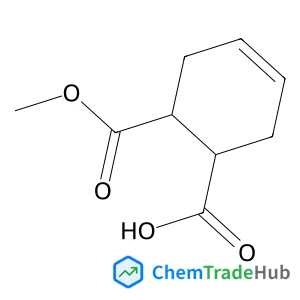
2-[(E)-(2-Methoxyphenyl)diazenyl]-3-oxo-N-(2-oxo-2,3-dihydro-1H-benzimidazol-5-yl)butanamide
CAS Number:
82199-12-0
Molecular Formula:
C18H17N5O4
Recommended Suppliers






Disclaimer
This page provides academic journal information for reference and research purposes only. We are not affiliated with any journal publishers and do not handle publication submissions. For publication-related inquiries, please contact the respective journal publishers directly.
If you notice any inaccuracies in the information displayed, please contact us at support@chemtradehub.com. We will promptly review and address your concerns.