












3-Methylpiperidinium ionic liquids
Literature Information
Publication Date
2015-01-28
DOI
10.1039/C4CP05936K
Impact Factor
3.676
Authors
Tayeb Belhocine, Stewart A. Forsyth, H. Q. Nimal Gunaratne, Mark Nieuwenhuyzen, Peter Nockemann, Alberto V. Puga, Kenneth R. Seddon, Geetha Srinivasan, Keith Whiston
View Original
Abstract
A wide range of room temperature ionic liquids based on the 3-methylpiperdinium cation core were produced from 3-methylpiperidine, which is a derivative of DYTEK® A amine. First, reaction with 1-bromoalkanes or 1-bromoalkoxyalkanes generated the corresponding tertiary amines (Rmβpip, R = alkyl or alkoxyalkyl); further quaternisation reactions with the appropriate methylating agents yielded the quaternary [Rmmβpip]X salts (X− = I−, [CF3CO2]− or [OTf]−; Tf = –SO2CF3), and [Rmmβpip][NTf2] were prepared by anion metathesis from the corresponding iodides. All [NTf2]− salts are liquids at room temperature. [Rmmβpip]X (X− = I−, [CF3CO2]− or [OTf]−) are low-melting solids when R = alkyl, but room temperature liquids upon introduction of ether functionalities on R. Neither of the 3-methylpiperdinium ionic liquids showed any signs of crystallisation, even well below 0 °C. Some related non-C-substituted piperidinium and pyrrolidinium analogues were prepared and studied for comparison. Crystal structures of 1-hexyl-1,3-dimethylpiperidinium tetraphenylborate, 1-butyl-3-methylpiperidinium bromide, 1-(2-methoxyethyl)-1-methylpiperidinium chloride and 1-(2-methoxyethyl)-1-methylpyrrolidinium bromide are reported. Extensive structural and physical data are collected and compared to literature data, with special emphasis on the systematic study of the cation ring size and/or asymmetry effects on density, viscosity and ionic conductivity, allowing general trends to be outlined. Cyclic voltammetry shows that 3-methylpiperidinium ionic liquids, similarly to azepanium, piperidinium or pyrrolidinium counterparts, are extremely electrochemically stable; the portfolio of useful alternatives for safe and high-performing electrolytes is thus greatly extended.
Related Literature
Characterizing a nonclassical carbene with coupled cluster methods: cyclobutylidene
Xiao Wang, Jay Agarwal, Henry F. Schaefer III
2016-08-09
Paper
DOI: 10.1039/C6CP03513B
The influence of LiH on the rehydrogenation behavior of halide free rare earth (RE) borohydrides (RE = Pr, Er)
Michael Heere, Seyed Hosein Payandeh GharibDoust, Christoph Frommen, Magnus H. Sørby, Torben R. Jensen, Bjørn C. Hauback
2016-08-12
Paper
DOI: 10.1039/C6CP04523E
A comparison of adsorbed and grafted fibronectin coatings under static and dynamic conditions
Sergio Díaz-Rodríguez, Ranna Tolouei, Pascale Chevallier, Emmanuel Pauthe, Diego Mantovani
2016-08-08
Paper
DOI: 10.1039/C6CP04527H
A new class of N–H excited-state intramolecular proton transfer (ESIPT) molecules bearing localized zwitterionic tautomers
Anton J. Stasyuk, Yi-Ting Chen, Chi-Lin Chen, Pei-Jhen Wu, Pi-Tai Chou
2016-08-11
Paper
DOI: 10.1039/C6CP05236C
Hard magnetism in structurally engineered silica nanocomposite
Jeffrey I. Zink
2016-08-02
Paper
DOI: 10.1039/C6CP04843A
How do random superficial defects influence the electro-oxidation of glycerol on Pt(111) surfaces?
Pablo S. Fernández, Polina Tereshchuk, Camilo A. Angelucci, Janaina F. Gomes, Amanda C. Garcia, Cauê A. Martins, Giuseppe A. Camara, María E. Martins, Juarez L. F. Da Silva, Germano Tremiliosi-Filho
2016-08-16
Paper
DOI: 10.1039/C6CP04768H
Wetting dynamics of a water nanodrop on graphene
Joseph Eugene Andrews, Shayandev Sinha, Peter W. Chung, Siddhartha Das
2016-06-09
Paper
DOI: 10.1039/C6CP01936F
Laser induced mechanisms controlling the size distribution of metallic nanoparticles
Zeming Liu, Guy Vitrant, Yaya Lefkir, Said Bakhti, Nathalie Destouches
2016-08-08
Paper
DOI: 10.1039/C6CP03415B
You might also like
Compound Q&A
Is 2-(2-chloroacetamido)-3-phenylpropanoic acid (CAS: 7765-11-9) safe?
2-(2-Chloroacetamido)-3-phenylpropanoic acid (CAS: 7765-11-9) is generally consi...
7765-11-92-(2-chloroacetamido...
Compound Q&A
Is 2-(Benzyloxy)-5-bromobenzoic acid (CAS: 62176-31-2) safe?
2-(Benzyloxy)-5-bromobenzoic acid can be handled safely if appropriate precautio...
62176-31-22-(Benzyloxy)-5-brom...
Compound Q&A
What is (4-Methyl-1,2,5-oxadiazol-3-yl)methanamine hydrochloride (CAS: 1159825-48-5)?
(4-Methyl-1,2,5-oxadiazol-3-yl)methanamine hydrochloride is a chemical compound ...
1159825-48-5(4-Methyl-1,2,5-oxad...
Compound Q&A
What is 2-(5-Hexylthiophen-2-yl)-4,4,5,5-tetramethyl-1,3,2-dioxaborolane (CAS: 917985-54-7)?
2-(5-Hexylthiophen-2-yl)-4,4,5,5-tetramethyl-1,3,2-dioxaborolane (CAS: 917985-54...
917985-54-72-(5-Hexylthiophen-2...
Compound Q&A
Are there alternatives to 4-(8-Methyl-9H-1,3-dioxolo[4,5-h][2,3]benzodiazepin-5-yl)benzenamine (CAS: 102771-26-6) in synthesis?
While 4-(8-Methyl-9H-1,3-dioxolo[4,5-h][2,3]benzodiazepin-5-yl)benzenamine (CAS:...
102771-26-64-(8-Methyl-9H-1,3-d...
Compound Q&A
What is the market or research trend for tert-butyl 3-hydroxy-4,5,7,8-tetrahydro-2H-pyrazolo[3,4-d]azepine-6-carboxylate (CAS: 851376-80-2)?
The market for tert-butyl 3-hydroxy-4,5,7,8-tetrahydro-2H-pyrazolo[3,4-d]azepine...
851376-80-2tert-butyl 3-hydroxy...
Compound Q&A
How should waste containing 3,5-Diamino-1H-pyrazole-4-carbonitrile (CAS: 6844-58-2) be handled?
Waste containing 3,5-Diamino-1H-pyrazole-4-carbonitrile (CAS: 6844-58-2) should ...
6844-58-23,5-Diamino-1H-pyraz...
Compound Q&A
How is (6-Fluoro-3-pyridinyl)boronic acid (CAS: 351019-18-6) typically synthesized?
(6-Fluoro-3-pyridinyl)boronic acid can be synthesized through the reaction of 6-...
351019-18-6(6-Fluoro-3-pyridiny...
Compound Q&A
What industries use Dibenzyl carbonimidoylbiscarbamate (CAS: 10065-79-9)?
Dibenzyl carbonimidoylbiscarbamate (CAS: 10065-79-9) finds applications in vario...
10065-79-9Dibenzyl carbonimido...
Compound Q&A
What is the market or research trend for (beta,beta,2,3,4,5,6-~2~H_7_)Phenylalanine (CAS: 74228-83-4)?
The market for (beta,beta,2,3,4,5,6-~2~H_7_)Phenylalanine (CAS: 74228-83-4) is g...
74228-83-4(beta,beta,2,3,4,5,6...
Source Journal
Physical Chemistry Chemical Physics

CiteScore:
5.5
Self-citation Rate:
10.3%
Articles per Year:
3036
Physical Chemistry Chemical Physics (PCCP) is an international journal co-owned by 19 physical chemistry and physics societies from around the world. This journal publishes original, cutting-edge research in physical chemistry, chemical physics and biophysical chemistry. To be suitable for publication in PCCP, articles must include significant innovation and/or insight into physical chemistry; this is the most important criterion that reviewers and Editors will judge against when evaluating submissions. The journal has a broad scope and welcomes contributions spanning experiment, theory, computation and data science. Topical coverage includes spectroscopy, dynamics, kinetics, statistical mechanics, thermodynamics, electrochemistry, catalysis, surface science, quantum mechanics, quantum computing and machine learning. Interdisciplinary research areas such as polymers and soft matter, materials, nanoscience, energy, surfaces/interfaces, and biophysical chemistry are welcomed if they demonstrate significant innovation and/or insight into physical chemistry. Joined experimental/theoretical studies are particularly appreciated when complementary and based on up-to-date approaches.
Recommended Compounds
![{3-[Bis(4-hydroxyphenyl)methyl]-1-[2-(dimethylamino)ethyl]-1H-indol-2-yl}[4-(2-chlorophenyl)-1-piperazinyl]methanone structure](https://static.chemtradehub.com/structs/170/170365-25-0-e4d7.webp "{3-[Bis(4-hydroxyphenyl)methyl]-1-[2-(dimethylamino)ethyl]-1H-indol-2-yl}[4-(2-chlorophenyl)-1-piperazinyl]methanone structure")
{3-[Bis(4-hydroxyphenyl)methyl]-1-[2-(dimethylamino)ethyl]-1H-indol-2-yl}[4-(2-chlorophenyl)-1-piperazinyl]methanone
CAS Number:
170365-25-0
Molecular Formula:
C36H37ClN4O3
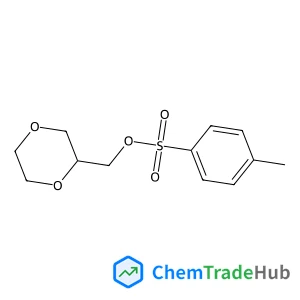
(S)-(1,4-Dioxan-2-yl)methyl 4-methylbenzenesulfonate
CAS Number:
917882-64-5
Molecular Formula:
C12H16O5S
![Ethyl ({[(2-methyl-2-propanyl)oxy]carbonyl}amino)(2-pyridinyl)acetate structure](https://static.chemtradehub.com/structs/313/313490-90-3-dd15.webp "Ethyl ({[(2-methyl-2-propanyl)oxy]carbonyl}amino)(2-pyridinyl)acetate structure")
Ethyl ({[(2-methyl-2-propanyl)oxy]carbonyl}amino)(2-pyridinyl)acetate
CAS Number:
313490-90-3
Molecular Formula:
C14H20N2O4
Recommended Suppliers



Disclaimer
This page provides academic journal information for reference and research purposes only. We are not affiliated with any journal publishers and do not handle publication submissions. For publication-related inquiries, please contact the respective journal publishers directly.
If you notice any inaccuracies in the information displayed, please contact us at support@chemtradehub.com. We will promptly review and address your concerns.