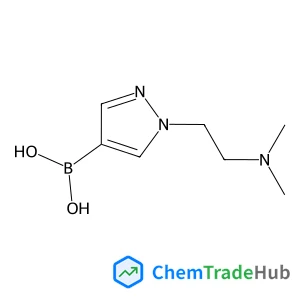
(1-(2-(Dimethylamino)ethyl)-1H-pyrazol-4-yl)boronic acid
CAS Number:
1086063-73-1
Molecular Formula:
C7H14BN3O2
Zeming Liu, Guy Vitrant, Yaya Lefkir, Said Bakhti, Nathalie Destouches
This paper describes a model to simulate changes in the size distribution of metallic nanoparticles (NPs) in TiO2 films upon continuous wave light excitation. Interrelated laser induced physical and chemical processes initiated directly by photon absorption or by plasmon induced thermal heating are considered. Namely the model takes into account the NP coalescence, Ostwald ripening, the reduction of silver ions and the oxidation of metallic NPs, competitive mechanisms that can lead to counter-intuitive behaviors depending on the exposure conditions. Theoretical predictions are compared successfully to the experimental results deduced from a thorough analysis of scanning transmission electron microscopy (STEM) pictures of Ag:TiO2 films processed with a scanning visible laser beam at different speeds. Ag:TiO2 systems are considered for many applications in solar energy conversion, photocatalysis or secured data printing. Numerical investigations of such a system provide a better understanding of light induced growth and shrinking processes and open up prospects for designing more efficient photocatalytic devices based on metal NP doped TiO2 or for improving the size homogeneity in self-organized metallic NP patterns, for instance.

Photochemical & Photobiological Sciences

Faraday Discussions

Contact Lens & Anterior Eye

Lab on a Chip

Environmental Toxicology and Pharmacology

Mini-Reviews in Medicinal Chemistry

Journal of Enzyme inhibition and Medicinal Chemistry

Foundations of Chemistry

Current Pharmaceutical Biotechnology

European Journal of Organic Chemistry
Alemayehu Ambaw
DOI: 10.1039/D3FB00089C
Anju Srivastava, Sriparna Dutta, Reena Jain
DOI: 10.1039/D3SU00246B
Sumanjot Kaur, Jingyi Chen
DOI: 10.1039/D3FB00069A
Aniruddha Sarker, Raju Ahmmed, S. M. Ahsan, Juwel Rana, Mithun Kumar Ghosh, Rakhi Nandi
DOI: 10.1039/D3FB00156C
Bareera Siddiqui, Alisha Ahmad, Owais Yousuf, Kaiser Younis
DOI: 10.1039/D3FB00111C
Aswathi P. V., Anju Sebastian, Lulu Varghese, Joseph V. P., Jolly Andrews
DOI: 10.1039/D3FB00126A
Mi Feng, Ming Jiang
DOI: 10.1039/D3SU00248A
Weiliang Han, Weigao Han, Zhicheng Tang
DOI: 10.1039/D3LF00147D
2-(2-Chloroacetamido)-3-phenylpropanoic acid (CAS: 7765-11-9) is generally consi...
2-(Benzyloxy)-5-bromobenzoic acid can be handled safely if appropriate precautio...
(4-Methyl-1,2,5-oxadiazol-3-yl)methanamine hydrochloride is a chemical compound ...
2-(5-Hexylthiophen-2-yl)-4,4,5,5-tetramethyl-1,3,2-dioxaborolane (CAS: 917985-54...
While 4-(8-Methyl-9H-1,3-dioxolo[4,5-h][2,3]benzodiazepin-5-yl)benzenamine (CAS:...
The market for tert-butyl 3-hydroxy-4,5,7,8-tetrahydro-2H-pyrazolo[3,4-d]azepine...
Waste containing 3,5-Diamino-1H-pyrazole-4-carbonitrile (CAS: 6844-58-2) should ...
(6-Fluoro-3-pyridinyl)boronic acid can be synthesized through the reaction of 6-...
Dibenzyl carbonimidoylbiscarbamate (CAS: 10065-79-9) finds applications in vario...
The market for (beta,beta,2,3,4,5,6-~2~H_7_)Phenylalanine (CAS: 74228-83-4) is g...

Physical Chemistry Chemical Physics (PCCP) is an international journal co-owned by 19 physical chemistry and physics societies from around the world. This journal publishes original, cutting-edge research in physical chemistry, chemical physics and biophysical chemistry. To be suitable for publication in PCCP, articles must include significant innovation and/or insight into physical chemistry; this is the most important criterion that reviewers and Editors will judge against when evaluating submissions. The journal has a broad scope and welcomes contributions spanning experiment, theory, computation and data science. Topical coverage includes spectroscopy, dynamics, kinetics, statistical mechanics, thermodynamics, electrochemistry, catalysis, surface science, quantum mechanics, quantum computing and machine learning. Interdisciplinary research areas such as polymers and soft matter, materials, nanoscience, energy, surfaces/interfaces, and biophysical chemistry are welcomed if they demonstrate significant innovation and/or insight into physical chemistry. Joined experimental/theoretical studies are particularly appreciated when complementary and based on up-to-date approaches.

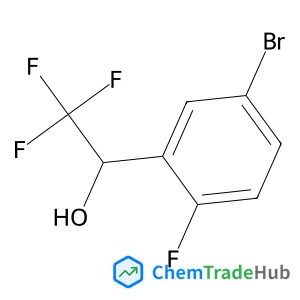
![(3S,4aS,8aS)-2-[(2R,3S)-3-Amino-2-hydroxy-4-phenylbutyl]-N-(2-methyl-2-propanyl)decahydro-3-isoquinolinecarboxamide structure](https://static.chemtradehub.com/structs/136/136522-17-3-4d77.webp "(3S,4aS,8aS)-2-[(2R,3S)-3-Amino-2-hydroxy-4-phenylbutyl]-N-(2-methyl-2-propanyl)decahydro-3-isoquinolinecarboxamide structure")