



Development of an electrochemical surface-enhanced Raman spectroscopy (EC-SERS) aptasensor for direct detection of DNA hybridization
Literature Information
Publication Date
2015-03-06
DOI
10.1039/C4CP05077K
Impact Factor
3.676
Authors
R. A. Karaballi, A. Nel, S. Krishnan, J. Blackburn, C. L. Brosseau
View Original
Abstract
Rapid detection of disease biomarkers at the patient point-of-care is essential to timely and effective treatment. The research described herein focuses on the development of an electrochemical surface-enhanced Raman spectroscopy (EC-SERS) DNA aptasensor capable of direct detection of tuberculosis (TB) DNA. Specifically, a plausible DNA biomarker present in TB patient urine was chosen as the model target for detection. Cost-effective screen printed electrodes (SPEs) modified with silver nanoparticles (AgNP) were used as the aptasensor platform, onto which the aptamer specific for the target DNA was immobilized. Direct detection of the target DNA was demonstrated through the appearance of SERS peaks characteristic for adenine, present only in the target strand. Modulation of the applied potential allowed for a sizeable increase in the observed SERS response and the use of thiol back-filling prevented non-specific adsorption of non-target DNA. To our knowledge, this work represents the first EC-SERS study of an aptasensor for the direct, label-free detection of DNA hybridization. Such a technology paves the way for rapid detection of disease biomarkers at the patient point-of-care.
Recommended Journals

European Journal of Wood and Wood Products

Russian Chemical Reviews

Nature

Planta Medica

Kinetics and Catalysis

Journal of Physics and Chemistry of Solids

Journal of Organometallic Chemistry

Journal of Heterocyclic Chemistry

Israel Journal of Chemistry

Proceedings of the National Academy of Sciences of the United States of America
Related Literature
Evidence for coherent mixing of excited and charge-transfer states in the major plant light-harvesting antenna, LHCII
Charusheela Ramanan, Marco Ferretti, Henny van Roon, Vladimir I. Novoderezhkin, Rienk van Grondelle
2017-08-03
Paper
DOI: 10.1039/C7CP03038J
Differentiating between long and short range disorder in infra-red spectra: on the meaning of “crystallinity” in silica
Luca Nodari, Ivana Angelini, Tiziana Boffa Ballaran
2017-07-19
Paper
DOI: 10.1039/C7CP03446F
Long-range Li ion diffusion in NASICON-type Li1.5Al0.5Ge1.5(PO4)3 (LAGP) studied by 7Li pulsed-gradient spin-echo NMR
Kikuko Hayamizu
2017-08-14
Paper
DOI: 10.1039/C7CP03647G
The role of van der Waals and exchange interactions in high-pressure solid hydrogen
Graeme J. Ackland
2017-08-02
Paper
DOI: 10.1039/C7CP03729E
Interpenetration of CH3NH3PbI3 and TiO2 improves perovskite solar cells while TiO2 expansion leads to degradation
A. Kovalsky, Y. C. Wang, L. L. Wang, S. Goldberg, W. L. Kao, C. Y. Wu, H. Y. Chang, J. J. Shyue
2017-07-18
Paper
DOI: 10.1039/C7CP03116E
Change in optoelectronic properties of ExBox+4 on functionalization and guest encapsulation
Debdutta Chakraborty, Ranjita Das, Pratim Kumar Chattaraj
2017-08-09
Paper
DOI: 10.1039/C7CP02433A
Photo-switching of a non-ionic azobenzene amphiphile in Langmuir and Langmuir–Blodgett films
Emilia Piosik, Michał Kotkowiak, Izabela Korbecka, Zbigniew Galewski, Tomasz Martyński
2017-08-10
Paper
DOI: 10.1039/C7CP03514D
A first principles study of p-type defects in LaCrO3
Nasrin Sarmadian, Erik C. Neyts, Bart Partoens
2017-08-01
Paper
DOI: 10.1039/C7CP03575F
Novel multiple phosphorescence in nanostructured zinc oxide and calculations of correlated colour temperature
Sagnik Das, Uttam Kumar Ghorai, Rajib Dey, Chandan Kumar Ghosh, Mrinal Pal
2017-08-08
Paper
DOI: 10.1039/C7CP03631K
You might also like
Compound Q&A
Is 6-(3-Fluorophenyl)picolinic acid (CAS: 887982-40-3) safe?
6-(3-Fluorophenyl)picolinic acid is generally considered safe for laboratory use...
887982-40-36-(3-Fluorophenyl)pi...
Compound Q&A
What industries use (3R)-3-Pyrrolidinol (CAS: 2799-21-5)?
(3R)-3-Pyrrolidinol is used in the pharmaceutical industry as a precursor for dr...
2799-21-5(3R)-3-Pyrrolidinol
Compound Q&A
What precautions should be taken when handling (4R,5R)-4,5-Diethoxycarbonyl-2,2-dimethyldioxolane (CAS: 59779-75-8)?
When handling (4R,5R)-4,5-Diethoxycarbonyl-2,2-dimethyldioxolane (CAS: 59779-75-...
59779-75-8(4R,5R)-4,5-Diethoxy...
Compound Q&A
How is 1-(6-Chloroimidazo[1,2-b]pyridazin-3-yl)ethanone (CAS: 90734-71-7) typically synthesized?
1-(6-Chloroimidazo[1,2-b]pyridazin-3-yl)ethanone is often synthesized via a mult...
90734-71-71-(6-Chloroimidazo[1...
Compound Q&A
What is the market or research trend for N-Ethyl-3,4-dimethylbenzylamine (CAS: 39180-83-1)?
The market for N-Ethyl-3,4-dimethylbenzylamine (CAS: 39180-83-1) remains steady,...
39180-83-1N-Ethyl-3,4-dimethyl...
Compound Q&A
What is Tert-butyl 3-(pyrrolidin-1-yl)azetidine-1-carboxylate (CAS: 1019008-21-9)?
Tert-butyl 3-(pyrrolidin-1-yl)azetidine-1-carboxylate is a chemical compound wit...
1019008-21-9Tert-butyl 3-(pyrrol...
Compound Q&A
What regulatory guidelines apply to 1-Bromo-3-chloro-2,4-dimethoxybenzene (CAS: 1228956-93-1)?
1-Bromo-3-chloro-2,4-dimethoxybenzene (CAS: 1228956-93-1) falls under the classi...
1228956-93-11-Bromo-3-chloro-2,4...
Compound Q&A
Is 8-Bromo-2-methyl-3,4-dihydroisoquinolin-1(2H)-one (CAS: 1368622-07-4) safe?
The safety of 8-Bromo-2-methyl-3,4-dihydroisoquinolin-1(2H)-one (CAS: 1368622-07...
1368622-07-48-Bromo-2-methyl-3,4...
Compound Q&A
Is Benzyl [(3S)-2,6-dioxo-3-piperidinyl]carbamate (CAS: 22785-43-9) safe?
Benzyl [(3S)-2,6-dioxo-3-piperidinyl]carbamate is generally safe when handled wi...
22785-43-9Benzyl [(3S)-2,6-dio...
Compound Q&A
How should 1-{[4-(4,4,5,5-Tetramethyl-1,3,2-dioxaborolan-2-yl)phenyl]sulfonyl}pyrrolidine (CAS: 928657-21-0) be stored?
1-{[4-(4,4,5,5-Tetramethyl-1,3,2-dioxaborolan-2-yl)phenyl]sulfonyl}pyrrolidine s...
928657-21-01-{[4-(4,4,5,5-Tetra...
Source Journal
Physical Chemistry Chemical Physics

CiteScore:
5.5
Self-citation Rate:
10.3%
Articles per Year:
3036
Physical Chemistry Chemical Physics (PCCP) is an international journal co-owned by 19 physical chemistry and physics societies from around the world. This journal publishes original, cutting-edge research in physical chemistry, chemical physics and biophysical chemistry. To be suitable for publication in PCCP, articles must include significant innovation and/or insight into physical chemistry; this is the most important criterion that reviewers and Editors will judge against when evaluating submissions. The journal has a broad scope and welcomes contributions spanning experiment, theory, computation and data science. Topical coverage includes spectroscopy, dynamics, kinetics, statistical mechanics, thermodynamics, electrochemistry, catalysis, surface science, quantum mechanics, quantum computing and machine learning. Interdisciplinary research areas such as polymers and soft matter, materials, nanoscience, energy, surfaces/interfaces, and biophysical chemistry are welcomed if they demonstrate significant innovation and/or insight into physical chemistry. Joined experimental/theoretical studies are particularly appreciated when complementary and based on up-to-date approaches.
Recommended Compounds
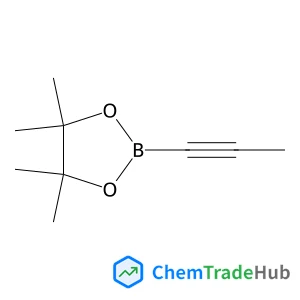
4,4,5,5-Tetramethyl-2-(1-propyn-1-YL)-1,3,2-dioxaborolane
CAS Number:
347389-75-7
Molecular Formula:
C9H15BO2
![trans-2-{[(Tert-butoxy)carbonyl]amino}cyclobutane-1-carboxylic acid structure](https://static.chemtradehub.com/structs/951/951173-25-4-27cd.webp "trans-2-{[(Tert-butoxy)carbonyl]amino}cyclobutane-1-carboxylic acid structure")
trans-2-{[(Tert-butoxy)carbonyl]amino}cyclobutane-1-carboxylic acid
CAS Number:
951173-25-4
Molecular Formula:
C10H17NO4

(S)-1-(3-(Benzyloxy)phenyl)-3-(dimethylamino)-2-methylpropan-1-one (2r,3r)-2,3-bis(benzoyloxy)succinate
CAS Number:
1004315-81-4
Molecular Formula:
C37H37NO10

Recommended Suppliers






Disclaimer
This page provides academic journal information for reference and research purposes only. We are not affiliated with any journal publishers and do not handle publication submissions. For publication-related inquiries, please contact the respective journal publishers directly.
If you notice any inaccuracies in the information displayed, please contact us at support@chemtradehub.com. We will promptly review and address your concerns.