


Photo-switching of a non-ionic azobenzene amphiphile in Langmuir and Langmuir–Blodgett films
Literature Information
Publication Date
2017-08-10
DOI
10.1039/C7CP03514D
Impact Factor
3.676
Authors
Emilia Piosik, Michał Kotkowiak, Izabela Korbecka, Zbigniew Galewski, Tomasz Martyński
View Original
Abstract
The concept of programmable and reconfigurable soft matter has emerged in science in the last few decades and can be realized by photoisomerization of azobenzene derivatives. This possibility results in great application potential of these compounds in optical storage devices, molecular junctions of electronic devices, command layers of liquid crystal displays or holographic gratings. In this paper, we present the results of a study on the organization and isomerization of the non-ionic and amphiphilic methyl 4-[(E)-2-[4-(nonyloxy)phenyl]diazen-1-yl]benzoate (LCA) in a 2D layer architecture of Langmuir and Langmuir–Blodgett (LB) films supported by spectroscopic studies on LCA chloroform solutions. Our investigation has shown a significantly different molecular organization of LCA depending on the ratio of trans and cis isomers in the monolayers. Taking advantage of a relatively low packing density and aggregation strength in the cis-LCA monolayer, we demonstrated the reversible isomerization in the LB film initially formed of LCA molecules in the cis form, while in the trans-LCA monolayer this effect was not observed. Our approach allows the formation of a switchable monolayer made of the amphiphilic LCA showing liquid crystalline properties without introducing an ionic group into the molecule structure, mixing with another compound or changing the subphase pH to provide free space for the molecules’ isomerization.
Recommended Journals

Proceedings of the National Academy of Sciences of the United States of America

Helvetica Chimica Acta

Science

Organic Preparations and Procedures International

Pure and Applied Chemistry

Pharmacological Reviews

Israel Journal of Chemistry

Journal of Physics and Chemistry of Solids

Journal of Catalysis

Molecular Pharmacology
Related Literature
DMF/NaOH/H2O: a metal-free system for efficient and chemoselective reduction of α-ketoamides
Rongcong Ye, Feiyue Hao, Guyue Liu, Qingsong Zuo, Lijun Deng, Zhengneng Jin, Jiashou Wu
2019-09-04
Research Article
DOI: 10.1039/C9QO00842J
Visible-light-induced radical hydrodifluoromethylation of alkenes
Jiao Yu, Jin-Hong Lin, Yu-Cai Cao, Ji-Chang Xiao
2019-09-05
Research Article
DOI: 10.1039/C9QO00919A
Synthesis of α-trifluoromethyl ethanone oximes via the three-component reaction of aryl-substituted ethylenes, tert-butyl nitrite, and the Langlois reagent
Kui Lu, Quan Li, Liangshuo Ji, Erbing Hua, Yujie Dai, Xia Zhao
2019-10-01
Research Article
DOI: 10.1039/C9QO00940J
Ring-opening/annulation reaction of cyclopropyl ethanols: concise access to thiophene aldehydes via C–S bond formation
Ting Wang, Zhenyu An, Zhenjie Qi, Daijiao Zhuang, Aosheng Chang, Yunxia Yang, Rulong Yan
2019-10-01
Research Article
DOI: 10.1039/C9QO01014A
Efficient construction of pyrrolo[1′,2′:1,2]azocino[4,5-c]quinolines via cascade cycloaddition and annulation reaction
Wen-Tao Wu, Ying Han, Jing Sun, Chao-Guo Yan
2019-09-04
Research Article
DOI: 10.1039/C9QO00891H
Diastereoselective formal [3 + 3] cycloaddition of isatin-based α-(trifluoromethyl)imines with N,N′-dialkyloxyureas
Hong-Wu Zhao, Jia-Ming Guo, Li-Ru Wang, Wan-Qiu Ding, Zhe Tang, Xiu-Qing Song, Hui-Hui Wu, Xiao-Zu Fan, Xiao-Fan Bi
2019-10-21
Research Article
DOI: 10.1039/C9QO01181A
TFA-promoted sulfonation/cascade cyclization of 2-propynolphenols with sodium sulfinates to 4-sulfonyl 2H-chromenes under metal-free conditions
Tao Yang, Peihao Kou, Fengyan Jin, Xian-Rong Song, Jiang Bai, Haixin Ding, Qiang Xiao, Yong-Min Liang
2019-07-19
Research Article
DOI: 10.1039/C9QO00712A
You might also like
Compound Q&A
Is 6-(3-Fluorophenyl)picolinic acid (CAS: 887982-40-3) safe?
6-(3-Fluorophenyl)picolinic acid is generally considered safe for laboratory use...
887982-40-36-(3-Fluorophenyl)pi...
Compound Q&A
What industries use (3R)-3-Pyrrolidinol (CAS: 2799-21-5)?
(3R)-3-Pyrrolidinol is used in the pharmaceutical industry as a precursor for dr...
2799-21-5(3R)-3-Pyrrolidinol
Compound Q&A
What precautions should be taken when handling (4R,5R)-4,5-Diethoxycarbonyl-2,2-dimethyldioxolane (CAS: 59779-75-8)?
When handling (4R,5R)-4,5-Diethoxycarbonyl-2,2-dimethyldioxolane (CAS: 59779-75-...
59779-75-8(4R,5R)-4,5-Diethoxy...
Compound Q&A
How is 1-(6-Chloroimidazo[1,2-b]pyridazin-3-yl)ethanone (CAS: 90734-71-7) typically synthesized?
1-(6-Chloroimidazo[1,2-b]pyridazin-3-yl)ethanone is often synthesized via a mult...
90734-71-71-(6-Chloroimidazo[1...
Compound Q&A
What is the market or research trend for N-Ethyl-3,4-dimethylbenzylamine (CAS: 39180-83-1)?
The market for N-Ethyl-3,4-dimethylbenzylamine (CAS: 39180-83-1) remains steady,...
39180-83-1N-Ethyl-3,4-dimethyl...
Compound Q&A
What is Tert-butyl 3-(pyrrolidin-1-yl)azetidine-1-carboxylate (CAS: 1019008-21-9)?
Tert-butyl 3-(pyrrolidin-1-yl)azetidine-1-carboxylate is a chemical compound wit...
1019008-21-9Tert-butyl 3-(pyrrol...
Compound Q&A
What regulatory guidelines apply to 1-Bromo-3-chloro-2,4-dimethoxybenzene (CAS: 1228956-93-1)?
1-Bromo-3-chloro-2,4-dimethoxybenzene (CAS: 1228956-93-1) falls under the classi...
1228956-93-11-Bromo-3-chloro-2,4...
Compound Q&A
Is 8-Bromo-2-methyl-3,4-dihydroisoquinolin-1(2H)-one (CAS: 1368622-07-4) safe?
The safety of 8-Bromo-2-methyl-3,4-dihydroisoquinolin-1(2H)-one (CAS: 1368622-07...
1368622-07-48-Bromo-2-methyl-3,4...
Compound Q&A
Is Benzyl [(3S)-2,6-dioxo-3-piperidinyl]carbamate (CAS: 22785-43-9) safe?
Benzyl [(3S)-2,6-dioxo-3-piperidinyl]carbamate is generally safe when handled wi...
22785-43-9Benzyl [(3S)-2,6-dio...
Compound Q&A
How should 1-{[4-(4,4,5,5-Tetramethyl-1,3,2-dioxaborolan-2-yl)phenyl]sulfonyl}pyrrolidine (CAS: 928657-21-0) be stored?
1-{[4-(4,4,5,5-Tetramethyl-1,3,2-dioxaborolan-2-yl)phenyl]sulfonyl}pyrrolidine s...
928657-21-01-{[4-(4,4,5,5-Tetra...
Source Journal
Physical Chemistry Chemical Physics

CiteScore:
5.5
Self-citation Rate:
10.3%
Articles per Year:
3036
Physical Chemistry Chemical Physics (PCCP) is an international journal co-owned by 19 physical chemistry and physics societies from around the world. This journal publishes original, cutting-edge research in physical chemistry, chemical physics and biophysical chemistry. To be suitable for publication in PCCP, articles must include significant innovation and/or insight into physical chemistry; this is the most important criterion that reviewers and Editors will judge against when evaluating submissions. The journal has a broad scope and welcomes contributions spanning experiment, theory, computation and data science. Topical coverage includes spectroscopy, dynamics, kinetics, statistical mechanics, thermodynamics, electrochemistry, catalysis, surface science, quantum mechanics, quantum computing and machine learning. Interdisciplinary research areas such as polymers and soft matter, materials, nanoscience, energy, surfaces/interfaces, and biophysical chemistry are welcomed if they demonstrate significant innovation and/or insight into physical chemistry. Joined experimental/theoretical studies are particularly appreciated when complementary and based on up-to-date approaches.
Recommended Compounds
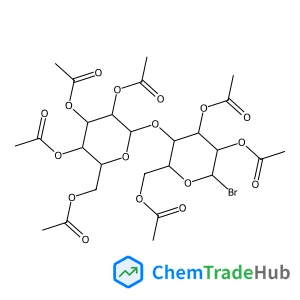
2,3,6-Tri-O-acetyl-4-O-(2,3,4,6-tetra-O-acetyl-beta-D-galactopyranosyl)-alpha-D-glucopyranosyl bromide
CAS Number:
4753-07-5
Molecular Formula:
C26H35BrO17
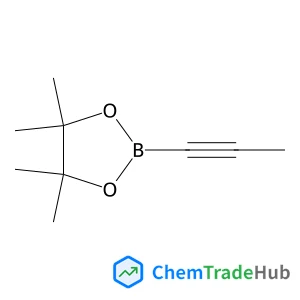
4,4,5,5-Tetramethyl-2-(1-propyn-1-YL)-1,3,2-dioxaborolane
CAS Number:
347389-75-7
Molecular Formula:
C9H15BO2
Recommended Suppliers





Disclaimer
This page provides academic journal information for reference and research purposes only. We are not affiliated with any journal publishers and do not handle publication submissions. For publication-related inquiries, please contact the respective journal publishers directly.
If you notice any inaccuracies in the information displayed, please contact us at support@chemtradehub.com. We will promptly review and address your concerns.