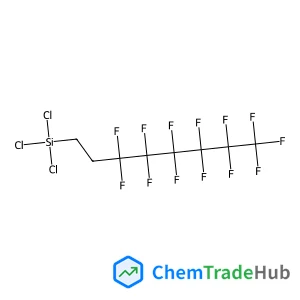
Trichloro(3,3,4,4,5,5,6,6,7,7,8,8,8-tridecafluorooctyl)silane
CAS Number:
78560-45-9
Molecular Formula:
C8H4Cl3F13Si
Yuyang Wang, Mingfu Yu, Tianyu Zhang, Zhichao Xue, Ying Ma, Hong Sun
Carbon nanotubes (CNTs) have been used as a cathode material for hybrid Li–air batteries (HLABs); however, their catalytic abilities for the oxygen reduction reaction (ORR) and oxygen evolution reaction (OER) are relatively limited. Herein, to improve their catalytic performance, we have synthesized a boron-doped CNT (BC3NT) with varying boron contents. The Raman spectrum proves that the more defects are due to the higher boron content. And HLABs based on BC3NT show great cyclability and catalytic performance in air, with an overpotential value of 0.3 V for 200 hours at a current density of 0.05 mA cm−2. Furthermore, theoretical calculations with density functional theory (DFT) confirm the effects of topological defects of BC3NT on the ORR and OER. Since boron is doped into the CNT, BC3NT containing a large amount of defect rings is obtained. And the generation of defects was conducive to the battery reaction. Accordingly, as a positive electrode material for HLABs, BC3NT is more conducive to the ORR and OER, and the topological defect ring generated by it improved the ORR and OER performance.
DOI: 10.1039/C9CP01850F
Bodo Zibrowius, Michael Felderhoff
DOI: 10.1039/C9CP01059A
Hua Jiang, A. Mulero
DOI: 10.1039/C9CP02033K
Michal Bodík, Jakub Hagara, Matej Mičušík, Mária Omastová, Mário Kotlár, Juraj Chlpík, Július Cirák, Helena Švajdlenková, Michal Anguš, Alicia Marín Roldán, Pavel Veis, Matej Jergel
DOI: 10.1039/C9CP01951K
A. Kortyna, A. J. Samin, T. A. Miller
DOI: 10.1039/C9CP90148E
Alexandra E. Raeber, David A. Mazziotti
DOI: 10.1039/C9CP01678C
Kenji Tatesaka, Kenya Soh, Hyuma Masu, Ashu Choudhary, Ryuta Ise, Hiroaki Imai, Tatsuya Takeguchi, Kiyoshi Kanamura
DOI: 10.1039/C9CP01400D
Long Van Duong, Dang Thi Tuyet Mai, My Phuong Pham-Ho
DOI: 10.1039/C9CP00737G
Houda El Hanini, Faouzi Najar, Manel Naouai, Nejm-Eddine Jaidane
DOI: 10.1039/C9CP01889A
Gersh O. Berim, Eli Ruckenstein
DOI: 10.1039/C9CP01791G
1H-Indazole-6-carbonitrile finds applications in pharmaceuticals, where it serve...
Waste containing Dioctyl (2E)-2-butenedioate (CAS: 2997-85-5) should be collecte...
Sodium [(1,2-benzoxazol-3-ylmethyl)sulfonyl]azanide is primarily used in pharmac...
Dimethyl 4-(4,4,5,5-tetramethyl-1,3,2-dioxaborolan-2-yl)-2,6-pyridinedicarboxyla...
Waste containing 2-Fluoro-6-hydrazinopyridine (CAS: 80714-39-2) should be manage...
6-Formyl-2-pyridinecarboxylic acid is an organic compound with the molecular for...
Research trends for this compound indicate a focus on its potential applications...
9H-Tribenzo[b,d,f]azepine is typically synthesized via a multi-step process invo...
1-Cyclopropyl-7-ethoxy-6-fluoro-8-methoxy-4-oxo-1,4-dihydro-3-quinolinecarboxyli...
Waste containing Methyl 3-oxo-1,2,3,4-tetrahydro-6-quinoxalinecarboxylate (CAS: ...
Catalysis Science & Technology is committed to publishing research reporting high-quality, cutting-edge developments across the catalysis community at large. The journal places equal focus on publications from the heterogeneous, homogeneous, thermo-, electro-, photo-, organo- and biocatalysis communities. Works published in the journal feature a balanced mix of fundamental, technology-oriented, experimental, computational, digital and data-driven original research, thus appealing to catalysis practitioners in both academic and industrial environments. Original research articles published in the journal must demonstrate new catalytic discoveries and/or methodological advances that represent a significant advance on previously published work, from the molecular to the process scales. We welcome rigorous research in a wide range of timely or emerging applications related to the environment, health, energy and materials. Catalysis Science & Technology publishes Communications, Articles, Reviews and Perspectives. More details regarding manuscript types may be found in the Information for Authors section.