![Heptadecanoic Acid 3-[2-[4-(6-Fluoro-1,2-benzisoxazol-3-yl)-1-piperidinyl]ethyl]-6,7,8,9-tetrahydro-2-methyl-4-oxo-4H-pyrido[1,2-a]pyrimidin-9-yl Ester structure](https://static.chemtradehub.com/structs/140/1404053-62-8-9da4.webp "Heptadecanoic Acid 3-[2-[4-(6-Fluoro-1,2-benzisoxazol-3-yl)-1-piperidinyl]ethyl]-6,7,8,9-tetrahydro-2-methyl-4-oxo-4H-pyrido[1,2-a]pyrimidin-9-yl Ester structure")
Heptadecanoic Acid 3-[2-[4-(6-Fluoro-1,2-benzisoxazol-3-yl)-1-piperidinyl]ethyl]-6,7,8,9-tetrahydro-2-methyl-4-oxo-4H-pyrido[1,2-a]pyrimidin-9-yl Ester
CAS Number:
1404053-62-8
Molecular Formula:
C40H59FN4O4
Jonas Warneke, Willem F. Van Dorp, Petra Rudolf, Michal Stano, Peter Papp, Štefan Matejčík, Tobias Borrmann, Petra Swiderek
In focused electron beam induced deposition (FEBID) acetylacetone plays a role as a ligand in metal acetylacetonate complexes. As part of a larger effort to understand the chemical processes in FEBID, the electron-induced reactions of acetylacetone were studied both in condensed layers and in the gas phase and compared to those of acetone. X-ray photoelectron spectroscopy (XPS) shows that the electron-induced decomposition of condensed acetone layers yields a non-volatile hydrocarbon residue while electron irradiation of acetylacetone films produces a non-volatile residue that contains not only much larger amounts of carbon but also significant amounts of oxygen. Electron-stimulated desorption (ESD) and thermal desorption spectrometry (TDS) measurements reveal striking differences in the decay kinetics of the layers. In particular, intact acetylacetone suppresses the desorption of volatile products. Gas-phase studies of dissociative electron attachment and electron impact ionization suggest that this effect cannot be traced back to differences in the initial fragmentation reactions of the isolated molecules but is due to subsequent dissociation processes and to an efficient reaction of released methyl radicals with adjacent acetylacetone molecules. These results could explain the incorporation of large amounts of ligand material in deposits fabricated by FEBID processes using acetylacetonate complexes.
Xinju Pan, Gang Zhou
DOI: 10.1039/C7CP08112J
Shoichi Kutsumizu, Yutaro Yamada, Tadashi Sugimoto, Nina Yamada, Taro Udagawa, Yohei Miwa
DOI: 10.1039/C7CP08345A
Gourhari Jana, Sudip Pan, Edison Osorio, Lili Zhao, Gabriel Merino, Pratim K. Chattaraj
DOI: 10.1039/C8CP02837K
Fabian Sieland, Jenny Schneider
DOI: 10.1039/C8CP00398J
Vincent V. Duong, Alexander L. Ayzner
DOI: 10.1039/C8CP04746D
Joseph C. Deaton, Arnab Chakraborty, Rafal Czerwieniec, Hartmut Yersin, Felix N. Castellano
DOI: 10.1039/C8CP05213A
DOI: 10.1039/C8CP04651D
Rajeev Yadav, H. Peter Lu
DOI: 10.1039/C7CP08030A
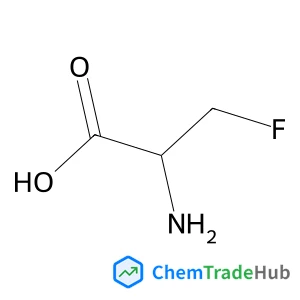
2-(2-Chloroacetamido)-3-phenylpropanoic acid (CAS: 7765-11-9) is generally consi...
2-(Benzyloxy)-5-bromobenzoic acid can be handled safely if appropriate precautio...
(4-Methyl-1,2,5-oxadiazol-3-yl)methanamine hydrochloride is a chemical compound ...
2-(5-Hexylthiophen-2-yl)-4,4,5,5-tetramethyl-1,3,2-dioxaborolane (CAS: 917985-54...
While 4-(8-Methyl-9H-1,3-dioxolo[4,5-h][2,3]benzodiazepin-5-yl)benzenamine (CAS:...
The market for tert-butyl 3-hydroxy-4,5,7,8-tetrahydro-2H-pyrazolo[3,4-d]azepine...
Waste containing 3,5-Diamino-1H-pyrazole-4-carbonitrile (CAS: 6844-58-2) should ...
(6-Fluoro-3-pyridinyl)boronic acid can be synthesized through the reaction of 6-...
Dibenzyl carbonimidoylbiscarbamate (CAS: 10065-79-9) finds applications in vario...
The market for (beta,beta,2,3,4,5,6-~2~H_7_)Phenylalanine (CAS: 74228-83-4) is g...

Physical Chemistry Chemical Physics (PCCP) is an international journal co-owned by 19 physical chemistry and physics societies from around the world. This journal publishes original, cutting-edge research in physical chemistry, chemical physics and biophysical chemistry. To be suitable for publication in PCCP, articles must include significant innovation and/or insight into physical chemistry; this is the most important criterion that reviewers and Editors will judge against when evaluating submissions. The journal has a broad scope and welcomes contributions spanning experiment, theory, computation and data science. Topical coverage includes spectroscopy, dynamics, kinetics, statistical mechanics, thermodynamics, electrochemistry, catalysis, surface science, quantum mechanics, quantum computing and machine learning. Interdisciplinary research areas such as polymers and soft matter, materials, nanoscience, energy, surfaces/interfaces, and biophysical chemistry are welcomed if they demonstrate significant innovation and/or insight into physical chemistry. Joined experimental/theoretical studies are particularly appreciated when complementary and based on up-to-date approaches.