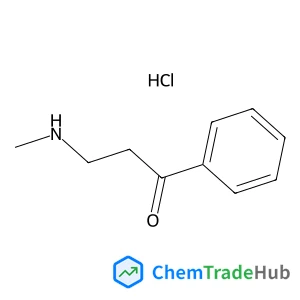
3-(Methylamino)-1-phenyl-1-propanone hydrochloride (1:1)
CAS Number:
2538-50-3
Molecular Formula:
C10H14ClNO
Fangrui Cheng, Xiping Jing, Ziyuan Wang
A series of double molybdate scheelite-type phosphors LixAg1−xYb0.99(MoO4)2:0.01Er3+ (x = 0, 0.1, 0.3, 0.5, 0.7, 0.9, 1.0) were synthesized by the solid state reaction method, and their crystal structures and upconversion (UC) luminescence properties were investigated in detail. The phase structure evolution of this series samples was discussed and the selected Li0.5Ag0.5Yb0.99(MoO4)2:0.01Er3+ was analyzed based on the Rietveld refinement. The UC emission properties and the related UC mechanism were also studied. With an increasing Li/Ag ratio in this host, the UC emission intensities of LixAg1−xYb0.99(MoO4)2:0.01Er3+ increased obviously, and the enhancement could be attributed to the coupling effect and the nonradiative transition between two energy levels of LixAg1−xYb(MoO4)2 matrices and the activator Er3+, which have also been analyzed based on the results of the ultraviolet-visible diffuse reflection spectroscopy (UV-vis DRS) and Raman spectroscopy.
Ziyun Wang, Christopher Hardacre, Wen-Feng Lin
DOI: 10.1039/C6CP06906A
H. W. Wang, C. L. Li, S. L. Yuan, J. F. Wang, C. L. Lu, J.-M. Liu
DOI: 10.1039/C6CP06369A
Lianjie Xue, Fehmi Bardak, George Tamas, Edward L. Quitevis
DOI: 10.1039/C6CP08263G
Pablo Gamallo, Sinan Akpinar, Paolo Defazio, Carlo Petrongolo
DOI: 10.1039/C6CP07756K
Natsumi Muramatsu, Naoki Mimura, Osamu Sato
DOI: 10.1039/C6CP06831F
Sarawoot Impeng, Siwarut Siwaipram, Sareeya Bureekaew, Michael Probst
DOI: 10.1039/C6CP07771D
Dannie J. G. P. van Osch, Laura J. B. M. Kollau, Sari Asikainen, Marisa A. A. Rocha
DOI: 10.1039/C6CP07499E
Masashi Hattori, Keigo Kamata
DOI: 10.1039/C6CP06864B
Josep Bonet Avalos
DOI: 10.1039/C6CP08511C
Bason Clancy, Joshua Salafsky
DOI: 10.1039/C6CP07708K
When handling 4-(2-Furylmethyl)thiomorpholine 1,1-dioxide (CAS: 79206-94-3), it ...
When handling 4-Chloro-N-[2-(4-morpholinyl)ethyl]benzamide (CAS: 71320-77-9), it...
Waste containing this compound (CAS: 62921-74-8) should be handled according to ...
Waste containing (S)-Methyl 2-amino-3-cyclohexylpropanoate should be collected i...
This compound can be synthesized using a multi-step process involving the conjug...
There are several alternatives to (2E)-3-(3,4-Dichlorophenyl)acrylic acid in syn...
Ethyl 6-(2-nitrophenyl)imidazo[2,1-b][1,3]thiazole-3-carboxylate (CAS: 925437-84...
Waste containing 2-(1,3-Thiazol-2-yl)ethanamine (CAS: 18453-07-1) should be coll...
Methyl 5-iodo-2-methylbenzoate can be synthesized through the iodination of meth...
5-Chloro[1,2,4]triazolo[1,5-a]pyridine is commonly synthesized via the condensat...

Physical Chemistry Chemical Physics (PCCP) is an international journal co-owned by 19 physical chemistry and physics societies from around the world. This journal publishes original, cutting-edge research in physical chemistry, chemical physics and biophysical chemistry. To be suitable for publication in PCCP, articles must include significant innovation and/or insight into physical chemistry; this is the most important criterion that reviewers and Editors will judge against when evaluating submissions. The journal has a broad scope and welcomes contributions spanning experiment, theory, computation and data science. Topical coverage includes spectroscopy, dynamics, kinetics, statistical mechanics, thermodynamics, electrochemistry, catalysis, surface science, quantum mechanics, quantum computing and machine learning. Interdisciplinary research areas such as polymers and soft matter, materials, nanoscience, energy, surfaces/interfaces, and biophysical chemistry are welcomed if they demonstrate significant innovation and/or insight into physical chemistry. Joined experimental/theoretical studies are particularly appreciated when complementary and based on up-to-date approaches.