












Nonadiabatic Renner–Teller quantum dynamics of OH(X2Π) + H+ reactive collisions
Literature Information
Publication Date
2017-01-09
DOI
10.1039/C6CP07756K
Impact Factor
3.676
Authors
Pablo Gamallo, Sinan Akpinar, Paolo Defazio, Carlo Petrongolo
View Original
Abstract
Following previous studies on the O(3P) + H2+(X2Σg+) collisions, we present the nonadiabatic quantum dynamics of the reactions OH(X2Π) + H′+ → OH′(X2Π) + H+, exchange (e), → OH+(X3Σ−) + H′(2S), quenching (q), and → OH′+ (X3Σ−) + H(2S), exchange-quenching (eq). The reactants and products correlate via the ground 2A′′ and first excited Ã2A′ electronic states of OH2+, which are the degenerate components of linear 2Π species. Therefore, they are strongly perturbed by nonadiabatic Renner—Teller (RT) effects, opening the (q) and (eq) channels that are closed in the Born–Oppenheimer approximation. Using accurate potential energy surfaces (PESs) and RT matrix elements, initial-state-resolved reaction probabilities, real-time dynamics, cross sections, and rate constants of the product channels are obtained through the time-dependent real wavepacket (WP) method and full coupled-channel calculations. Owing to the nonadiabatic couplings, the WP jumps from the excited Ã2A′ surface to the 2A′′ ground PES, avoiding any barrier, opening the quenching channels, and giving many collision complexes into the deep minima of both PESs, as it is clearly shown by the oscillations of the reaction probabilities and by the time-dependent WP dynamics. All the results show that the nonadiabatic-RT channels (q) and (eq) are highly reactive, much more than the adiabatic one (e), pointing out large RT effects. The reactivity of the quenching channels is similar, accounting for 97% of the overall reactivity. In fact, the maximum values of the (q) and (eq) cross sections σq and σeq are equal to 31.6 Å2, whereas the maximum σe value equals 1.34 Å2, and the maximum values of the rate constants kq, keq, and ke are 2.07 × 10⁻¹⁰, 2.45 × 10⁻¹⁰, and 0.23 × 10⁻¹⁰ cm3 s−1. Some calculations show that the centrifugal-sudden and the truncated coupled-channel approximations cannot be employed for the (q) channel. After a sharp increase at the threshold, σq and σeq decrease at larger collision energies while σe and the rate constants depend slightly on the collision energy and temperature, respectively. These findings are consistent with the barrierless nature of both PESs and the exoergicity of the quenching products, with the small role played by the centrifugal and RT barriers in the reactant channel, and with the large RT couplings in the OH2+ intermediates. Finally, we contrast the present results with those for the opposite reactions O + H2+ and for the nonadiabatic-induced quenchings NH + H′ and OH + H′.
Recommended Journals
Related Literature
Thermoresponsive nanogels with film-forming ability
Ana S. Sonzogni, Stefanie Wedepohl, Marcelo Calderón
2018-01-18
Paper
DOI: 10.1039/C7PY01798G
SET-LRP mediated by TREN in biphasic water–organic solvent mixtures provides the most economical and efficient process
Adrian Moreno, Silvia Grama, Tong Liu, Marina Galià, Virgil Percec
2017-11-24
Paper
DOI: 10.1039/C7PY01841J
Photo-reversible bonding and cleavage of block copolymers
Siham Telitel, Eva Blasco, Lukas D. Bangert
2017-06-16
Paper
DOI: 10.1039/C7PY00843K
Phosphazene/triisobutylaluminum-promoted anionic ring-opening polymerization of 1,2-epoxybutane initiated by secondary carbamates
L. Hassouna, N. Illy, P. Guégan
2017-06-13
Paper
DOI: 10.1039/C7PY00675F
Visible-light responsive hydrogen-bonded supramolecular polymers based on ortho-tetrafluorinated azobenzene
Meng-Di Lin, Jie Wei, Li-Juan Liu, Meng-Yan Yun, Lin Wu, Si-Tai Zheng, Huan-Huan Yin, Li-Chun Kong
2017-11-13
Paper
DOI: 10.1039/C7PY01612C
Syntheses, characterizations and functions of cationic polyethers with imidazolium-based ionic liquid moieties
Shigetaka Hayano, Keisuke Ota, Hoang The Ban
2018-01-24
Paper
DOI: 10.1039/C7PY01985H
Effect of conjugation length and metal-backbone interactions on charge transport properties of conducting metallopolymers
Minh T. Nguyen, Richard A. Jones, Bradley J. Holliday
2017-06-13
Paper
DOI: 10.1039/C7PY00673J
Reporting pH-sensitive drug release via unpaired spin fluorescence silencing
Bettina Olshausen, Kathryn E. Fairfull-Smith, Ute Schepers
2018-01-10
Paper
DOI: 10.1039/C7PY01942D
Structure/property relationships in copolymers comprising renewable isosorbide, glucarodilactone, and 2,5-bis(hydroxymethyl)furan subunits
Leon M. Lillie, William B. Tolman, Theresa M. Reineke
2017-06-12
Paper
DOI: 10.1039/C7PY00575J
You might also like
Compound Q&A
What precautions should be taken when handling 4-(2-Furylmethyl)thiomorpholine 1,1-dioxide (CAS: 79206-94-3)?
When handling 4-(2-Furylmethyl)thiomorpholine 1,1-dioxide (CAS: 79206-94-3), it ...
79206-94-34-(2-Furylmethyl)thi...
Compound Q&A
What precautions should be taken when handling 4-Chloro-N-[2-(4-morpholinyl)ethyl]benzamide (CAS: 71320-77-9)?
When handling 4-Chloro-N-[2-(4-morpholinyl)ethyl]benzamide (CAS: 71320-77-9), it...
71320-77-94-Chloro-N-[2-(4-mor...
Compound Q&A
How should waste containing 2-[2-(2-Methoxyethoxy)ethoxy]ethyl 4-methylbenzenesulfonate (CAS: 62921-74-8) be handled?
Waste containing this compound (CAS: 62921-74-8) should be handled according to ...
62921-74-82-[2-(2-Methoxyethox...
Compound Q&A
How should waste containing (S)-Methyl 2-amino-3-cyclohexylpropanoate be handled?
Waste containing (S)-Methyl 2-amino-3-cyclohexylpropanoate should be collected i...
40056-18-6(S)-Methyl 2-amino-3...
Compound Q&A
How is 5-({4-[(2S,4R)-4-Hydroxy-2-methyltetrahydro-2H-pyran-4-yl]-2-thienyl}sulfanyl)-1-methyl-1,3-dihydro-2H-indol-2-one (CAS: 166882-70-8) typically synthesized?
This compound can be synthesized using a multi-step process involving the conjug...
166882-70-85-({4-[(2S,4R)-4-Hyd...
Compound Q&A
Are there alternatives to (2E)-3-(3,4-Dichlorophenyl)acrylic acid (CAS: 7312-27-8) in synthesis?
There are several alternatives to (2E)-3-(3,4-Dichlorophenyl)acrylic acid in syn...
7312-27-8(2E)-3-(3,4-Dichloro...
Compound Q&A
How should Ethyl 6-(2-nitrophenyl)imidazo[2,1-b][1,3]thiazole-3-carboxylate (CAS: 925437-84-9) be stored?
Ethyl 6-(2-nitrophenyl)imidazo[2,1-b][1,3]thiazole-3-carboxylate (CAS: 925437-84...
925437-84-9Ethyl 6-(2-nitrophen...
Compound Q&A
How should waste containing 2-(1,3-Thiazol-2-yl)ethanamine (CAS: 18453-07-1) be handled?
Waste containing 2-(1,3-Thiazol-2-yl)ethanamine (CAS: 18453-07-1) should be coll...
18453-07-12-(1,3-Thiazol-2-yl)...
Compound Q&A
How is Methyl 5-iodo-2-methylbenzoate (CAS: 103440-54-6) typically synthesized?
Methyl 5-iodo-2-methylbenzoate can be synthesized through the iodination of meth...
103440-54-6Methyl 5-iodo-2-meth...
Compound Q&A
How is 5-Chloro[1,2,4]triazolo[1,5-a]pyridine (CAS: 1427399-34-5) typically synthesized?
5-Chloro[1,2,4]triazolo[1,5-a]pyridine is commonly synthesized via the condensat...
1427399-34-55-Chloro[1,2,4]triaz...
Source Journal
Physical Chemistry Chemical Physics

CiteScore:
5.5
Self-citation Rate:
10.3%
Articles per Year:
3036
Physical Chemistry Chemical Physics (PCCP) is an international journal co-owned by 19 physical chemistry and physics societies from around the world. This journal publishes original, cutting-edge research in physical chemistry, chemical physics and biophysical chemistry. To be suitable for publication in PCCP, articles must include significant innovation and/or insight into physical chemistry; this is the most important criterion that reviewers and Editors will judge against when evaluating submissions. The journal has a broad scope and welcomes contributions spanning experiment, theory, computation and data science. Topical coverage includes spectroscopy, dynamics, kinetics, statistical mechanics, thermodynamics, electrochemistry, catalysis, surface science, quantum mechanics, quantum computing and machine learning. Interdisciplinary research areas such as polymers and soft matter, materials, nanoscience, energy, surfaces/interfaces, and biophysical chemistry are welcomed if they demonstrate significant innovation and/or insight into physical chemistry. Joined experimental/theoretical studies are particularly appreciated when complementary and based on up-to-date approaches.
Recommended Compounds
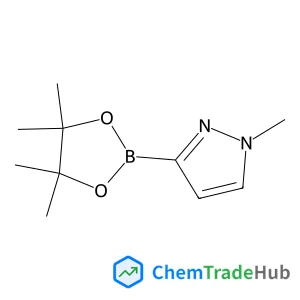
1-Methyl-3-(4,4,5,5-tetramethyl-1,3,2-dioxaborolan-2-yl)-1H-pyrazole
CAS Number:
1020174-04-2
Molecular Formula:
C10H17BN2O2
![4-{2-[4-(2-Methyl-2-propanyl)phenyl]ethoxy}quinazoline structure](https://static.chemtradehub.com/structs/120/120928-09-8-d3db.webp "4-{2-[4-(2-Methyl-2-propanyl)phenyl]ethoxy}quinazoline structure")
4-{2-[4-(2-Methyl-2-propanyl)phenyl]ethoxy}quinazoline
CAS Number:
120928-09-8
Molecular Formula:
C20H22N2O
![1-Naphthalenesulfonic acid, 2-[(2-hydroxy-1-naphthalenyl)azo]-, bariumsalt (2:1) structure](https://static.chemtradehub.com/structs/110/1103-38-4-0b33.webp "1-Naphthalenesulfonic acid, 2-[(2-hydroxy-1-naphthalenyl)azo]-, bariumsalt (2:1) structure")
1-Naphthalenesulfonic acid, 2-[(2-hydroxy-1-naphthalenyl)azo]-, bariumsalt (2:1)
CAS Number:
1103-38-4
Molecular Formula:
C20H14BaN2O4S
Recommended Suppliers






Disclaimer
This page provides academic journal information for reference and research purposes only. We are not affiliated with any journal publishers and do not handle publication submissions. For publication-related inquiries, please contact the respective journal publishers directly.
If you notice any inaccuracies in the information displayed, please contact us at support@chemtradehub.com. We will promptly review and address your concerns.