












Fullerenes generated from porous structures
Literature Information
Publication Date
2014-10-03
DOI
10.1039/C4CP03529A
Impact Factor
3.676
Authors
Ricardo Paupitz, Chad E. Junkermeier, Adri C. T. van Duin, Paulo S. Branicio
View Original
Abstract
A class of macromolecules based on the architecture of the well-known fullerenes is theoretically investigated. The building blocks used to geometrically construct these molecules are the two dimensional structures: porous graphene and biphenylene-carbon. Density functional-based tight binding methods as well as reactive molecular dynamics methods are applied to study the electronic and structural properties of these molecules. Our calculations predict that these structures can be stable up to temperatures of 2500 K. The atomization energies of carbon structures are predicted to be in the range of 0.45 eV per atom to 12.11 eV per atom (values relative to the C60 fullerene), while the hexagonal boron nitride analogues have atomization energies between −0.17 eV per atom and 12.01 eV per atom (compared to the B12N12 fullerene). Due to their high porosity, these structures may be good candidates for gas storage and/or molecular encapsulation.
Related Literature
The A-center defect in diamond: quantum mechanical characterization through the infrared spectrum
Simone Salustro, Giuseppe Sansone, Claudio M. Zicovich-Wilson, Yves Noël, Lorenzo Maschio, Roberto Dovesi
2017-05-23
Paper
DOI: 10.1039/C7CP00093F
Oxygen diffusion in ceria doped with rare-earth elements
Johan O. Nilsson, Mikael Leetmaa, Sergei I. Simak
2017-05-12
Paper
DOI: 10.1039/C6CP06460D
Strain engineering of electronic structures and photocatalytic responses of MXenes functionalized by oxygen
S. A. Khan, B. Amin, Li-Yong Gan, Iftikhar Ahmad
2017-05-10
Paper
DOI: 10.1039/C7CP02513K
Interface passivation and electron transport improvement of polymer solar cells through embedding a polyfluorene layer
Shujun Li, Zhiqi Li, Chunyu Liu, Xinyuan Zhang, Zhihui Zhang, Wenbin Guo, Liang Shen, Shengping Ruan, Liu Zhang
2017-05-15
Paper
DOI: 10.1039/C7CP01326D
Reactions between hydroxyl-substituted alkylperoxy radicals and Criegee intermediates: correlations of the electronic characteristics of methyl substituents and the reactivity
Qiangli Zhao, Fengyi Liu, Weina Wang, Chunying Li, Jian Lü, Wenliang Wang
2017-05-16
Paper
DOI: 10.1039/C7CP00869D
Establishing the link between fibril formation and Raman optical activity spectra of insulin
Shigeki Yamamoto, Petr Bouř
2017-05-11
Paper
DOI: 10.1039/C7CP01556A
Thionine–graphene oxide covalent hybrid and its interaction with light
Ewelina Krzyszkowska, Justyna Walkowiak-Kulikowska, Sven Stienen, Aleksandra Wojcik
2017-05-22
Paper
DOI: 10.1039/C7CP01267E
Dissection of H-bonding interactions in a glycolic acid–water dimer
Dan Shen, Zhen Tang, Wei Wu, Peifeng Su, Yong Xia, Zhijun Yang, Carl O. Trindle
2017-05-03
Paper
DOI: 10.1039/C7CP02234D
Elucidating the structure of light absorbing styrene carbocation species formed within zeolites
2017-05-16
Paper
DOI: 10.1039/C7CP02344H
A novel anion doping strategy to enhance upconversion luminescence in NaGd(MoO4)2:Yb3+/Er3+ nanophosphors
Dekang Xu, Hao Lin, Lu Yao, Shenghong Yang, Yuanzhi Shao, Yueli Zhang, Zhenqiang Chen
2017-05-25
Paper
DOI: 10.1039/C7CP00855D
You might also like
Compound Q&A
What are the main uses of 1-(3-Aminophenyl)-3-[(3R)-1-(3,3-dimethyl-2-oxobutyl)-2-oxo-5-(2-pyridinyl)-2,3-dihydro-1H-1,4-benzodiazepin-3-yl]urea (CAS: 155412-88-7)?
This compound is mainly used as an intermediate in the synthesis of antipsychoti...
155412-88-71-(3-Aminophenyl)-3-...
Compound Q&A
How should waste containing 1-(D-Ribofuranosyl)-1,4-dihydro-3-pyridinecarboxamide (CAS: 19132-12-8) be handled?
Waste containing 1-(D-Ribofuranosyl)-1,4-dihydro-3-pyridinecarboxamide (CAS: 191...
19132-12-81-(D-Ribofuranosyl)-...
Compound Q&A
What regulatory guidelines apply to 2-Methyl-2-propanyl 3-bromo-3-(hydroxymethyl)-1-azetidinecarboxylate (CAS: 2007919-81-3)?
2-Methyl-2-propanyl 3-bromo-3-(hydroxymethyl)-1-azetidinecarboxylate (CAS: 20079...
2007919-81-32-Methyl-2-propanyl ...
Compound Q&A
What is N-(4-Chloro-2-pyridinyl)acetamide (CAS: 245056-66-0)?
N-(4-Chloro-2-pyridinyl)acetamide (CAS: 245056-66-0) is a chemical compound with...
245056-66-0N-(4-Chloro-2-pyridi...
Compound Q&A
What is 5-Chloro-2-hydroxybenzoic acid (CAS: 321-14-2)?
5-Chloro-2-hydroxybenzoic acid, also known as 5-chlorosalicylic acid, is an arom...
321-14-25-Chloro-2-hydroxybe...
Compound Q&A
What precautions should be taken when handling 1,1-Dichloro-1-fluoroethane (CAS: 1717-00-6)?
When handling 1,1-Dichloro-1-fluoroethane (CAS: 1717-00-6), it is important to u...
1717-00-61,1-Dichloro-1-fluor...
Compound Q&A
What are the physical and chemical properties of Fmoc-(2S,3R)-3-phenylpyrrolidine-2-carboxylic acid (CAS: 281655-32-1)?
Fmoc-(2S,3R)-3-phenylpyrrolidine-2-carboxylic acid is a white crystalline solid ...
281655-32-1Fmoc-(2S,3R)-3-pheny...
Compound Q&A
What are the main uses of 4-Amino-5-bromo-2-pyridinecarboxylic acid (CAS: 1363381-01-4)?
4-Amino-5-bromo-2-pyridinecarboxylic acid is primarily used as a precursor in th...
1363381-01-44-Amino-5-bromo-2-py...
Compound Q&A
What precautions should be taken when handling (S)-tert-butyl 2-((2-(4-bromophenyl)-2-oxoethyl)carbamoyl)pyrrolidine-1-carboxylate (CAS: 1007881-98-2)?
Handling this compound should be done with personal protective equipment (PPE) i...
1007881-98-2(S)-tert-butyl 2-((2...
Compound Q&A
What precautions should be taken when handling 8-bromo-2,2-dimethyl-3,4-dihydro-2H-1,4-benzoxazin-3-one (CAS: 688363-73-7)?
When handling 8-bromo-2,2-dimethyl-3,4-dihydro-2H-1,4-benzoxazin-3-one, use prop...
688363-73-78-bromo-2,2-dimethyl...
Source Journal
Physical Chemistry Chemical Physics

CiteScore:
5.5
Self-citation Rate:
10.3%
Articles per Year:
3036
Physical Chemistry Chemical Physics (PCCP) is an international journal co-owned by 19 physical chemistry and physics societies from around the world. This journal publishes original, cutting-edge research in physical chemistry, chemical physics and biophysical chemistry. To be suitable for publication in PCCP, articles must include significant innovation and/or insight into physical chemistry; this is the most important criterion that reviewers and Editors will judge against when evaluating submissions. The journal has a broad scope and welcomes contributions spanning experiment, theory, computation and data science. Topical coverage includes spectroscopy, dynamics, kinetics, statistical mechanics, thermodynamics, electrochemistry, catalysis, surface science, quantum mechanics, quantum computing and machine learning. Interdisciplinary research areas such as polymers and soft matter, materials, nanoscience, energy, surfaces/interfaces, and biophysical chemistry are welcomed if they demonstrate significant innovation and/or insight into physical chemistry. Joined experimental/theoretical studies are particularly appreciated when complementary and based on up-to-date approaches.
Recommended Compounds
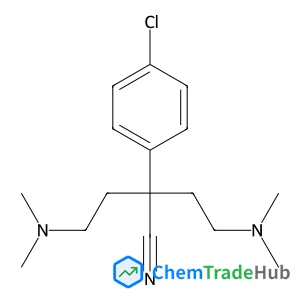
2-(4-Chlorophenyl)-4-(dimethylamino)-2-(2-(dimethylamino)ethyl)butanenitrile
CAS Number:
1246816-57-8
Molecular Formula:
C16H24ClN3

N,N-Diethyl-4-(4,4,5,5-tetramethyl-1,3,2-dioxaborolan-2-yl)benzamide
CAS Number:
325142-99-2
Molecular Formula:
C17H26BNO3
Recommended Suppliers






Disclaimer
This page provides academic journal information for reference and research purposes only. We are not affiliated with any journal publishers and do not handle publication submissions. For publication-related inquiries, please contact the respective journal publishers directly.
If you notice any inaccuracies in the information displayed, please contact us at support@chemtradehub.com. We will promptly review and address your concerns.