












Interface passivation and electron transport improvement of polymer solar cells through embedding a polyfluorene layer
Literature Information
Publication Date
2017-05-15
DOI
10.1039/C7CP01326D
Impact Factor
3.676
Authors
Shujun Li, Zhiqi Li, Chunyu Liu, Xinyuan Zhang, Zhihui Zhang, Wenbin Guo, Liang Shen, Shengping Ruan, Liu Zhang
View Original
Abstract
In this contribution, a series of conducting polyfluorenes (PF) are introduced to improve interface adhesion and boost charge extraction of the TiO2 electron transport layer of inverted polymer solar cells (PSCs). After employing poly (9,9-dihexylfluorenyl-2,7-diyl) (PDF), poly[(9,9-dioctylfluorenyl-2,7-diyl)-alt-co-(1,4-benzo-{2,1′,3}-thiadiazole)] (PDFBT), and poly[(4-(5-(7-methyl-9,9-dioctyl-9H-fluoren-2-yl) thiophen-2-yl)-7-(5-methylthiophen-2-yl)benzo[c][1,2,5]thiadiazole)] (PFTBT) as capping layers, interfacial coherence improvement and energy loss decrease are both achieved, facilitating charge transfer from the active layer to the TiO2 layer. The optimized contact, enhanced electrical conductivity, and reduced internal resistance contribute to increased short-circuit current density and fill factor, leading to an enhanced power conversion efficiency (PCE) from 5.72% up to 7.97%. The employment of the PF capping TiO2 buffer layer provides a promising approach to develop high efficiency PSCs.
Recommended Journals
Related Literature
Photoredox-catalyzed 2,2,2-trifluoroethylation and 2,2-difluoroethylation of alkenes with concomitant introduction of a quinoxalin-2(1H)-one moiety
Xiu Yang, Wei-Dong Meng, Xiu-Hua Xu, Yangen Huang
2021-10-05
Research Article
DOI: 10.1039/D1QO01170G
Multifunctional P-ligand-controlled “silicon-centered” selectivity in Rh/Cu-catalyzed Si–C bond cleavage of silacyclobutanes
Xu Wang, Shuai-Shuai Huang, Feng-Jiao Zhang, Jia-Le Xie, Zhao Li, Zheng Xu, Fei Ye
2021-10-05
Research Article
DOI: 10.1039/D1QO01386F
A mechanistic study on the regioselective Ni-catalyzed methylation–alkenylation of alkyne with AlMe3 and allylic alcohol
Jiao Liu, Deguang Liu, Wan Nie, Haizhu Yu, Jing Shi
2021-11-17
Research Article
DOI: 10.1039/D1QO01580J
Rapid and reversible hydrazone bioconjugation in cells without the use of extraneous catalysts
Rahul Nisal, Gregor P. Jose, Chitra Shanbhag, Jeet Kalia
2018-05-18
Paper
DOI: 10.1039/C8OB00946E
Novel photoactivatable substrates for Renilla luciferase imaging in vitro and in vivo
Chaochao Zhang, Lin Cheng, Gaopan Dong, Guangxi Han, Xingye Yang, Chunchao Tang, Xiang Li, Yubin Zhou, Lupei Du
2018-06-13
Communication
DOI: 10.1039/C8OB01192C
Elucidation of the catalytic mechanism of 6-hydroxymethyl-7,8-dihydropterin pyrophosphokinase using QM/MM calculations
Nathjanan Jongkon, Duangkamol Gleeson, M. Paul Gleeson
2018-08-03
Paper
DOI: 10.1039/C8OB01428K
Correction: 2-Aroylquinoline-5,8-diones as potent anticancer agents displaying tubulin and heat shock protein 90 (HSP90) inhibition
Kunal Nepali, Sunil Kumar, Hsiang-Ling Huang, Fei-Chiao Kuo, Cheng-Hsin Lee, Ching-Chuan Kuo, Teng-Kuang Yeh, Yu-Hsuan Li, Jang-Yang Chang, Jing-Ping Liou, Hsueh-Yun Lee
2018-06-15
Correction
DOI: 10.1039/C8OB90080A
Aziridine based electrophilic handle for aspartic acid ligation
Kiran Bajaj, Devesh S. Agarwal, Rajeev Sakhuja, Girinath G. Pillai
2018-05-16
Paper
DOI: 10.1039/C8OB00676H
Gold-catalysed synthesis of phosphonate-substituted oxetan-3-ones – an easy access to highly strained HWE reagents
Shaista Tahir, Jonas F. Wunsch, Matthias Rudolph, Frank Rominger
2021-11-12
Research Article
DOI: 10.1039/D1QO01214B
One-pot enantioselective construction of 3,4-dihydro-2H-1,4-oxazines over Ru/Au relay catalysis and its mechanistic serendipity
Dongfeng Yang, Chengyi Wang, Yu Wang, Guohua Liu, Tanyu Cheng, Rui Liu
2021-11-17
Research Article
DOI: 10.1039/D1QO01482J
You might also like
Compound Q&A
What industries use (1R,3S)-1,3-Cyclopentanediol (CAS: 16326-97-9)?
(1R,3S)-1,3-Cyclopentanediol finds applications in various industries. In the ph...
16326-97-9(1R,3S)-1,3-Cyclopen...
Compound Q&A
What precautions should be taken when handling N'-[4-(Dimethylamino)phenyl]-N,N-dimethyl-1,4-benzenediamine (CAS: 637-31-0)?
When handling N'-[4-(Dimethylamino)phenyl]-N,N-dimethyl-1,4-benzenediamine, it i...
637-31-0N'-[4-(Dimethylamino...
Compound Q&A
Are there alternatives to 5-(2,4-Difluorophenyl)-2-methoxypyrimidine (CAS: 1352318-16-1) in synthesis?
There are several alternatives to 5-(2,4-Difluorophenyl)-2-methoxypyrimidine in ...
1352318-16-15-(2,4-Difluoropheny...
Compound Q&A
What regulatory guidelines apply to 1-(3-Methoxyphenoxy)propan-2-ol (CAS: 382141-68-6)?
1-(3-Methoxyphenoxy)propan-2-ol (CAS: 382141-68-6) must comply with the Globally...
382141-68-61-(3-Methoxyphenoxy)...
Compound Q&A
Is Tetrodotoxin Citrate (CAS: 18660-81-6) safe?
Tetrodotoxin Citrate is extremely dangerous and should be handled with extreme c...
18660-81-6Tetrodotoxin Citrate
Compound Q&A
What are the main uses of 2-Methyl-2-propanyl [(1R,3S)-3-hydroxycyclopentyl]carbamate (CAS: 225641-84-9)?
2-Methyl-2-propanyl [(1R,3S)-3-hydroxycyclopentyl]carbamate (CAS: 225641-84-9) i...
225641-84-92-Methyl-2-propanyl ...
Compound Q&A
How should waste containing 4-(2-Hydroxyhexafluoroisopropyl)Benzoic Acid (CAS: 16261-80-6) be handled?
Waste containing 4-(2-Hydroxyhexafluoroisopropyl)Benzoic Acid (CAS: 16261-80-6) ...
16261-80-64-(2-Hydroxyhexafluo...
Compound Q&A
How is 2-Methyl-2-proanyl {(2S)-1-[(benzyloxy)amino]-3-hydroxy-3-methyl-1-oxo-2-butanyl}carbamate (CAS: 102507-19-7) typically synthesized?
2-Methyl-2-proanyl {(2S)-1-[(benzyloxy)amino]-3-hydroxy-3-methyl-1-oxo-2-butanyl...
102507-19-72-Methyl-2-propanyl ...
Compound Q&A
What is Benzeneethanamine, α-ethyl-, hydrochloride (1:1) (CAS: 20735-15-3)?
Benzeneethanamine, α-ethyl-, hydrochloride (1:1) is an organic compound with the...
20735-15-3Benzeneethanamine, α...
Compound Q&A
Are there alternatives to 3-{(E)-[4-(Dimethylamino)phenyl]diazenyl}benzoic acid (CAS: 20691-84-3) in synthesis?
In the synthesis of compounds similar to 3-{(E)-[4-(Dimethylamino)phenyl]diazeny...
20691-84-33-{(E)-[4-(Dimethyla...
Source Journal
Physical Chemistry Chemical Physics

CiteScore:
5.5
Self-citation Rate:
10.3%
Articles per Year:
3036
Physical Chemistry Chemical Physics (PCCP) is an international journal co-owned by 19 physical chemistry and physics societies from around the world. This journal publishes original, cutting-edge research in physical chemistry, chemical physics and biophysical chemistry. To be suitable for publication in PCCP, articles must include significant innovation and/or insight into physical chemistry; this is the most important criterion that reviewers and Editors will judge against when evaluating submissions. The journal has a broad scope and welcomes contributions spanning experiment, theory, computation and data science. Topical coverage includes spectroscopy, dynamics, kinetics, statistical mechanics, thermodynamics, electrochemistry, catalysis, surface science, quantum mechanics, quantum computing and machine learning. Interdisciplinary research areas such as polymers and soft matter, materials, nanoscience, energy, surfaces/interfaces, and biophysical chemistry are welcomed if they demonstrate significant innovation and/or insight into physical chemistry. Joined experimental/theoretical studies are particularly appreciated when complementary and based on up-to-date approaches.
Recommended Compounds
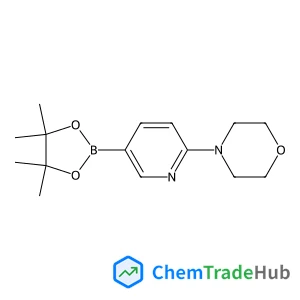
4-(5-(4,4,5,5-tetramethyl-1,3,2-dioxaborolan-2-yl)pyridin-2-yl)morpholine
CAS Number:
485799-04-0
Molecular Formula:
C15H23BN2O3
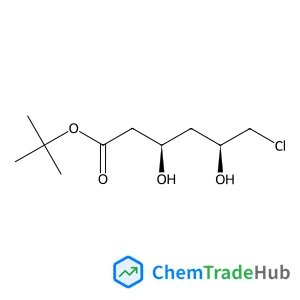
2-Methyl-2-propanyl (3R,5S)-6-chloro-3,5-dihydroxyhexanoate
CAS Number:
154026-93-4
Molecular Formula:
C10H19ClO4
Recommended Suppliers






Disclaimer
This page provides academic journal information for reference and research purposes only. We are not affiliated with any journal publishers and do not handle publication submissions. For publication-related inquiries, please contact the respective journal publishers directly.
If you notice any inaccuracies in the information displayed, please contact us at support@chemtradehub.com. We will promptly review and address your concerns.