












Polymorphic transformations and optical properties of graphene-based Ag-doped titania nanostructures
Literature Information
Publication Date
2014-09-17
DOI
10.1039/C4CP02982H
Impact Factor
3.676
Authors
Anand Kumar Tripathi, Promod Kumar, Balasubramaniyan R., Manish Kumar Singh, Jin Suk Chung, Seung Hyun Hur, Arvind Agarwal
View Original
Abstract
TiO2 is the most studied semiconductor material for photovoltaics and photocatalyst applications, but due to a very large electron hole recombination process it is difficult to use it as a photovoltaics material. In this context graphene-decorated Ag-doped TiO2 nanostructures have been synthesized by a simple, cost effective chemical method. In this paper, we have studied the structural transformations and electronic band structure of Ag-doped TiO2 due to the incorporation of graphene oxide. Pure rutile and anatase–rutile mixed phases of TiO2 nanoparticles were obtained by Ag doping and annealing at 400 °C. A large red shift was observed in most of the graphene-decorated, doped TiO2 hybrid nanostructures, which is because of the electron transfer between the conduction bands of the doped TiO2 and the multilayer graphene. The Ag-doped TiO2 nanoparticles appear in the shape of a bunch of bananas (or rice-like) because of the jumbled collection of particles, which remain unaltered even after graphene decoration. The strong electrical coupling of Ag-doped TiO2 with reduced graphene oxide produces an advanced hybrid material useful for superior photovoltaics, photocatalytic activity and other applications.
Related Literature
Fabrication and photoluminescence of chemically stable La2O3:Eu3+–La2Sn2O7 core–shell-structured nanoparticles
Eiji Hosono, Shinobu Fujihara
2004-08-13
Communication
DOI: 10.1039/B408495K
The mechanism of the oxidative addition of aryl halides to Pd-catalysts: a DFT investigation
Lukas J. Gooßen, Debasis Koley, Holger Hermann, Walter Thiel
2004-08-20
Communication
DOI: 10.1039/B409144B
Facile deposition of copper-doped diamond-like carbon nanocomposite films by a liquid-phase electrochemical route
Heqing Jiang, Lina Huang, Zhijun Zhang, Tao Xu, Weimin Liu
2004-08-19
Communication
DOI: 10.1039/B408497G
Cyclopeptide alkaloids: chemistry and biology
Madeleine M. Joullié, David J. Richard
2004-08-31
Feature Article
DOI: 10.1039/B400334A
New reactions in water: metal-free conversion of alcohols and ketones into α-iodoketones
José Barluenga, María Marco-Arias, Francisco González-Bobes, Alfredo Ballesteros, José M. González
2004-10-04
Communication
DOI: 10.1039/B411227J
Bundles of identical double-walled carbon nanotubes
J.-F. Colomer, L. Henrard, P. Launois, G. Van Tendeloo, A. A. Lucas, Ph. Lambin
2004-09-30
Communication
DOI: 10.1039/B410930A
A mixed ladderane/n-alkyl glycerol diether membrane lipid in an anaerobic ammonium-oxidizing bacterium
Jaap S. Sinninghe Damsté, W. Irene C. Rijpstra, Marc Strous, Mike S. M. Jetten, Olivier R. P. David, Jan A. J. Geenevasen, Jan H. van Maarseveen
2004-09-30
Communication
DOI: 10.1039/B409806D
A new packing motif for para-sulfonatocalix[4]arene: the solid state structure of the para-sulfonatocalix[4]arene d-arginine complex
Adina Lazar, Eric Da Silva, Alda Navaza, Carole Barbey, Anthony W. Coleman
2004-08-20
Communication
DOI: 10.1039/B408863H
A facile synthesis of single-crystal mullite nanobelts
Chuanbao Cao, Xu Xiang, Hesun Zhu
2004-09-24
Communication
DOI: 10.1039/B409087J
Molecular tectonics: design of luminescent H-bonded molecular networks
Sylvie Ferlay, Mir Wais Hosseini, Véronique Bulach, Jean-Marc Planeix
2004-09-07
Communication
DOI: 10.1039/B410459P
You might also like
Compound Q&A
How should waste containing 6-Chloro-5-(2'-hydroxy-3'-methoxy-4-biphenylyl)-3-(3-methoxyphenyl)-1H-pyrrolo[3,2-d]pyrimidine-2,4(3H,5H)-dione (CAS: 1346607-05-3) be handled?
Waste containing 6-Chloro-5-(2'-hydroxy-3'-methoxy-4-biphenylyl)-3-(3-methoxyphe...
1346607-05-36-Chloro-5-(2'-hydro...
Compound Q&A
What are the main uses of (3alpha,5alpha)-3-Hydroxypregnane-11,20-dione (CAS: 23930-19-0)?
(3alpha,5alpha)-3-Hydroxypregnane-11,20-dione is primarily used in the pharmaceu...
23930-19-0(3alpha,5alpha)-3-Hy...
Compound Q&A
What is the market or research trend for 4-Amino-6-chloro-2-pyridinecarboxylic acid (CAS: 546141-56-4)?
The market for 4-Amino-6-chloro-2-pyridinecarboxylic acid (CAS: 546141-56-4) is ...
546141-56-44-Amino-6-chloro-2-p...
Compound Q&A
Are there alternatives to (2-Benzoylethyl)trimethylammonium chloride (CAS: 24472-88-6) in synthesis?
Alternatives to (2-Benzoylethyl)trimethylammonium chloride (CAS: 24472-88-6) in ...
24472-88-6(2-Benzoylethyl)trim...
Compound Q&A
Is N-[4-Nitro-3-(trifluoromethyl)phenyl]acetamide (CAS: 393-12-4) safe?
N-[4-Nitro-3-(trifluoromethyl)phenyl]acetamide (CAS: 393-12-4) is generally safe...
393-12-4N-[4-Nitro-3-(triflu...
Compound Q&A
Are there alternatives to [(4R,5R,6S)-5-hydroxy-10-imino-3,7-dioxa-1,9-diazatricyclo[6.4.0.02,6]dodeca-8,11-dien-4-yl]methyl dihydrogen phosphate (CAS: 39679-56-6) in synthesis?
Alternative reagents such as other phosphates or similar functional groups can b...
39679-56-6[(4R,5R,6S)-5-hydrox...
Compound Q&A
Are there alternatives to N,N'-Bis(3-aminopropyl)-1,3-propanediamine (CAS: 4605-14-5) in synthesis?
There are alternatives to N,N'-Bis(3-aminopropyl)-1,3-propanediamine (CAS: 4605-...
4605-14-5N,N'-Bis(3-aminoprop...
Compound Q&A
What precautions should be taken when handling Aluminium trihexadecanoate (CAS: 555-35-1)?
When handling Aluminium trihexadecanoate, it is important to use appropriate per...
555-35-1Aluminium trihexadec...
Compound Q&A
What is (1,1-Dioxido-3-oxo-1,2-benzothiazol-2(3H)-yl)acetic acid (CAS: 52188-11-1)?
(1,1-Dioxido-3-oxo-1,2-benzothiazol-2(3H)-yl)acetic acid is a chemical compound ...
52188-11-1(1,1-Dioxido-3-oxo-1...
Compound Q&A
Are there alternatives to 5,5-dimethyloxolan-2-one (CAS: 3123-97-5) in synthesis?
Several alternatives to 5,5-dimethyloxolan-2-one (CAS: 3123-97-5) can be used in...
3123-97-55,5-dimethyloxolan-2...
Source Journal
Physical Chemistry Chemical Physics

CiteScore:
5.5
Self-citation Rate:
10.3%
Articles per Year:
3036
Physical Chemistry Chemical Physics (PCCP) is an international journal co-owned by 19 physical chemistry and physics societies from around the world. This journal publishes original, cutting-edge research in physical chemistry, chemical physics and biophysical chemistry. To be suitable for publication in PCCP, articles must include significant innovation and/or insight into physical chemistry; this is the most important criterion that reviewers and Editors will judge against when evaluating submissions. The journal has a broad scope and welcomes contributions spanning experiment, theory, computation and data science. Topical coverage includes spectroscopy, dynamics, kinetics, statistical mechanics, thermodynamics, electrochemistry, catalysis, surface science, quantum mechanics, quantum computing and machine learning. Interdisciplinary research areas such as polymers and soft matter, materials, nanoscience, energy, surfaces/interfaces, and biophysical chemistry are welcomed if they demonstrate significant innovation and/or insight into physical chemistry. Joined experimental/theoretical studies are particularly appreciated when complementary and based on up-to-date approaches.
Recommended Compounds
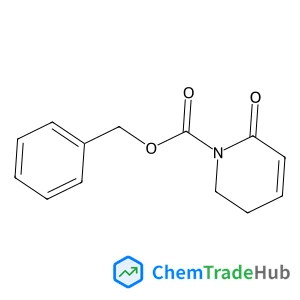
Benzyl 6-oxo-3,6-dihydro-1(2H)-pyridinecarboxylate
CAS Number:
725746-35-0
Molecular Formula:
C13H13NO3
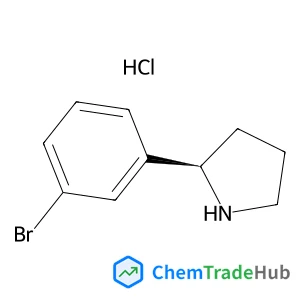
(2R)-2-(3-Bromophenyl)pyrrolidine hydrochloride (1:1)
CAS Number:
1391550-13-2
Molecular Formula:
C10H13BrClN

Recommended Suppliers





Disclaimer
This page provides academic journal information for reference and research purposes only. We are not affiliated with any journal publishers and do not handle publication submissions. For publication-related inquiries, please contact the respective journal publishers directly.
If you notice any inaccuracies in the information displayed, please contact us at support@chemtradehub.com. We will promptly review and address your concerns.