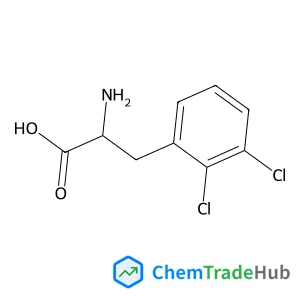
![3-[4-(difluoromethoxy)phenyl]-2-({[(9H-fluoren-9-yl)methoxy]carbonyl}amino)propanoic acid structure](https://static.chemtradehub.com/structs/149/1496564-27-2-952e.webp "3-[4-(difluoromethoxy)phenyl]-2-({[(9H-fluoren-9-yl)methoxy]carbonyl}amino)propanoic acid structure")
3-[4-(difluoromethoxy)phenyl]-2-({[(9H-fluoren-9-yl)methoxy]carbonyl}amino)propanoic acid
CAS Number:
1496564-27-2
Molecular Formula:
C25H21F2NO5
Y. Isshiki, S. Fujii, T. Nishino, M. Kiguchi
We have investigated the electric conductance and atomic structure of single molecular junctions of pyrazine (Py), 4,4′-bipyridine (BiPy), fullerene (C60), and 1,4-diaminobutane (DAB). The single molecular junctions were fabricated by breaking Au contacts between an Au tip and the Au electrode surface in the presence of the target molecules (breaking process) or approaching the Au tip to the Au electrode surface covered by the molecules (making process). In the making process, no major conductance state was observed in the conductance histogram for DAB, while single conductance states were observed for the π-conjugated molecules of Py (10 mG0, G0 ∼ 77.45 μ Ω−1), BiPy (3 mG0), and C60 (5 mG0). In contrast to the making process, two major conductance states were observed for Py (1 mG0 and 0.3 mG0), BiPy (0.6 mG0 and 0.2 mG0), and C60 (30 mG0 and 3 mG0) in the breaking process. The observed conductance behavior could be explained by the characters of the anchoring unit of molecules. In the making process, anchoring of molecules cannot be established by the point contact between the Au electrode and the localized lone pair of the N atom of DAB, Py, and BiPY, while molecules anchor on the Au electrode by using the plane-like contact between the Au electrode and the delocalized π electrons in the aromatic ring of Py, BiPY, and C60, which explains the difference in the observed conductance behavior between DAB and the π conjugated molecules of Py, BiPY, and C60 in the making process. In the breaking process, the delocalized π-electrons of Py, BiPY, and C60 can make a contact with the Au electrode surface and the lone pair on the N atom of DAB as well as Py and BiPY can bind to Au atoms, and therefore, single molecular junctions were formed for all systems. The present results indicate that the π-plane is important for making metal–molecule contacts and for the formation of the single molecular junction in the making process.
Renhe Li, Guangbin Dong
DOI: 10.1039/C8QO00808F
N. Kodiah Beyeh, Sandip Bhowmik, Fangfang Pan, K. Rissanen
DOI: 10.1039/C4QO00326H
Pedro Almendros, Hikaru Yanai, Shoki Hoshikawa, Cristina Aragoncillo, Carlos Lázaro-Milla, Mireia Toledano-Pinedo, Takashi Matsumoto, Benito Alcaide
DOI: 10.1039/C8QO00955D
Resul Ozdemir, Sangyun Park, İbrahim Deneme, Yonghan Park, Yunus Zorlu, Kevser Harmandar, Choongik Kim, Hakan Usta
DOI: 10.1039/C8QO00856F
Matthias Leiendecker, Adisak Chatupheeraphat, Magnus Rueping
DOI: 10.1039/C5QO00001G
Bharatkumar Chaudhary, Monika Diwaker, Satyasheel Sharma
DOI: 10.1039/C8QO00932E
Bing Leng, Xueshun Jia, Xiaodi Yang, Xike Gao
DOI: 10.1039/C4QO00252K
Rong-Ran Liang, Xin Zhao
DOI: 10.1039/C8QO00830B
Thomas Lebleu, Jacques Maddaluno, Julien Legros
DOI: 10.1039/C4QO00342J
2-(2-Chloroacetamido)-3-phenylpropanoic acid (CAS: 7765-11-9) is generally consi...
2-(Benzyloxy)-5-bromobenzoic acid can be handled safely if appropriate precautio...
(4-Methyl-1,2,5-oxadiazol-3-yl)methanamine hydrochloride is a chemical compound ...
2-(5-Hexylthiophen-2-yl)-4,4,5,5-tetramethyl-1,3,2-dioxaborolane (CAS: 917985-54...
While 4-(8-Methyl-9H-1,3-dioxolo[4,5-h][2,3]benzodiazepin-5-yl)benzenamine (CAS:...
The market for tert-butyl 3-hydroxy-4,5,7,8-tetrahydro-2H-pyrazolo[3,4-d]azepine...
Waste containing 3,5-Diamino-1H-pyrazole-4-carbonitrile (CAS: 6844-58-2) should ...
(6-Fluoro-3-pyridinyl)boronic acid can be synthesized through the reaction of 6-...
Dibenzyl carbonimidoylbiscarbamate (CAS: 10065-79-9) finds applications in vario...
The market for (beta,beta,2,3,4,5,6-~2~H_7_)Phenylalanine (CAS: 74228-83-4) is g...

Physical Chemistry Chemical Physics (PCCP) is an international journal co-owned by 19 physical chemistry and physics societies from around the world. This journal publishes original, cutting-edge research in physical chemistry, chemical physics and biophysical chemistry. To be suitable for publication in PCCP, articles must include significant innovation and/or insight into physical chemistry; this is the most important criterion that reviewers and Editors will judge against when evaluating submissions. The journal has a broad scope and welcomes contributions spanning experiment, theory, computation and data science. Topical coverage includes spectroscopy, dynamics, kinetics, statistical mechanics, thermodynamics, electrochemistry, catalysis, surface science, quantum mechanics, quantum computing and machine learning. Interdisciplinary research areas such as polymers and soft matter, materials, nanoscience, energy, surfaces/interfaces, and biophysical chemistry are welcomed if they demonstrate significant innovation and/or insight into physical chemistry. Joined experimental/theoretical studies are particularly appreciated when complementary and based on up-to-date approaches.
![(3S,4aS,8aS)-2-[(2R,3S)-3-Amino-2-hydroxy-4-phenylbutyl]-N-(2-methyl-2-propanyl)decahydro-3-isoquinolinecarboxamide structure](https://static.chemtradehub.com/structs/136/136522-17-3-4d77.webp "(3S,4aS,8aS)-2-[(2R,3S)-3-Amino-2-hydroxy-4-phenylbutyl]-N-(2-methyl-2-propanyl)decahydro-3-isoquinolinecarboxamide structure")
![2-[(E)-(2-Methoxyphenyl)diazenyl]-3-oxo-N-(2-oxo-2,3-dihydro-1H-benzimidazol-5-yl)butanamide structure](https://static.chemtradehub.com/structs/821/82199-12-0-f1d0.webp "2-[(E)-(2-Methoxyphenyl)diazenyl]-3-oxo-N-(2-oxo-2,3-dihydro-1H-benzimidazol-5-yl)butanamide structure")