


Monitoring of the crystallization of zeolite LTA using Raman and chemometric tools
Literature Information
Publication Date
2014-11-13
DOI
10.1039/C4AN00913D
Impact Factor
4.616
Authors
T. F. Chaves, F. L. F. Soares, D. Cardoso, R. L. Carneiro
View Original
Abstract
LTA zeolite is used both in industry as well as in laboratories, because of its spatial-specific structure which is useful in gas adsorption and in ion exchange separation. At-line reaction monitoring and multivariate analysis of data, such as Principal Component Analysis (PCA), are fundamentals of the Process Analytical Technology (PAT), which consists of the use of analyzers with rapid detection and low sample preparation for analysis during the process stream. In this work, an optimization of zeolite LTA synthesis was performed aiming to obtain nanocrystals and the synthesis was monitored using Raman spectroscopy and PCA. A reaction mixture of 6.2Na2O : Al2O3 : 2SiO2 : 128H2O was used and it was possible to obtain a small particle size and high crystallinity after 72 h of synthesis at 25 °C. The synthesis was monitored at-line, using Raman spectroscopy in both liquid and solid phases. The extension of the reaction could be clearly observed by the PCA scores. As expected, the liquid phase presented changes over time, but the solid phase presented three specific stationary conditions at 0–24 h, 32–56 h and 72–80, related to the beginning of the reaction, the nucleation process, and the crystal formation, respectively. In addition, it was possible to identify the intermediates of the reaction and with the aid of PCA to monitor the reaction close to the real time.
Recommended Journals

Saudi Pharmaceutical Journal

New Journal of Chemistry

Russian Journal of Applied Chemistry

Russian Journal of Coordination Chemistry

Current Opinion in Solid State & Materials Science

Acta Materialia

Journal of Peptide Science

Russian Journal of Organic Chemistry

Russian Journal of Bioorganic Chemistry

Russian Chemical Bulletin
Related Literature
Resolution of the non-steady-state kinetics of the elimination of HBr from 2-(p-nitrophenyl)ethyl bromide in alcohol/alkoxide media
Kishan L. Handoo, Yun Lu, Yixing Zhao, Vernon D. Parker
2002-11-21
Communication
DOI: 10.1039/B208634D
From central to planar chirality, the first example of atropenantioselective cycloetherification
Gabriela Islas-Gonzalez, Michèle Bois-Choussy, Jieping Zhu
2002-11-08
Communication
DOI: 10.1039/B208905J
First catalyst-free CO2 trapping of N-acyliminium ions under ambient conditions: sustainable multicomponent synthesis of thia- and oxazolidinyl carbamates
Max Franz, Timo Stalling, Henning Steinert, Jürgen Martens
2018-09-05
Paper
DOI: 10.1039/C8OB01865K
Probing the mechanism of a fungal glycosyltransferase essential for cell wall biosynthesis. UDP-Chitobiose is not a substrate for chitin synthase
Robert Chang, Adam R. Yeager, Nathaniel S. Finney
2002-12-05
Communication
DOI: 10.1039/B208953J
HIV-1 protease: mechanism and drug discovery
Ashraf Brik, Chi-Huey Wong
2002-11-26
Perspective
DOI: 10.1039/B208248A
Transition metal free decarboxylative fluoroalkylation of N-acrylamides with 3,3,3-trifluoro-2,2-dimethylpropanoic acid (TFDMPA)
Yingkun Shi, Hongqing Xiao, Xiu-Hua Xu, Yangen Huang
2018-10-22
Communication
DOI: 10.1039/C8OB02457J
Dirhodium(ii)-catalyzed ortho C–H amination of sterically congested N,N-dialkylanilines
Motoki Ito, Tomoya Nakagawa, Kazuhiro Higuchi, Shigeo Sugiyama
2018-09-12
Communication
DOI: 10.1039/C8OB01974F
Bioactive polycyclic polyprenylated acylphloroglucinols from Hypericum perforatum
Yi Guo, Na Zhang, Weiguang Sun, Xueyan Duan, Qing Zhang, Qun Zhou, Chunmei Chen, Hucheng Zhu, Zengwei Luo, Junjun Liu, Xiao-Nian Li, Yongbo Xue, Yonghui Zhang
2018-10-08
Paper
DOI: 10.1039/C8OB02067A
Synthesis and Suzuki–Miyaura cross coupling reactions for post-synthetic modification of a tetrabromo-anthracenyl porphyrin
Joffrey Pijeat, Yannick J. Dappe, Pierre Thuéry, Stéphane Campidelli
2018-10-09
Paper
DOI: 10.1039/C8OB02150C
Direct defluorinative amidation–hydrolysis reaction of gem-difluoroalkenes with N,N-dimethylformamide, and primary and secondary amines
Biyun Wang, Xianghu Zhao, Qingyun Liu, Song Cao
2018-10-18
Paper
DOI: 10.1039/C8OB02322K
You might also like
Compound Q&A
Is 4-Benzyl-2,2-dimethylmorpholine (CAS: 84761-04-6) safe?
4-Benzyl-2,2-dimethylmorpholine is generally considered safe when handled under ...
84761-04-64-Benzyl-2,2-dimethy...
Compound Q&A
What is (5,6-Dimethoxy-3-pyridinyl)boronic acid (CAS: 1346526-61-1)?
(5,6-Dimethoxy-3-pyridinyl)boronic acid is a chemical compound with the molecula...
1346526-61-1(5,6-Dimethoxy-3-pyr...
Compound Q&A
How is 1,1,3,3-Tetramethyl-1,3-bis(2-methyl-2-propanyl)disiloxane (CAS: 67875-55-2) typically synthesized?
1,1,3,3-Tetramethyl-1,3-bis(2-methyl-2-propanyl)disiloxane is synthesized throug...
67875-55-21,1,3,3-Tetramethyl-...
Compound Q&A
What are the main uses of (2R,4S)-1-Boc-4-methylpyrrolidine-2-carboxylic acid (CAS: 1018818-04-6)?
(2R,4S)-1-Boc-4-methylpyrrolidine-2-carboxylic acid is primarily used as a build...
1018818-04-6(2R,4S)-1-Boc-4-meth...
Compound Q&A
What precautions should be taken when handling 2,3-Dichloroacrylonitrile (CAS: 22410-58-8)?
When handling 2,3-Dichloroacrylonitrile, it is crucial to wear appropriate perso...
22410-58-82,3-Dichloroacryloni...
Compound Q&A
How should (S)-1-(o-Tolyl)ethanamine hydrochloride (CAS: 1332832-16-2) be stored?
(S)-1-(o-Tolyl)ethanamine hydrochloride should be stored in a cool, dry place to...
1332832-16-2(S)-1-(o-Tolyl)ethan...
Compound Q&A
What are the physical and chemical properties of Benzyl [1-(hydroxyamino)-1-imino-2-methyl-2-propanyl]carbamate (CAS: 518047-98-8)?
Benzyl [1-(hydroxyamino)-1-imino-2-methyl-2-propanyl]carbamate (CAS: 518047-98-8...
518047-98-8Benzyl [1-(hydroxyam...
Compound Q&A
What industries use 2-Methyloxazole-5-carbaldehyde (CAS: 885273-42-7)?
2-Methyloxazole-5-carbaldehyde is used in the pharmaceutical industry for the sy...
885273-42-72-Methyloxazole-5-ca...
Compound Q&A
What is the market or research trend for 2-Methyl-2-propanyl 4-[(1S)-1-hydroxyethyl]-1-piperidinecarboxylate (CAS: 389889-82-1)?
The market for 2-Methyl-2-propanyl 4-[(1S)-1-hydroxyethyl]-1-piperidinecarboxyla...
389889-82-12-Methyl-2-propanyl ...
Compound Q&A
Is 1-Butyl-3-methylpyridinium bromide (CAS: 26576-85-2) safe?
1-Butyl-3-methylpyridinium bromide is generally considered safe for laboratory u...
26576-85-21-Butyl-3-methylpyri...
Source Journal
Analyst

CiteScore:
7.8
Self-citation Rate:
5.6%
Articles per Year:
653
Analyst publishes analytical and bioanalytical research that reports premier fundamental discoveries and inventions, and the applications of those discoveries, unconfined by traditional discipline barriers.
Recommended Compounds
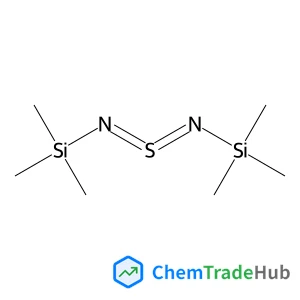
1,3-Bis(trimethylsilyl)-2lambda~4~-diazathia-1,2-diene
CAS Number:
18156-25-7
Molecular Formula:
C6H18N2SSi2
Recommended Suppliers




Disclaimer
This page provides academic journal information for reference and research purposes only. We are not affiliated with any journal publishers and do not handle publication submissions. For publication-related inquiries, please contact the respective journal publishers directly.
If you notice any inaccuracies in the information displayed, please contact us at support@chemtradehub.com. We will promptly review and address your concerns.