












Synthesis and Suzuki–Miyaura cross coupling reactions for post-synthetic modification of a tetrabromo-anthracenyl porphyrin
Literature Information
Publication Date
2018-10-09
DOI
10.1039/C8OB02150C
Impact Factor
3.876
Authors
Joffrey Pijeat, Yannick J. Dappe, Pierre Thuéry, Stéphane Campidelli
View Original
Abstract
The outstanding properties of porphyrins and the extreme versatility of their synthesis and their functionalisation constitute real assets for the fabrication of opto- and electroactive materials or for biological applications. In the large collection of porphyrinic structures, meso-substituted anthracenylporphyrins are among the less studied. Here, we synthesised the 5,10,15,20-tetra-bromoanthracenylporphyrin (BrTAP) and we investigated its chemical reactivity by post-synthetic modification using Suzuki–Miyaura cross coupling reactions with a series of boronic acids to generate a collection of original tetra-anthracenyl porphyrin based molecules: tetraphenylanthracenylporphyrin (TPAP), tetratolylanthracenylporphyrin (TTAP), tetramethoxyphenylanthracenylporphyrin (TMPAP), tetranaphthylanthracenylporphyrin (TNAP) and tetrapyrenylanthracenylporphyrin (TPyAP). Optical characterisations of these modified porphyrins showed, in most cases, only emission of the porphyrin in the visible region with extinction of the fluorescence of PAHs in the UV or visible region.
Related Literature
Sustainable chromatography (an oxymoron?)
Emily A. Peterson, Barry Dillon, Izzat Raheem, Paul Richardson, Daniel Richter, Rachel Schmidt, Helen F. Sneddon
2014-07-15
Perspective
DOI: 10.1039/C4GC00615A
Towards non-toxic solvents for membrane preparation: a review
A. Figoli, T. Marino, S. Simone, E. Di Nicolò, X.-M. Li, T. He, S. Tornaghi, E. Drioli
2014-07-03
Tutorial Review
DOI: 10.1039/C4GC00613E
Highly active, water-compatible and easily separable magnetic mesoporous Lewis acid catalyst for the Mukaiyama–Aldol reaction in water
Fang Zhang, Xiaotao Wu, Chao Liang, Xiaoyan Li, Zhen Wang, Hexing Li
2014-03-27
Paper
DOI: 10.1039/C4GC00178H
Correction: Catalytic aerobic oxidation of renewable furfural to maleic anhydride and furanone derivatives with their mechanistic studies
Jihong Lan, Zhuqi Chen, Jinchi Lin, Guochuan Yin
2014-09-10
Correction
DOI: 10.1039/C4GC90039A
An alternative method for the production of second-generation biofuels
Martin Trautmann, Yvonne Traa
2014-04-22
Communication
DOI: 10.1039/C4GC00649F
Regioselective acetylation of carbohydrates and diols catalyzed by tetramethyl-ammonium hydroxide in water
Yuchao Lu, Peng Wei, Yuxin Pei, Hengfu Xu, Xiaoting Xin
2014-07-31
Communication
DOI: 10.1039/C4GC00770K
Influence of precursor type on non-toxic hybrid inks for high-efficiency Cu2ZnSnS4 thin-film solar cells
Kyujin Kim, Inhyuk Kim, Yunjung Oh, Daehee Lee, Kyoohee Woo, Sunho Jeong, Jooho Moon
2014-07-10
Paper
DOI: 10.1039/C4GC00896K
A general and direct synthesis of imidazolium ionic liquids using orthoesters
Do Joong Kim, Kyung Hwan Oh, Jin Kyoon Park
2014-07-22
Communication
DOI: 10.1039/C4GC00684D
Integrated conversion of agroindustrial residue with high pressure CO2 within the biorefinery concept
Ana R. C. Morais, Ana C. Mata, Rafal Bogel-Lukasik
2014-07-08
Paper
DOI: 10.1039/C4GC01093K
You might also like
Compound Q&A
How should 2-Methylbenzene-1,4-diamine dihydrochloride (CAS: 615-45-2) be stored?
2-Methylbenzene-1,4-diamine dihydrochloride (CAS: 615-45-2) should be stored in ...
615-45-22-Methylbenzene-1,4-...
Compound Q&A
Is (1S,4S)-2,5-Diazabicyclo[2.2.1]heptane dihydrobromide (CAS: 132747-20-7) safe?
(1S,4S)-2,5-Diazabicyclo[2.2.1]heptane dihydrobromide is generally considered sa...
132747-20-7(1S,4S)-2,5-Diazabic...
Compound Q&A
What industries use (6-Chloropyridazin-3-YL)methanamine (CAS: 871826-15-2)?
(6-Chloropyridazin-3-YL)methanamine finds applications in the pharmaceutical ind...
871826-15-2(6-Chloropyridazin-3...
Compound Q&A
What are the main uses of 2-Fluoro-3-methylphenol (CAS: 77772-72-6)?
2-Fluoro-3-methylphenol is primarily used in the synthesis of pharmaceuticals, p...
77772-72-62-Fluoro-3-methylphe...
Compound Q&A
What precautions should be taken when handling 3-Methoxy-4-nitrobenzonitrile (CAS: 177476-75-4)?
When handling 3-Methoxy-4-nitrobenzonitrile, it is important to wear appropriate...
177476-75-43-Methoxy-4-nitroben...
Compound Q&A
What precautions should be taken when handling 1,3-Oxazolo[4,5-b]pyridine-2(3H)-thione (CAS: 211949-57-4)?
When handling 1,3-Oxazolo[4,5-b]pyridine-2(3H)-thione (CAS: 211949-57-4), it is ...
211949-57-4[1,3]Oxazolo[4,5-b]p...
Compound Q&A
What regulatory guidelines apply to 4-Ethynylbenzamide (CAS: 90347-86-7)?
4-Ethynylbenzamide (CAS: 90347-86-7) falls under various regulatory guidelines i...
90347-86-74-Ethynylbenzamide
Compound Q&A
What are the main uses of 3-(2-Ethylphenyl)-2-thioxo-4-imidazolidinone (CAS: 186822-57-1)?
3-(2-Ethylphenyl)-2-thioxo-4-imidazolidinone is primarily used as an intermediat...
186822-57-13-(2-Ethylphenyl)-2-...
Compound Q&A
What is (2-Fluoro-6-methoxyphenyl)acetic acid (CAS: 500912-19-6)?
(2-Fluoro-6-methoxyphenyl)acetic acid, also known as 4-fluoro-3-methoxybenzoic a...
500912-19-6(2-Fluoro-6-methoxyp...
Compound Q&A
What is the market or research trend for 2-[4-(Hydroxymethyl)phenoxy]ethanol (CAS: 102196-18-9)?
Market trends for 2-[4-(Hydroxymethyl)phenoxy]ethanol (CAS: 102196-18-9) indicat...
102196-18-92-[4-(Hydroxymethyl)...
Source Journal
Organic & Biomolecular Chemistry

CiteScore:
3.4
Self-citation Rate:
10.3%
Articles per Year:
1041
Organic & Biomolecular Chemistry (OBC) publishes original and high impact research and reviews in organic chemistry. We welcome research that shows new or significantly improved protocols or methodologies in total synthesis, synthetic methodology or physical and theoretical organic chemistry as well as research that shows a significant advance in the organic chemistry or molecular design aspects of chemical biology, catalysis, supramolecular and macromolecular chemistry, theoretical chemistry, mechanism-oriented physical organic chemistry, medicinal chemistry or natural products. Articles published in the journal should report new work which makes a highly-significant impact in the field. Routine and incremental work is generally not suitable for publication in the journal. More details about key areas of our scope are below. In all cases authors should include in their article clear rationale for why their research has been carried out.
Recommended Compounds
![[1-(5-Methyl-2-pyridinyl)-1H-pyrazol-4-yl]methanol structure](https://static.chemtradehub.com/structs/143/1439822-99-7-6cc9.webp "[1-(5-Methyl-2-pyridinyl)-1H-pyrazol-4-yl]methanol structure")
[1-(5-Methyl-2-pyridinyl)-1H-pyrazol-4-yl]methanol
CAS Number:
1439822-99-7
Molecular Formula:
C10H11N3O
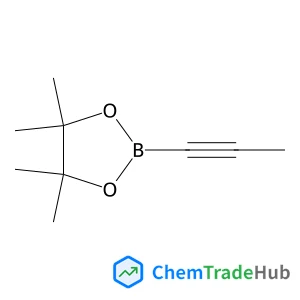
4,4,5,5-Tetramethyl-2-(1-propyn-1-YL)-1,3,2-dioxaborolane
CAS Number:
347389-75-7
Molecular Formula:
C9H15BO2
![3-[(3R,4R)-3-[(6-aminopyrimidin-4-yl)-methyl-amino]-4-methyl-1-piperidyl]-3-oxo-propanenitrile structure](https://static.chemtradehub.com/structs/164/1640971-60-3-83a4.webp "3-[(3R,4R)-3-[(6-aminopyrimidin-4-yl)-methyl-amino]-4-methyl-1-piperidyl]-3-oxo-propanenitrile structure")
3-[(3R,4R)-3-[(6-aminopyrimidin-4-yl)-methyl-amino]-4-methyl-1-piperidyl]-3-oxo-propanenitrile
CAS Number:
1640971-60-3
Molecular Formula:
C14H20N6O
Recommended Suppliers





Disclaimer
This page provides academic journal information for reference and research purposes only. We are not affiliated with any journal publishers and do not handle publication submissions. For publication-related inquiries, please contact the respective journal publishers directly.
If you notice any inaccuracies in the information displayed, please contact us at support@chemtradehub.com. We will promptly review and address your concerns.