












Identification of the sulfoxide functionality in protonated analytes via ion/molecule reactions in linear quadrupole ion trap mass spectrometry
Literature Information
Publication Date
2014-06-05
DOI
10.1039/C4AN00677A
Impact Factor
4.616
Authors
Huaming Sheng, Peggy E. Williams, Weijuan Tang, Minli Zhang, Hilkka I. Kenttämaa
View Original
Abstract
A mass spectrometric method utilizing gas-phase ion/molecule reactions of 2-methoxypropene (MOP) has been developed for the identification of the sulfoxide functionality in protonated analytes in a LQIT mass spectrometer. Protonated sulfoxide analytes react with MOP to yield an abundant addition product (corresponding to 37–99% of the product ions), which is accompanied by a much slower proton transfer. The total efficiency (percent of gas-phase collisions leading to products) of the reaction is moderate (3–14%). A variety of compounds with different functional groups, including sulfone, hydroxylamino, N-oxide, aniline, phenol, keto, ester, amino and hydroxy, were examined to probe the selectivity of this reaction. Most of the protonated compounds with proton affinities lower than that of MOP react mainly via proton transfer to MOP. The formation of adduct-MeOH ions was found to be characteristic for secondary N-hydroxylamines. N-Oxides formed abundant MOP adducts just like sulfoxides, but sulfoxides can be differentiated from N-oxides based on their high reaction efficiencies. The reaction was tested by using the anti-inflammatory drug sulindac (a sulfoxide) and its metabolite sulindac sulfone. The presence of a sulfoxide functionality in the drug but a sulfone functionality in the metabolite was readily demonstrated. The presence of other functionalities in addition to sulfoxide in the analytes was found not to influence the diagnostic reactivity.
Related Literature
Dielectric spectroscopy of ion-pairing and hydration in aqueous tetra-n-alkylammonium halide solutions
Richard Buchner, Christian Hölzl, Jochen Stauber, Josef Barthel
2002-04-29
Paper
DOI: 10.1039/B110361J
The PFI-ZEKE photoelectron spectrum of m-fluorophenol and its aqueous complexes: Comparing intermolecular vibrations in rotational isomers
Keigo Yosida, Kazunari Suzuki, Shun-ichi Ishiuchi, Makoto Sakai, Masaaki Fujii, Caroline E. H. Dessent, Klaus Müller-Dethlefs
2002-05-14
Paper
DOI: 10.1039/B201107G
The influence of the starch indicator on front waves in the iodate–arsenous acid system with applied electric fields
J. H. Merkin
2002-04-26
Paper
DOI: 10.1039/B110364B
Laser-induced incandescence and Raman measurements in sooting methane and ethylene flames
2002-05-03
Paper
DOI: 10.1039/B111335F
Pulsed laser deposition of La0.6Ca0.4CoO3 (LCCO) films. A promising metal-oxidecatalyst for air based batteries
M. J. Montenegro, M. Döbeli, T. Lippert, S. Müller, B. Schnyder, A. Weidenkaff, A. Wokaun
2002-05-16
Paper
DOI: 10.1039/B200120A
Formation and consumption of single-ring aromatic hydrocarbons and their precursors in premixed acetylene, ethylene and benzene flames
Henning Richter, Jack B. Howard
Paper
DOI: 10.1039/B110089K
Implementation of RI-CC2 triplet excitation energies with an application to trans-azobenzene
Kasper Hald
2002-05-02
Paper
DOI: 10.1039/B110847F
Surface photochemistry on confined systems: UV-laser-induced photodesorption of NO from Pd-nanostructures on Al2O3
Margarethe Kampling, Katharina Al-Shamery, Hans-Joachim Freund, Markus Wilde, Katsuyuki Fukutani, Yoshitada Murata
2002-05-09
Paper
DOI: 10.1039/B201357F
Doping level change of polythiophene film during its electrochemical growth process
Mingxiao Fu, Gaoquan Shi, Fengen Chen, Xiaoyin Hong
2002-05-07
Paper
DOI: 10.1039/B201041K
Metal clusters in plasma polymer matrices Part IV. Electrical properties of Ag clusters
Michael Wark, Alfred Baalmann, Ulrich Simon, Nils Jaeger
2002-04-26
Paper
DOI: 10.1039/B111038A
You might also like
Compound Q&A
How should waste containing (6-Bromo-2-naphthyl)oxy](dimethyl)(2-methyl-2-propanyl)silane be handled?
Waste containing (6-Bromo-2-naphthyl)oxy](dimethyl)(2-methyl-2-propanyl)silane (...
100751-65-3[(6-Bromo-2-naphthyl...
Compound Q&A
How is 7-Fluoro-4-isoquinolinecarboxylic acid (CAS: 1841081-40-0) typically synthesized?
7-Fluoro-4-isoquinolinecarboxylic acid can be synthesized via a multi-step proce...
1841081-40-07-Fluoro-4-isoquinol...
Compound Q&A
What are the physical and chemical properties of 2,3,5,6-Tetrabromothieno[3,2-b]thiophene (CAS: 124638-53-5)?
2,3,5,6-Tetrabromothieno[3,2-b]thiophene is a crystalline compound with a high m...
124638-53-52,3,5,6-Tetrabromoth...
Compound Q&A
Is 1-[4-(Benzylamino)-7,8-dihydro-5H-pyrano[4,3-d]pyrimidin-2-yl]-2-methyl-1H-indole-4-carboxamide (CAS: 1542705-92-9) safe?
1-[4-(Benzylamino)-7,8-dihydro-5H-pyrano[4,3-d]pyrimidin-2-yl]-2-methyl-1H-indol...
1542705-92-91-[4-(Benzylamino)-7...
Compound Q&A
What is the market or research trend for imidazo[5,1-d]-1,2,3,5-tetrazine-8-carboxylic acid, 3,4-dihydro-3-methyl-4-oxo- (CAS: 113942-30-6)?
The market for imidazo[5,1-d]-1,2,3,5-tetrazine-8-carboxylic acid, 3,4-dihydro-3...
113942-30-6Imidazo[5,1-d]-1,2,3...
Compound Q&A
What is 3-(Triisopropylsilyl)propiolaldehyde (CAS: 163271-80-5)?
3-(Triisopropylsilyl)propiolaldehyde is a synthetic organic compound with the CA...
163271-80-53-(Triisopropylsilyl...
Compound Q&A
What regulatory guidelines apply to 6-Nitro-2H-1,4-benzoxazin-3(4H)-one (CAS: 81721-87-1)?
6-Nitro-2H-1,4-benzoxazin-3(4H)-one (CAS: 81721-87-1) is subject to various regu...
81721-87-16-Nitro-2H-1,4-benzo...
Compound Q&A
How should waste containing (3-Fluorophenyl)(4-{[(2-methyl-2-propanyl)oxy]carbonyl}-1-piperazinyl)acetic acid (CAS: 885272-91-3) be handled?
Waste containing (3-Fluorophenyl)(4-{[(2-methyl-2-propanyl)oxy]carbonyl}-1-piper...
885272-91-3(3-Fluorophenyl)(4-{...
Compound Q&A
What are the physical and chemical properties of N,N'-4,4'-Biphenyldiyldiisonicotinamide (CAS: 55119-40-9)?
N,N'-4,4'-Biphenyldiyldiisonicotinamide is a white crystalline solid with a mole...
55119-40-9N,N'-4,4'-Biphenyldi...
Compound Q&A
What industries use 6-Bromo-8-fluoro-2-quinazolinol (CAS: 1036756-15-6)?
6-Bromo-8-fluoro-2-quinazolinol is primarily used in the pharmaceutical industry...
1036756-15-66-Bromo-8-fluoro-2-q...
Source Journal
Analyst

CiteScore:
7.8
Self-citation Rate:
5.6%
Articles per Year:
653
Analyst publishes analytical and bioanalytical research that reports premier fundamental discoveries and inventions, and the applications of those discoveries, unconfined by traditional discipline barriers.
Recommended Compounds
![2-{[4-(2-Methoxyethyl)phenoxy]methyl}oxirane structure](https://static.chemtradehub.com/structs/567/56718-70-8-f037.webp "2-{[4-(2-Methoxyethyl)phenoxy]methyl}oxirane structure")
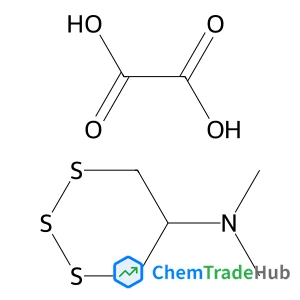
Oxalic acid compound with cyclohexylsulfamothioic O-acid (11)
CAS Number:
31895-22-4
Molecular Formula:
C7H13NO4S3
![(2S)-2-({[(2-Methyl-2-propanyl)oxy]carbonyl}amino)-4-pentynoic acid structure](https://static.chemtradehub.com/structs/630/63039-48-5-b66d.webp "(2S)-2-({[(2-Methyl-2-propanyl)oxy]carbonyl}amino)-4-pentynoic acid structure")
(2S)-2-({[(2-Methyl-2-propanyl)oxy]carbonyl}amino)-4-pentynoic acid
CAS Number:
63039-48-5
Molecular Formula:
C10H15NO4
Recommended Suppliers






Disclaimer
This page provides academic journal information for reference and research purposes only. We are not affiliated with any journal publishers and do not handle publication submissions. For publication-related inquiries, please contact the respective journal publishers directly.
If you notice any inaccuracies in the information displayed, please contact us at support@chemtradehub.com. We will promptly review and address your concerns.