












Formation and consumption of single-ring aromatic hydrocarbons and their precursors in premixed acetylene, ethylene and benzene flames
Literature Information
Publication Date
DOI
10.1039/B110089K
Impact Factor
3.676
Authors
Henning Richter, Jack B. Howard
View Original
Abstract
Kinetic modeling is becoming a powerful tool for the quantitative description of combustion processes covering different fuels and large ranges of temperature, pressure and equivalence ratio. In the present work, a reaction mechanism which was developed initially for benzene oxidation, and included the formation of polycyclic aromatic hydrocarbons was extended and tested for the combustion of acetylene and ethylene. Thermodynamic and kinetic property data were updated. If available, data were taken from the recent literature. In addition, density functional theory as well as ab initio computations on a CBS-Q and CBS-RAD level, partially published previously, were carried out. Quantum Rice–Ramsperger–Kassel analysis was conducted in order to determine pressure-dependent rate constants of chemically activated reactions. The model was developed and tested using species concentration profiles reported in the literature from molecular beam mass-spectrometry measurements in four unidimensional laminar premixed low-pressure ethylene, acetylene and benzene flames at equivalence ratios (ϕ) of 0.75 and 1.9 (C2H4), 2.4 (C2H2) and 1.8 (C6H6). Predictive capabilities of the model were found to be at least fair and often good to excellent for the consumption of the reactants, the formation of the main combustion products as well as the formation and depletion of major intermediates including radicals. Self-combination of propargyl (C3H3) followed by ring closure and rearrangement was the dominant benzene formation pathway in both rich acetylene and ethylene flames. In addition, reaction between vinylacetylene (C4H4) and vinyl radical (C2H3) contributed to benzene formation in the ϕ = 1.9 ethylene flame. Propargyl formation and consumption pathways which involve reactions between acetylene, allene, propyne and singlet and triplet methylene were assessed. Significant overpredictions of phenoxy radicals indicate the necessity of further investigation of the pressure and temperature dependence and the product distribution of phenyl oxidation. The possible formation of benzoquinones, the ratio of the ortho and para isomers and their degradation pathways are of particular interest.
Related Literature
Chitosan/PVA-supported silver nanoparticles for azo dyes removal: fabrication, characterization, and assessment of antioxidant activity
Ismet Meydan, Aysenur Aygun, Rima Nour Elhouda Tiri, Tugba Gur, Yılmaz Kocak, Hamdullah Seckin, Fatih Sen
2023-11-22
Paper
DOI: 10.1039/D3VA00224A
Fluorine pollution in a sheep fluorosis area of the northern Helan Mountains, Ningxia, China
Xiuping Hong, Handong Liang
2023-11-14
Paper
DOI: 10.1039/D3VA00262D
Operando insights into correlating CO coverage and Cu–Au alloying with the selectivity of Au NP-decorated Cu2O nanocubes during the electrocatalytic CO2 reduction
Clara Rettenmaier, Antonia Herzog, Daniele Casari, Martina Rüscher, Hyo Sang Jeon, David Kordus, Mauricio Lopez Luna, Stefanie Kühl, Uta Hejral, Earl M. Davis, See Wee Chee, Janis Timoshenko, Duncan T.L. Alexander, Arno Bergmann, Beatriz Roldan Cuenya
2023-10-25
Paper
DOI: 10.1039/D3EY00162H
Direct ink writing of polyimide aerogels for battery thermal mitigation
Ciera E. Cipriani, Donald A. Dornbusch, Stephanie L. Vivod
2023-12-13
Paper
DOI: 10.1039/D3LP00200D
Superior single- and multi-component siloxane removal from water using a faulted silica DON zeolite adsorbent
Dariana R. Vega-Santander, Rodinson Arrieta-Pérez, Daniela Rivera-Mirabal, Gabriela Del Valle-Pérez, Miguel Sepúlveda-Pagán, Juan C. Muñoz-Senmache, Yomaira J. Pagán-Torres, Arturo J. Hernández-Maldonado
2023-11-10
Paper
DOI: 10.1039/D3VA00282A
A simple approach to determining the efficacy of antiperspirants using paper-based colorimetric paper sensors: SweatSENSE
Rachel A. Hand, Spyridon Efstathiou, Alan M. Wemyss, Maria Grypioti, Gavin Kirby, Tammie Barlow, Emmett Cullen Tinley, Jane Ford, Andy Jamieson, Janette Reynolds, Jean Miller, Susan Bates, David M. Haddleton
2024-01-05
Paper
DOI: 10.1039/D3LP00214D
Microplastic distribution and ecological risks: investigating road dust and stormwater runoff across land uses
S. M. Alamgir Kabir, Muhammed A. Bhuiyan, Guomin Zhang, Biplob Kumar Pramanik
2023-11-13
Paper
DOI: 10.1039/D3VA00128H
Modified Cu–Zn–Al mixed oxide dual function materials enable reactive carbon capture to methanol
Chae Jeong-Potter, Martha A. Arellano-Treviño, W. Wilson McNeary, Alexander J. Hill, Daniel A. Ruddy, Anh T. To
2023-11-08
Communication
DOI: 10.1039/D3EY00254C
Development of a portable, microwell-based, smartphone-assisted colorimetric device to measure the activities of anaerobic digestion
Yanhao Miao, Qidi Sun, Guozhu Mao, Wanqing Dai, Cui Tang, Jiayu Chen
2023-11-14
Paper
DOI: 10.1039/D3VA00268C
You might also like
Compound Q&A
How should waste containing (6-Bromo-2-naphthyl)oxy](dimethyl)(2-methyl-2-propanyl)silane be handled?
Waste containing (6-Bromo-2-naphthyl)oxy](dimethyl)(2-methyl-2-propanyl)silane (...
100751-65-3[(6-Bromo-2-naphthyl...
Compound Q&A
How is 7-Fluoro-4-isoquinolinecarboxylic acid (CAS: 1841081-40-0) typically synthesized?
7-Fluoro-4-isoquinolinecarboxylic acid can be synthesized via a multi-step proce...
1841081-40-07-Fluoro-4-isoquinol...
Compound Q&A
What are the physical and chemical properties of 2,3,5,6-Tetrabromothieno[3,2-b]thiophene (CAS: 124638-53-5)?
2,3,5,6-Tetrabromothieno[3,2-b]thiophene is a crystalline compound with a high m...
124638-53-52,3,5,6-Tetrabromoth...
Compound Q&A
Is 1-[4-(Benzylamino)-7,8-dihydro-5H-pyrano[4,3-d]pyrimidin-2-yl]-2-methyl-1H-indole-4-carboxamide (CAS: 1542705-92-9) safe?
1-[4-(Benzylamino)-7,8-dihydro-5H-pyrano[4,3-d]pyrimidin-2-yl]-2-methyl-1H-indol...
1542705-92-91-[4-(Benzylamino)-7...
Compound Q&A
What is the market or research trend for imidazo[5,1-d]-1,2,3,5-tetrazine-8-carboxylic acid, 3,4-dihydro-3-methyl-4-oxo- (CAS: 113942-30-6)?
The market for imidazo[5,1-d]-1,2,3,5-tetrazine-8-carboxylic acid, 3,4-dihydro-3...
113942-30-6Imidazo[5,1-d]-1,2,3...
Compound Q&A
What is 3-(Triisopropylsilyl)propiolaldehyde (CAS: 163271-80-5)?
3-(Triisopropylsilyl)propiolaldehyde is a synthetic organic compound with the CA...
163271-80-53-(Triisopropylsilyl...
Compound Q&A
What regulatory guidelines apply to 6-Nitro-2H-1,4-benzoxazin-3(4H)-one (CAS: 81721-87-1)?
6-Nitro-2H-1,4-benzoxazin-3(4H)-one (CAS: 81721-87-1) is subject to various regu...
81721-87-16-Nitro-2H-1,4-benzo...
Compound Q&A
How should waste containing (3-Fluorophenyl)(4-{[(2-methyl-2-propanyl)oxy]carbonyl}-1-piperazinyl)acetic acid (CAS: 885272-91-3) be handled?
Waste containing (3-Fluorophenyl)(4-{[(2-methyl-2-propanyl)oxy]carbonyl}-1-piper...
885272-91-3(3-Fluorophenyl)(4-{...
Compound Q&A
What are the physical and chemical properties of N,N'-4,4'-Biphenyldiyldiisonicotinamide (CAS: 55119-40-9)?
N,N'-4,4'-Biphenyldiyldiisonicotinamide is a white crystalline solid with a mole...
55119-40-9N,N'-4,4'-Biphenyldi...
Compound Q&A
What industries use 6-Bromo-8-fluoro-2-quinazolinol (CAS: 1036756-15-6)?
6-Bromo-8-fluoro-2-quinazolinol is primarily used in the pharmaceutical industry...
1036756-15-66-Bromo-8-fluoro-2-q...
Source Journal
Physical Chemistry Chemical Physics

CiteScore:
5.5
Self-citation Rate:
10.3%
Articles per Year:
3036
Physical Chemistry Chemical Physics (PCCP) is an international journal co-owned by 19 physical chemistry and physics societies from around the world. This journal publishes original, cutting-edge research in physical chemistry, chemical physics and biophysical chemistry. To be suitable for publication in PCCP, articles must include significant innovation and/or insight into physical chemistry; this is the most important criterion that reviewers and Editors will judge against when evaluating submissions. The journal has a broad scope and welcomes contributions spanning experiment, theory, computation and data science. Topical coverage includes spectroscopy, dynamics, kinetics, statistical mechanics, thermodynamics, electrochemistry, catalysis, surface science, quantum mechanics, quantum computing and machine learning. Interdisciplinary research areas such as polymers and soft matter, materials, nanoscience, energy, surfaces/interfaces, and biophysical chemistry are welcomed if they demonstrate significant innovation and/or insight into physical chemistry. Joined experimental/theoretical studies are particularly appreciated when complementary and based on up-to-date approaches.
Recommended Compounds
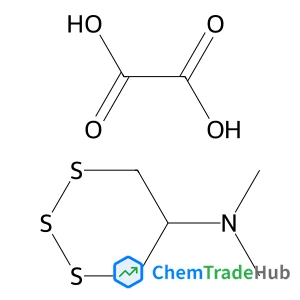
Oxalic acid compound with cyclohexylsulfamothioic O-acid (11)
CAS Number:
31895-22-4
Molecular Formula:
C7H13NO4S3
![(2S)-2-({[(2-Methyl-2-propanyl)oxy]carbonyl}amino)-4-pentynoic acid structure](https://static.chemtradehub.com/structs/630/63039-48-5-b66d.webp "(2S)-2-({[(2-Methyl-2-propanyl)oxy]carbonyl}amino)-4-pentynoic acid structure")
(2S)-2-({[(2-Methyl-2-propanyl)oxy]carbonyl}amino)-4-pentynoic acid
CAS Number:
63039-48-5
Molecular Formula:
C10H15NO4
Recommended Suppliers





Disclaimer
This page provides academic journal information for reference and research purposes only. We are not affiliated with any journal publishers and do not handle publication submissions. For publication-related inquiries, please contact the respective journal publishers directly.
If you notice any inaccuracies in the information displayed, please contact us at support@chemtradehub.com. We will promptly review and address your concerns.