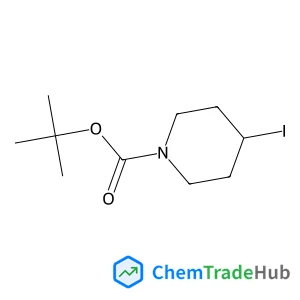
2-Methyl-2-propanyl 4-iodo-1-piperidinecarboxylate
CAS Number:
301673-14-3
Molecular Formula:
C10H18INO2
M. J. Montenegro, M. Döbeli, T. Lippert, S. Müller, B. Schnyder, A. Weidenkaff, A. Wokaun
La0.6Ca0.4CoO3 (LCCO) thin films were deposited on MgO(001) and stainless steel substrates by pulsed reactive crossed-beam laser ablation (PRCLA). The film stoichiometry was characterized by Rutherford backscattering spectrometry (RBS). The data confirmed that the material transfer from the target to the substrate is congruent. The thickness and surface roughness of the films is in the range of 200–500 and 2–12 nm, respectively, depending on the deposition conditions. The quality of the deposited film was analyzed by X-ray diffraction (XRD) and high resolution transmission electron microscopy (HRTEM). Epitaxial and single oriented thin films could be grown. In view of the importance of the surface composition in electrochemistry, X-ray photoelectron spectroscopy (XPS) measurements were performed. The electrochemical activity of the LCCO films is influenced by the crystallinity of the film.
Neha Saxena, Md Merajul Islam, Sainu Baliyan, Deepa Sharma
DOI: 10.1039/D2SU00069E
Karoline E. Eckhart, Hunter B. Wood, Tarik A. Taoufik, Michelle E. Wolf, Dazhe J. Cao, Stefanie A. Sydlik
DOI: 10.1039/D3LP00082F
Chang Chen, Jiazhan Li, Xin Tan, Yu Zhang, Yifan Li, Chang He, Zhiyuan Xu, Chao Zhang, Chen Chen
DOI: 10.1039/D3EY00150D
Jiajun Gu, Jeffrey A. Sward, K. Max Zhang
DOI: 10.1039/D3VA00191A
Ronald Sluyter, Konstantin Konstantinov, Jung Ho Kim
DOI: 10.1039/D3EY00239J
Mazen S. Hamada, Hossam Adel Zaqoot, Waqar Ahmed Sethar
DOI: 10.1039/D3VA00170A
S. M. Alamgir Kabir, Muhammed A. Bhuiyan, Guomin Zhang, Biplob Kumar Pramanik
DOI: 10.1039/D3VA00128H
Surya Singh, Mrinal Kanti Biswas
DOI: 10.1039/D3VA00222E
Waste containing (6-Bromo-2-naphthyl)oxy](dimethyl)(2-methyl-2-propanyl)silane (...
7-Fluoro-4-isoquinolinecarboxylic acid can be synthesized via a multi-step proce...
2,3,5,6-Tetrabromothieno[3,2-b]thiophene is a crystalline compound with a high m...
1-[4-(Benzylamino)-7,8-dihydro-5H-pyrano[4,3-d]pyrimidin-2-yl]-2-methyl-1H-indol...
The market for imidazo[5,1-d]-1,2,3,5-tetrazine-8-carboxylic acid, 3,4-dihydro-3...
3-(Triisopropylsilyl)propiolaldehyde is a synthetic organic compound with the CA...
6-Nitro-2H-1,4-benzoxazin-3(4H)-one (CAS: 81721-87-1) is subject to various regu...
Waste containing (3-Fluorophenyl)(4-{[(2-methyl-2-propanyl)oxy]carbonyl}-1-piper...
N,N'-4,4'-Biphenyldiyldiisonicotinamide is a white crystalline solid with a mole...
6-Bromo-8-fluoro-2-quinazolinol is primarily used in the pharmaceutical industry...

Physical Chemistry Chemical Physics (PCCP) is an international journal co-owned by 19 physical chemistry and physics societies from around the world. This journal publishes original, cutting-edge research in physical chemistry, chemical physics and biophysical chemistry. To be suitable for publication in PCCP, articles must include significant innovation and/or insight into physical chemistry; this is the most important criterion that reviewers and Editors will judge against when evaluating submissions. The journal has a broad scope and welcomes contributions spanning experiment, theory, computation and data science. Topical coverage includes spectroscopy, dynamics, kinetics, statistical mechanics, thermodynamics, electrochemistry, catalysis, surface science, quantum mechanics, quantum computing and machine learning. Interdisciplinary research areas such as polymers and soft matter, materials, nanoscience, energy, surfaces/interfaces, and biophysical chemistry are welcomed if they demonstrate significant innovation and/or insight into physical chemistry. Joined experimental/theoretical studies are particularly appreciated when complementary and based on up-to-date approaches.

![2,2'-{2,2-Propanediylbis[(2,6-dibromo-4,1-phenylene)oxy]}diethanol structure](https://static.chemtradehub.com/structs/416/4162-45-2-b3d6.webp "2,2'-{2,2-Propanediylbis[(2,6-dibromo-4,1-phenylene)oxy]}diethanol structure")