












Webcam-based flow cytometer using wide-field imaging for low cell number detection at high throughput
Literature Information
Publication Date
2014-07-04
DOI
10.1039/C4AN00669K
Impact Factor
4.616
Authors
Hugh Alan Bruck
View Original
Abstract
Here we describe a novel low-cost flow cytometer based on a webcam capable of low cell number detection in a large volume which may overcome the limitations of current flow cytometry. Several key elements have been combined to yield both high throughput and high sensitivity. The first element is a commercially available webcam capable of 187 frames per second video capture at a resolution of 320 × 240 pixels. The second element in this design is a 1 W 450 nm laser module for area-excitation, which combined with the webcam allows for rapid interrogation of a flow field. The final element is a 2D flow-cell which overcomes the flow limitation of hydrodynamic focusing and allows for higher sample throughput in a wider flow field. This cell allows for the linear velocity of target cells to be lower than in a conventional “1D” hydrodynamic focusing flow-cells typically used in cytometry at similar volumetric flow rates. It also allows cells to be imaged at the full frame rate of the webcam. Using this webcam-based flow cytometer with wide-field imaging, it was confirmed that the detection of fluorescently tagged 5 μm polystyrene beads in “1D” hydrodynamic focusing flow-cells was not practical for low cell number detection due to streaking from the motion of the beads, which did not occur with the 2D flow-cell design. The sensitivity and throughput of this webcam-based flow cytometer was then investigated using THP-1 human monocytes stained with SYTO-9 florescent dye in the 2D flow-cell. The flow cytometer was found to be capable of detecting fluorescently tagged cells at concentrations as low as 1 cell per mL at flow rates of 500 μL min−1 in buffer and in blood. The effectiveness of detection was concentration dependent: at 100 cells per mL 84% of the cells were detected compared to microscopy, 10 cells per mL 79% detected and 1 cell per mL 59% of the cells were detected. With the blood samples spiked to 100 cells per mL, the average concentration for all samples was 91.4 cells per mL, with a 95% confidence interval of 86–97 cells per mL. These low cell concentrations and the large volume capabilities of the system may overcome the limitations of current cytometry, and are applicable to rare cell (such as circulating tumor cell) detection The simplicity and low cost of this device suggests that it may have a potential use in developing point-of-care clinical flow cytometry for resource-poor settings associated with global health.
Related Literature
Solubilization of organic compounds into as-synthesized spherical mesoporous silica
Yoshikazu Miyake, Toshimi Yumoto, Hajime Kitamura, Taichi Sugimoto
2002-05-10
Paper
DOI: 10.1039/B200074C
An X-ray absorption near edge spectroscopy study of trace amount technetium implanted in apatite
C. Gaillard, C. Den Auwer, S. D. Conradson
2002-05-14
Communication
DOI: 10.1039/B202618J
Triaziridine and tetrazetidinevs. cyclic water trimer and tetramer: A computational approach to the relationship between molecular and supramolecular conformational analysis
Manuel Alcamí, Otilia Mó, Manuel Yáñez, Ibon Alkorta, José Elguero
2002-04-30
Paper
DOI: 10.1039/B108270C
Two-step mechanism in cationic lipoplex formation as observed by dynamic light scattering, dielectric relaxation and circular dichroism methods
2002-05-13
Paper
DOI: 10.1039/B110503E
Scanning plasmon near-field microscopy: signal–noise ratio of different registration schemes and prospects for single molecule detection
V. N. Konopsky, S. A. Saunin, V. A. Bykov, E. A. Vinogradov
2002-05-13
Paper
DOI: 10.1039/B109955H
Very high resolution near-field chemical imaging using an infrared free electron laser
G. Margaritondo, D. Talley, J. S. Sanghera, I. D. Aggarwal, N. H. Tolk
2002-05-14
Paper
DOI: 10.1039/B109279K
Laser-induced incandescence and Raman measurements in sooting methane and ethylene flames
2002-05-03
Paper
DOI: 10.1039/B111335F
Electropolymerization of 2-methoxyaniline. Polymerization kinetics and phenazine insertion at low monomer concentration
F. A. Viva, E. M. Andrade, M. I. Florit, F. V. Molina
2002-04-26
Paper
DOI: 10.1039/B110705D
Aggregate formation in mixed monolayers at the air–water interface of metal-complex tetracationic water-soluble porphyrins attached to a phospholipid matrix
José M. Pedrosa, Marta Pérez, Inmaculada Prieto, María Teresa Martín-Romero, Dietmar Möbius, Luis Camacho
2002-04-29
Paper
DOI: 10.1039/B108360K
You might also like
Compound Q&A
How should waste containing (6-Bromo-2-naphthyl)oxy](dimethyl)(2-methyl-2-propanyl)silane be handled?
Waste containing (6-Bromo-2-naphthyl)oxy](dimethyl)(2-methyl-2-propanyl)silane (...
100751-65-3[(6-Bromo-2-naphthyl...
Compound Q&A
How is 7-Fluoro-4-isoquinolinecarboxylic acid (CAS: 1841081-40-0) typically synthesized?
7-Fluoro-4-isoquinolinecarboxylic acid can be synthesized via a multi-step proce...
1841081-40-07-Fluoro-4-isoquinol...
Compound Q&A
What are the physical and chemical properties of 2,3,5,6-Tetrabromothieno[3,2-b]thiophene (CAS: 124638-53-5)?
2,3,5,6-Tetrabromothieno[3,2-b]thiophene is a crystalline compound with a high m...
124638-53-52,3,5,6-Tetrabromoth...
Compound Q&A
Is 1-[4-(Benzylamino)-7,8-dihydro-5H-pyrano[4,3-d]pyrimidin-2-yl]-2-methyl-1H-indole-4-carboxamide (CAS: 1542705-92-9) safe?
1-[4-(Benzylamino)-7,8-dihydro-5H-pyrano[4,3-d]pyrimidin-2-yl]-2-methyl-1H-indol...
1542705-92-91-[4-(Benzylamino)-7...
Compound Q&A
What is the market or research trend for imidazo[5,1-d]-1,2,3,5-tetrazine-8-carboxylic acid, 3,4-dihydro-3-methyl-4-oxo- (CAS: 113942-30-6)?
The market for imidazo[5,1-d]-1,2,3,5-tetrazine-8-carboxylic acid, 3,4-dihydro-3...
113942-30-6Imidazo[5,1-d]-1,2,3...
Compound Q&A
What is 3-(Triisopropylsilyl)propiolaldehyde (CAS: 163271-80-5)?
3-(Triisopropylsilyl)propiolaldehyde is a synthetic organic compound with the CA...
163271-80-53-(Triisopropylsilyl...
Compound Q&A
What regulatory guidelines apply to 6-Nitro-2H-1,4-benzoxazin-3(4H)-one (CAS: 81721-87-1)?
6-Nitro-2H-1,4-benzoxazin-3(4H)-one (CAS: 81721-87-1) is subject to various regu...
81721-87-16-Nitro-2H-1,4-benzo...
Compound Q&A
How should waste containing (3-Fluorophenyl)(4-{[(2-methyl-2-propanyl)oxy]carbonyl}-1-piperazinyl)acetic acid (CAS: 885272-91-3) be handled?
Waste containing (3-Fluorophenyl)(4-{[(2-methyl-2-propanyl)oxy]carbonyl}-1-piper...
885272-91-3(3-Fluorophenyl)(4-{...
Compound Q&A
What are the physical and chemical properties of N,N'-4,4'-Biphenyldiyldiisonicotinamide (CAS: 55119-40-9)?
N,N'-4,4'-Biphenyldiyldiisonicotinamide is a white crystalline solid with a mole...
55119-40-9N,N'-4,4'-Biphenyldi...
Compound Q&A
What industries use 6-Bromo-8-fluoro-2-quinazolinol (CAS: 1036756-15-6)?
6-Bromo-8-fluoro-2-quinazolinol is primarily used in the pharmaceutical industry...
1036756-15-66-Bromo-8-fluoro-2-q...
Source Journal
Analyst

CiteScore:
7.8
Self-citation Rate:
5.6%
Articles per Year:
653
Analyst publishes analytical and bioanalytical research that reports premier fundamental discoveries and inventions, and the applications of those discoveries, unconfined by traditional discipline barriers.
Recommended Compounds
![(2S)-2-({[(2-Methyl-2-propanyl)oxy]carbonyl}amino)-4-pentynoic acid structure](https://static.chemtradehub.com/structs/630/63039-48-5-b66d.webp "(2S)-2-({[(2-Methyl-2-propanyl)oxy]carbonyl}amino)-4-pentynoic acid structure")
(2S)-2-({[(2-Methyl-2-propanyl)oxy]carbonyl}amino)-4-pentynoic acid
CAS Number:
63039-48-5
Molecular Formula:
C10H15NO4

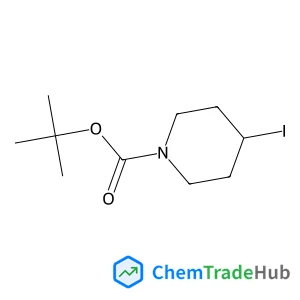
2-Methyl-2-propanyl 4-iodo-1-piperidinecarboxylate
CAS Number:
301673-14-3
Molecular Formula:
C10H18INO2
Recommended Suppliers




Disclaimer
This page provides academic journal information for reference and research purposes only. We are not affiliated with any journal publishers and do not handle publication submissions. For publication-related inquiries, please contact the respective journal publishers directly.
If you notice any inaccuracies in the information displayed, please contact us at support@chemtradehub.com. We will promptly review and address your concerns.