












Double modular modification of thiolactone-containing polymers: towards polythiols and derived structures
Literature Information
Publication Date
2012-02-03
DOI
10.1039/C2PY00565D
Impact Factor
5.582
Authors
Pieter Espeel, Fabienne Goethals, Milan M. Stamenović, Lionel Petton, Filip E. Du Prez
View Original
Abstract
A conceptual proof for the double modification (aminolysis and subsequent thiol-click modification) of thiolactone units, incorporated in linear polymer scaffolds, was elaborated. These polymers were prepared by either reversible addition–fragmentation chain transfer (RAFT) or nitroxide mediated radical polymerization (NMP) starting from a stable, readily available styrenic thiolactone monomer (St-TLa). Successful copolymerization of the latter with styrene (St) or methyl methacrylate (MMA) yielded linear polymers with varying thiolactone content (4–25%). Upon amine treatment, the ring-opening of the pendent thiolactones resulted in the formation of linear polythiols. Reaction conditions were optimized to avoid cross-linking via disulfide formation, thus preserving the linear nature of the polymer. Different primary amines (propylamine, benzylamine, ethanolamine and Jeffamine M-1000) were attached to the polymer backbone, while the PDIs remained low. The resulting polythiols are versatile scaffolds for further modification by various thiol-click reactions. In this respect, thiol–maleimide conjugation was used as a model reaction. NMR- and SEC-analyses revealed a near-quantitative double modification of thiolactone containing polystyrene (PS) and poly(methylmethacrylate) (PMMA) by subsequent treatment with propylamine and N-benzylmaleimide.
Related Literature
Synthesis of cardo-polymers using Tröger's base formation
Mariolino Carta, Matthew Croad, Johannes C. Jansen, Paola Bernardo, Gabriele Clarizia, Neil B. McKeown
2014-06-20
Paper
DOI: 10.1039/C4PY00607K
Functionalisation of MWCNTs with poly(lauryl acrylate) polymerised by Cu(0)-mediated and RAFT methods
Jaipal Gupta, Daniel J. Keddie, Chaoying Wan, David M. Haddleton, Tony McNally
2016-05-12
Paper
DOI: 10.1039/C6PY00522E
Oxygen and carbon dioxide dual gas-responsive homopolymers and diblock copolymers synthesized via RAFT polymerization
Xue Jiang, Guolin Lu, Huang Xiaoyu
2016-12-26
Paper
DOI: 10.1039/C6PY02004F
Reduction- and thermo-sensitive core-cross-linked polypeptide hybrid micelles for triggered and intracellular drug release
Yuanfeng Gao
2017-01-06
Paper
DOI: 10.1039/C6PY01929C
Peripherally diketopyrrolopyrrole-functionalized dendritic oligothiophenes – synthesis, molecular structure, properties and applications
Qun Luo, Junkai Wang, Yi Lin, Changquan Tang, Junyan Dou, Hongwei Tan, Qingdong Zheng, Chang-Qi Ma, Zheng Cui
2017-01-10
Paper
DOI: 10.1039/C6PY02161A
A tumor-targeting dextran–apoprotein conjugate integrated with enediyne chromophore shows highly potent antitumor efficacy
Bin Li, Xiu-jun Liu, Liang Li, Sheng-hua Zhang, Yi Li, Dian-dong Li, Yong-su Zhen
2014-05-20
Paper
DOI: 10.1039/C4PY00532E
Facile one-pot access to π-conjugated polymers via sequential bromination/direct arylation polycondensation
Hitoshi Saito, Jieran Chen, Junpei Kuwabara, Takeshi Yasuda, Takaki Kanbara
2017-04-25
Paper
DOI: 10.1039/C7PY00332C
Control over the assembly and rheology of supramolecular networks via multi-responsive double hydrophilic copolymers
Jérémy Brassinne, Charles-André Fustin, Jean-François Gohy
2017-01-30
Paper
DOI: 10.1039/C6PY02143C
RAFT/MADIX emulsion copolymerization of vinyl acetate and N-vinylcaprolactam: towards waterborne physically crosslinked thermoresponsive particles
Laura Etchenausia, Abdel Khoukh, Elise Deniau Lejeune, Maud Save
2017-03-16
Paper
DOI: 10.1039/C7PY00221A
Zirconocene-catalyzed stereoselective cyclocopolymerization of 2-methyl-1,5-hexadiene with propylene
Manuela Bader, Gabriel Theurkauff, Katty Den Dauw, Christian Lamotte, Olivier Lhost, Evgueni Kirillov, Jean-François Carpentier
2014-06-27
Paper
DOI: 10.1039/C4PY00612G
You might also like
Compound Q&A
Are there alternatives to 1-(4-Chlorophenyl)-N-hydroxymethanimine (CAS: 3848-36-0) in synthesis?
When considering alternatives to 1-(4-Chlorophenyl)-N-hydroxymethanimine (CAS: 3...
3848-36-01-(4-Chlorophenyl)-N...
Compound Q&A
How should (1R,9S,10S,12S,14E,16S,19R,20R,21S,22R)-3,9,21-Trihydroxy-5,10,12,14,16,20,22-heptamethyl-23,24-dioxatetracyclo[17.3.1.1~6,9~.0~2,7~]tetracosa-2,5,7,14-tetraen-4-one (CAS: 183202-73-5) be stored?
This compound should be stored in a cool, dry place away from direct sunlight. I...
183202-73-5(1R,9S,10S,12S,14E,1...
Compound Q&A
How is 3-(4-Bromophenyl)-5-(2-fluorophenyl)-1,2,4-oxadiazole (CAS: 419553-16-5) typically synthesized?
3-(4-Bromophenyl)-5-(2-fluorophenyl)-1,2,4-oxadiazole is synthesized through a m...
419553-16-53-(4-Bromophenyl)-5-...
Compound Q&A
How is 5-Chloro-2-(4-chlorophenyl)-4-methyl-6-[3-(1-piperidinyl)propoxy]pyrimidine (CAS: 1639220-19-1) typically synthesized?
5-Chloro-2-(4-chlorophenyl)-4-methyl-6-[3-(1-piperidinyl)propoxy]pyrimidine (CAS...
1639220-19-15-Chloro-2-(4-chloro...
Compound Q&A
What industries use 2-Chloro-4-(difluoromethoxy)pyridine (CAS: 1206978-15-5)?
2-Chloro-4-(difluoromethoxy)pyridine is used in the pharmaceutical industry for ...
1206978-15-52-Chloro-4-(difluoro...
Compound Q&A
What regulatory guidelines apply to 3-Chloro-6-methylpyridazine (CAS: 1121-79-5)?
3-Chloro-6-methylpyridazine (CAS: 1121-79-5) is classified under the Globally Ha...
1121-79-53-Chloro-6-methylpyr...
Compound Q&A
Are there alternatives to Methyl 4,5-dimethyl-2-nitrobenzoate in synthesis?
Several alternatives can be used in the synthesis of Methyl 4,5-dimethyl-2-nitro...
90922-74-0Methyl 4,5-dimethyl-...
Compound Q&A
Are there alternatives to (2E,2'E)-3,3'-(1,4-Phenylene)bisacrylaldehyde in synthesis?
Alternatives to (2E,2'E)-3,3'-(1,4-Phenylene)bisacrylaldehyde include other acry...
63405-68-5(2E,2'E)-3,3'-(1,4-P...
Compound Q&A
What is 3-Amino-5-chloropyridin-2-ol hydrochloride (CAS: 1261906-29-9)?
3-Amino-5-chloropyridin-2-ol hydrochloride is an organic compound with the CAS n...
1261906-29-93-Amino-5-chloropyri...
Compound Q&A
What precautions should be taken when handling 6,7-Difluoro-2,3-dihydro-4H-chromen-4-one (CAS: 1092349-93-3)?
When handling 6,7-Difluoro-2,3-dihydro-4H-chromen-4-one, it is essential to wear...
1092349-93-36,7-Difluoro-2,3-dih...
Source Journal
Polymer Chemistry

CiteScore:
8.6
Self-citation Rate:
7.3%
Articles per Year:
457
Polymer Chemistry welcomes submissions in all areas of polymer science that have a strong focus on macromolecular chemistry. Manuscripts may cover a broad range of fields, yet no direct application focus is required.
Recommended Compounds
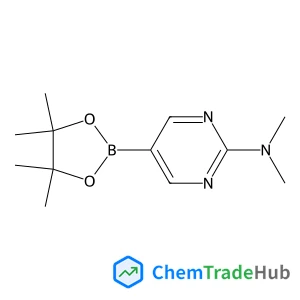
N,N-Dimethyl-5-(4,4,5,5-tetramethyl-1,3,2-dioxaborolan-2-yl)-2-pyrimidinamine
CAS Number:
1032759-30-0
Molecular Formula:
C12H20BN3O2
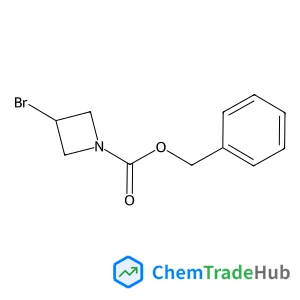
![6-Bromo-2,3-dihydro-1H-pyrido[2,3-b][1,4]oxazine structure](https://static.chemtradehub.com/structs/120/1203499-17-5-b4d1.webp "6-Bromo-2,3-dihydro-1H-pyrido[2,3-b][1,4]oxazine structure")
6-Bromo-2,3-dihydro-1H-pyrido[2,3-b][1,4]oxazine
CAS Number:
1203499-17-5
Molecular Formula:
C7H7BrN2O
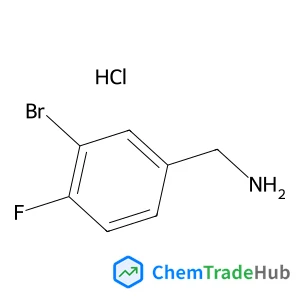
1-(3-Bromo-4-fluorophenyl)methanamine hydrochloride (1:1)
CAS Number:
202865-68-7
Molecular Formula:
C7H8BrClFN
Recommended Suppliers


Disclaimer
This page provides academic journal information for reference and research purposes only. We are not affiliated with any journal publishers and do not handle publication submissions. For publication-related inquiries, please contact the respective journal publishers directly.
If you notice any inaccuracies in the information displayed, please contact us at support@chemtradehub.com. We will promptly review and address your concerns.