












Poly(ethylene) brushes grafted to silicon substrates
Literature Information
Publication Date
2011-11-24
DOI
10.1039/C1PY00459J
Impact Factor
5.582
Authors
Denis Damiron, Jérôme Mazzolini, Fabrice Cousin, Christophe Boisson, Franck D'Agosto, Eric Drockenmuller
View Original
Abstract
A poly(glycidyl methacrylate) (PGMA) synthesized by RAFT polymerization was spin-coated onto a silicon substrate to yield, after annealing and rinsing unreacted chains, covalently attached epoxy-containing PGMA pseudo-brushes. A tailor-made ω-amino-poly(ethylene) (Mn = 1040 g mol−1, PDI = 1.3) was then grafted in melt at 130 °C for 24 h by reaction between amine chain-ends and surface-tethered epoxy groups. After discarding unreacted poly(ethylene) chains by sonication and Soxhlet rinsing, the resulting poly(ethylene) brushes were characterized by scanning probe microscopy, water contact angle and neutron reflectivity measurements. The grafting of poly(ethylene) brushes to silicon substrates has thus been demonstrated for the first time and resulted in nanostructured grafted layers with homogeneous surface coverage.
Related Literature
Copolymers of carbazole and phenazine derivatives: minor structural modification, but totally different photodetector performance
Shuang Li, Xianyu Deng, Lei Feng, Xincheng Miao, Kuangyi Tang, Qianqian Li, Zhen Li
2016-12-21
Paper
DOI: 10.1039/C6PY01733A
Tailoring the properties of polypropylene in the polymerization reactor using polymeric nucleating agents as prepolymers on the Ziegler–Natta catalyst granule
Claudio De Rosa, Finizia Auriemma, Oreste Tarallo, Rocco Di Girolamo, Enrico M. Troisi, Simona Esposito, Dario Liguori, Fabrizio Piemontesi, Gianni Vitale, Giampiero Morini
2016-12-23
Communication
DOI: 10.1039/C6PY01950A
Synthetic strategies for the generation of ABCA' type asymmetric tetrablock terpolymers
Siddharth Chanpuriya, Marc A. Hillmyer, Frank S. Bates
2014-06-13
Paper
DOI: 10.1039/C4PY00614C
Thermo-responsive gold/poly(vinyl alcohol)-b-poly(N-vinylcaprolactam) core–corona nanoparticles as a drug delivery system
Christophe Detrembleur, Marie Hurtgen, Antoine Debuigne, Marie-Claire De Pauw-Gillet, Stéphane Mornet, Etienne Duguet, Christine Jérôme
2014-05-09
Paper
DOI: 10.1039/C4PY00352G
A known photoinitiator for a novel technology: 2-(4-methoxystyryl)-4,6-bis(trichloromethyl)-1,3,5-triazine for near UV or visible LED
Jing Zhang, Pu Xiao, Fabrice Morlet-Savary, Bernadette Graff, Jean Pierre Fouassier, Jacques Lalevée
2014-06-27
Paper
DOI: 10.1039/C4PY00770K
Reverse micelles based on β-cyclodextrin-incorporated amphiphilic polyurethane copolymers for protein delivery
Xiaoxu Du, Nan Song, Ying-Wei Yang, Guolin Wu, Jianbiao Ma, Hui Gao
2014-05-07
Paper
DOI: 10.1039/C4PY00278D
Block, random and palm-tree amphiphilic fluorinated copolymers: controlled synthesis, surface activity and use as dispersion polymerization stabilizers
David Alaimo, Alexandre Beigbeder, Philippe Dubois, Guy Broze, Christine Jérôme, Bruno Grignard
2014-05-09
Paper
DOI: 10.1039/C4PY00366G
CO2-Responsive graft copolymers: synthesis and characterization
Shaojian Lin, Anindita Das, Patrick Theato
2017-01-03
Paper
DOI: 10.1039/C6PY01996J
Highly thermal conductive resins formed from wide-temperature-range eutectic mixtures of liquid crystalline epoxies bearing diglycidyl moieties at the side positions
Hyeonuk Yeo, Nam-Ho You, Se Gyu Jang, Seokhoon Ahn, Kwang-Un Jeong, Seung Hee Lee, Munju Goh
2017-04-05
Paper
DOI: 10.1039/C7PY00243B
You might also like
Compound Q&A
Are there alternatives to 1-(4-Chlorophenyl)-N-hydroxymethanimine (CAS: 3848-36-0) in synthesis?
When considering alternatives to 1-(4-Chlorophenyl)-N-hydroxymethanimine (CAS: 3...
3848-36-01-(4-Chlorophenyl)-N...
Compound Q&A
How should (1R,9S,10S,12S,14E,16S,19R,20R,21S,22R)-3,9,21-Trihydroxy-5,10,12,14,16,20,22-heptamethyl-23,24-dioxatetracyclo[17.3.1.1~6,9~.0~2,7~]tetracosa-2,5,7,14-tetraen-4-one (CAS: 183202-73-5) be stored?
This compound should be stored in a cool, dry place away from direct sunlight. I...
183202-73-5(1R,9S,10S,12S,14E,1...
Compound Q&A
How is 3-(4-Bromophenyl)-5-(2-fluorophenyl)-1,2,4-oxadiazole (CAS: 419553-16-5) typically synthesized?
3-(4-Bromophenyl)-5-(2-fluorophenyl)-1,2,4-oxadiazole is synthesized through a m...
419553-16-53-(4-Bromophenyl)-5-...
Compound Q&A
How is 5-Chloro-2-(4-chlorophenyl)-4-methyl-6-[3-(1-piperidinyl)propoxy]pyrimidine (CAS: 1639220-19-1) typically synthesized?
5-Chloro-2-(4-chlorophenyl)-4-methyl-6-[3-(1-piperidinyl)propoxy]pyrimidine (CAS...
1639220-19-15-Chloro-2-(4-chloro...
Compound Q&A
What industries use 2-Chloro-4-(difluoromethoxy)pyridine (CAS: 1206978-15-5)?
2-Chloro-4-(difluoromethoxy)pyridine is used in the pharmaceutical industry for ...
1206978-15-52-Chloro-4-(difluoro...
Compound Q&A
What regulatory guidelines apply to 3-Chloro-6-methylpyridazine (CAS: 1121-79-5)?
3-Chloro-6-methylpyridazine (CAS: 1121-79-5) is classified under the Globally Ha...
1121-79-53-Chloro-6-methylpyr...
Compound Q&A
Are there alternatives to Methyl 4,5-dimethyl-2-nitrobenzoate in synthesis?
Several alternatives can be used in the synthesis of Methyl 4,5-dimethyl-2-nitro...
90922-74-0Methyl 4,5-dimethyl-...
Compound Q&A
Are there alternatives to (2E,2'E)-3,3'-(1,4-Phenylene)bisacrylaldehyde in synthesis?
Alternatives to (2E,2'E)-3,3'-(1,4-Phenylene)bisacrylaldehyde include other acry...
63405-68-5(2E,2'E)-3,3'-(1,4-P...
Compound Q&A
What is 3-Amino-5-chloropyridin-2-ol hydrochloride (CAS: 1261906-29-9)?
3-Amino-5-chloropyridin-2-ol hydrochloride is an organic compound with the CAS n...
1261906-29-93-Amino-5-chloropyri...
Compound Q&A
What precautions should be taken when handling 6,7-Difluoro-2,3-dihydro-4H-chromen-4-one (CAS: 1092349-93-3)?
When handling 6,7-Difluoro-2,3-dihydro-4H-chromen-4-one, it is essential to wear...
1092349-93-36,7-Difluoro-2,3-dih...
Source Journal
Polymer Chemistry

CiteScore:
8.6
Self-citation Rate:
7.3%
Articles per Year:
457
Polymer Chemistry welcomes submissions in all areas of polymer science that have a strong focus on macromolecular chemistry. Manuscripts may cover a broad range of fields, yet no direct application focus is required.
Recommended Compounds
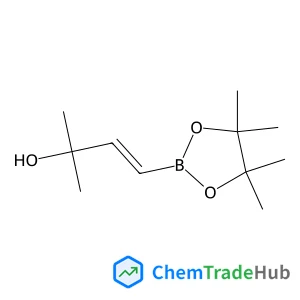
(E)-2-methyl-4-(4,4,5,5-tetramethyl-1,3,2-dioxaborolan-2-yl)but-3-en-2-ol
CAS Number:
581802-26-8
Molecular Formula:
C11H21BO3
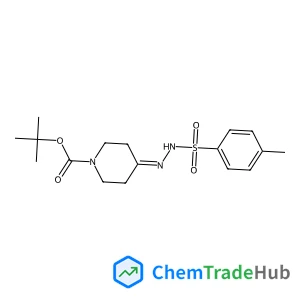
tert-Butyl 4-(2-(p-Tolylsulfonyl)hydrazono)piperidine-1-carboxylate
CAS Number:
1046478-89-0
Molecular Formula:
C17H25N3O4S
![(2S)-2-{[(9H-Fluoren-9-ylmethoxy)carbonyl]amino}-4-(methylselanyl)butanoic acid structure](https://static.chemtradehub.com/structs/121/1217852-49-7-f252.webp "(2S)-2-{[(9H-Fluoren-9-ylmethoxy)carbonyl]amino}-4-(methylselanyl)butanoic acid structure")
(2S)-2-{[(9H-Fluoren-9-ylmethoxy)carbonyl]amino}-4-(methylselanyl)butanoic acid
CAS Number:
1217852-49-7
Molecular Formula:
C20H21NO4Se
Recommended Suppliers







Disclaimer
This page provides academic journal information for reference and research purposes only. We are not affiliated with any journal publishers and do not handle publication submissions. For publication-related inquiries, please contact the respective journal publishers directly.
If you notice any inaccuracies in the information displayed, please contact us at support@chemtradehub.com. We will promptly review and address your concerns.