













Emergence of novel hydrogen chlorides under high pressure
Literature Information
Publication Date
2017-03-01
DOI
10.1039/C6CP08708F
Impact Factor
3.676
Authors
Gilles Frapper
View Original
Abstract
HCl is a textbook example of a polar covalent molecule, and has a wide range of industrial applications. Inspired by the discovery of unexpected stable sodium and potassium chlorides, we performed systematic ab initio evolutionary searches for all stable compounds in the H–Cl system at pressures up to 400 GPa. Besides HCl, four new stoichiometries (H2Cl, H3Cl, H5Cl and H4Cl7) are found to be stable under pressure. Our predictions substantially differ from previous theoretical studies. We evidence a high significance of zero-point energy in determining phase stability. The newly discovered compounds display a rich variety of chemical bonding characteristics. At ambient pressure, H2, Cl2 and HCl molecular crystals are formed by weak intermolecular van der Waals interactions, and adjacent HCl molecules connect with each other to form asymmetric zigzag chains, which become symmetric under high pressure. In H5Cl, triangular H3+ cations are stabilized by electrostatic interactions with the anionic chloride network. Further increase of pressure drives H2 dimers to combine with H3+ cations to form H5+ units. We also found chlorine-based Kagomé layers which are intercalated with zigzag HCl chains in H4Cl7. These findings could help to understand how varied bonding features can co-exist and evolve in one compound under extreme conditions.
Related Literature
Magnetic polyurethane elastomers with wide range modulation of elasticity
Tetsu Mitsumata, Suguru Ohori
2011-03-24
Communication
DOI: 10.1039/C1PY00033K
Organic support for ethylenepolymerization based on the self-assembly in heptane of end-functionalized polyisoprene
Jan Merna
2010-05-28
Paper
DOI: 10.1039/C0PY00072H
Thermo-responsive cellulose-based architectures: tailoring LCST using poly(ethylene glycol) methacrylates‡
Christian Porsch, Susanne Hansson, Niklas Nordgren, Eva Malmström
2011-02-16
Paper
DOI: 10.1039/C0PY00417K
Synthesis of nanotubesviacationic polymerization of styrene and divinylbenzene
Tanay Kesharwani, Justin S. Valenstein, Brian G. Trewyn, Fengkui Li, Victor S.-Y. Lin, Richard C. Larock
2010-09-06
Communication
DOI: 10.1039/C0PY00145G
Synthesis of nanogels/microgels by conventional and controlled radical crosslinking copolymerization
Nicolas Sanson, Jutta Rieger
2010-04-26
Review Article
DOI: 10.1039/C0PY00010H
Mesh-size control and functionalization of reorganizable chemical gels by monomer insertion into their cross-linking points
Yoshifumi Amamoto, Hiroyasu Masunaga, Hiroki Ogawa, Sono Sasaki
2011-01-27
Paper
DOI: 10.1039/C0PY00304B
Light driven asymmetric polymerization: an approach for tele-control reaction
Hiromasa Goto, Kohsuke Kawabata
2011-03-26
Paper
DOI: 10.1039/C0PY00396D
Chemistry, chances and limitations of the radical ring-opening polymerization of cyclic keteneacetals for the synthesis of degradable polyesters
Seema Agarwal
2010-03-23
Review Article
DOI: 10.1039/C0PY00040J
Controlled/living radical polymerization in nanoreactors: compartmentalization effects
Per B. Zetterlund
2010-10-04
Review Article
DOI: 10.1039/C0PY00247J
You might also like
Compound Q&A
Is 6-(3-Fluorophenyl)picolinic acid (CAS: 887982-40-3) safe?
6-(3-Fluorophenyl)picolinic acid is generally considered safe for laboratory use...
887982-40-36-(3-Fluorophenyl)pi...
Compound Q&A
What industries use (3R)-3-Pyrrolidinol (CAS: 2799-21-5)?
(3R)-3-Pyrrolidinol is used in the pharmaceutical industry as a precursor for dr...
2799-21-5(3R)-3-Pyrrolidinol
Compound Q&A
What precautions should be taken when handling (4R,5R)-4,5-Diethoxycarbonyl-2,2-dimethyldioxolane (CAS: 59779-75-8)?
When handling (4R,5R)-4,5-Diethoxycarbonyl-2,2-dimethyldioxolane (CAS: 59779-75-...
59779-75-8(4R,5R)-4,5-Diethoxy...
Compound Q&A
How is 1-(6-Chloroimidazo[1,2-b]pyridazin-3-yl)ethanone (CAS: 90734-71-7) typically synthesized?
1-(6-Chloroimidazo[1,2-b]pyridazin-3-yl)ethanone is often synthesized via a mult...
90734-71-71-(6-Chloroimidazo[1...
Compound Q&A
What is the market or research trend for N-Ethyl-3,4-dimethylbenzylamine (CAS: 39180-83-1)?
The market for N-Ethyl-3,4-dimethylbenzylamine (CAS: 39180-83-1) remains steady,...
39180-83-1N-Ethyl-3,4-dimethyl...
Compound Q&A
What is Tert-butyl 3-(pyrrolidin-1-yl)azetidine-1-carboxylate (CAS: 1019008-21-9)?
Tert-butyl 3-(pyrrolidin-1-yl)azetidine-1-carboxylate is a chemical compound wit...
1019008-21-9Tert-butyl 3-(pyrrol...
Compound Q&A
What regulatory guidelines apply to 1-Bromo-3-chloro-2,4-dimethoxybenzene (CAS: 1228956-93-1)?
1-Bromo-3-chloro-2,4-dimethoxybenzene (CAS: 1228956-93-1) falls under the classi...
1228956-93-11-Bromo-3-chloro-2,4...
Compound Q&A
Is 8-Bromo-2-methyl-3,4-dihydroisoquinolin-1(2H)-one (CAS: 1368622-07-4) safe?
The safety of 8-Bromo-2-methyl-3,4-dihydroisoquinolin-1(2H)-one (CAS: 1368622-07...
1368622-07-48-Bromo-2-methyl-3,4...
Compound Q&A
Is Benzyl [(3S)-2,6-dioxo-3-piperidinyl]carbamate (CAS: 22785-43-9) safe?
Benzyl [(3S)-2,6-dioxo-3-piperidinyl]carbamate is generally safe when handled wi...
22785-43-9Benzyl [(3S)-2,6-dio...
Compound Q&A
How should 1-{[4-(4,4,5,5-Tetramethyl-1,3,2-dioxaborolan-2-yl)phenyl]sulfonyl}pyrrolidine (CAS: 928657-21-0) be stored?
1-{[4-(4,4,5,5-Tetramethyl-1,3,2-dioxaborolan-2-yl)phenyl]sulfonyl}pyrrolidine s...
928657-21-01-{[4-(4,4,5,5-Tetra...
Source Journal
Physical Chemistry Chemical Physics

CiteScore:
5.5
Self-citation Rate:
10.3%
Articles per Year:
3036
Physical Chemistry Chemical Physics (PCCP) is an international journal co-owned by 19 physical chemistry and physics societies from around the world. This journal publishes original, cutting-edge research in physical chemistry, chemical physics and biophysical chemistry. To be suitable for publication in PCCP, articles must include significant innovation and/or insight into physical chemistry; this is the most important criterion that reviewers and Editors will judge against when evaluating submissions. The journal has a broad scope and welcomes contributions spanning experiment, theory, computation and data science. Topical coverage includes spectroscopy, dynamics, kinetics, statistical mechanics, thermodynamics, electrochemistry, catalysis, surface science, quantum mechanics, quantum computing and machine learning. Interdisciplinary research areas such as polymers and soft matter, materials, nanoscience, energy, surfaces/interfaces, and biophysical chemistry are welcomed if they demonstrate significant innovation and/or insight into physical chemistry. Joined experimental/theoretical studies are particularly appreciated when complementary and based on up-to-date approaches.
Recommended Compounds
![4-[(2,4-Dihydroxyphenyl)diazenyl]-5-hydroxy-2,7-naphthalenedisulfonic acid structure](https://static.chemtradehub.com/structs/362/3627-01-8-79ac.webp "4-[(2,4-Dihydroxyphenyl)diazenyl]-5-hydroxy-2,7-naphthalenedisulfonic acid structure")
4-[(2,4-Dihydroxyphenyl)diazenyl]-5-hydroxy-2,7-naphthalenedisulfonic acid
CAS Number:
3627-01-8
Molecular Formula:
C16H12N2O9S2

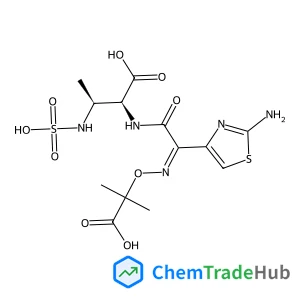
Aztreonam USP Related Compound A (Open-ring Aztreonam)
CAS Number:
87500-74-1
Molecular Formula:
C13H19N5O9S2
Recommended Suppliers





Disclaimer
This page provides academic journal information for reference and research purposes only. We are not affiliated with any journal publishers and do not handle publication submissions. For publication-related inquiries, please contact the respective journal publishers directly.
If you notice any inaccuracies in the information displayed, please contact us at support@chemtradehub.com. We will promptly review and address your concerns.