












Simultaneous enhancements of toughness and tensile strength for thermoplastic/elastomer blends through interfacial photocrosslinking with UV radiation
Literature Information
Publication Date
2013-03-25
DOI
10.1039/C3PY00185G
Impact Factor
5.582
Authors
Hongjun Xu, Yaqiong Zhang, Jingjing Yang, Lei Ye, Qianghua Wu, Baojun Qu, Qiao Wang, Zhigang Wang
View Original
Abstract
An easy procedure to introduce a photocrosslinked interface for polypropylene (PP)/maleic anhydride grafted styrene-b-(ethylene-co-butylene)-b-styrene triblock copolymer (mSEBS) thermoplastic/elastomer blends by UV radiation is reported. This procedure involves free-radical crosslinking at the interface between the mSEBS domain phase and the PP matrix phase and in the mSEBS phase domains with benzophenone (BP) as the photoinitiator and triallyl isocyanurate (TAIC) as the crosslinking agent. Compared with the absence of photocrosslinking, the structured PP/mSEBS blends with photocrosslinked interfaces confirmed by rheological measurements demonstrate simultaneous enhancements of toughness and tensile strength because of the enhanced interfacial adhesion and the more rigid mSEBS particle-like phase domains due to photocrosslinking. The tensile strength for the PP/mSEBS thermoplastic/elastomer blends with photocrosslinking increases with increasing mSEBS contents even at high mSEBS contents, and eventually approaches that for neat PP. Furthermore, the ultimate elongation at break increases with increasing crosshead speed, opposite to the general observation in that polymers tend to become brittle with increasing crosshead speed, indicating an enhanced tensile resistance for the UV radiation treated PP/mSEBS thermoplastic/elastomer blends. The procedure reported here is promising for preparing high-performance polymer blends used in high impact fields. For the purpose of comparison, PP/ethylene-propylene-diene rubber (PP/EPDM) blends were subjected to the same studies, however, the above observed simultaneous enhancements of toughness and tensile strength for the PP/mSEBS blends are completely absent for the PP/EPDM blends, simply because the UV radiation-induced interfacial crosslinking between the dispersed EPDM phase domains and the PP matrix phase does not occur.
Related Literature
The mechanism of excimer formation: an experimental and theoretical study on the pyrene dimer
Joscha Hoche, Hans-Christian Schmitt, Alexander Humeniuk, Ingo Fischer, Roland Mitrić, Merle I. S. Röhr
2017-08-30
Paper
DOI: 10.1039/C7CP03990E
Interfacial engineering of hole transport layers with metal and dielectric nanoparticles for efficient perovskite solar cells
Dian Wang, Kah H. Chan, Naveen Kumar Elumalai, Md. Arafat Mahmud, Mushfika B. Upama, Ashraf Uddin, Supriya Pillai
2017-08-29
Paper
DOI: 10.1039/C7CP04053A
Why do zeolites induce an unprecedented electronic state on exchanged metal ions?
Takahiro Ohkubo, Takashi Yumura, Hisayoshi Kobayashi, Yasushige Kuroda
2017-08-17
Paper
DOI: 10.1039/C7CP02669B
Ultrafast exciton dynamics in 2D in-plane hetero-nanostructures: delocalization and charge transfer
E. Cassette, S. Pedetti, B. Mahler, S. Ithurria, B. Dubertret, G. D. Scholes
2017-02-24
Paper
DOI: 10.1039/C6CP08689F
Amphiphilic nanosheet self-assembly at the water/oil interface: computer simulations
Wenjun Xiang, Shuangliang Zhao, Xianyu Song, Shenwen Fang, Fen Wang, Cheng Zhong, Zhaoyang Luo
2017-02-10
Paper
DOI: 10.1039/C6CP08654C
Charge carrier mobility in one-dimensional aligned π-stacks of conjugated small molecules with a benzothiadiazole central unit
2017-02-27
Paper
DOI: 10.1039/C7CP00798A
Dark excitons and tunable optical gap in graphene nanodots
Yingjie Zhang, Yang Li
2017-08-08
Paper
DOI: 10.1039/C7CP04591C
Tunable phenol remediation from wastewater using SWCNT-based, sub-nanometer porous membranes: reactive molecular dynamics simulations and DFT calculations
F. Moradi, M. Darvish Ganji, Y. Sarrafi
2017-02-23
Paper
DOI: 10.1039/C6CP08525C
You might also like
Compound Q&A
Is 6-(3-Fluorophenyl)picolinic acid (CAS: 887982-40-3) safe?
6-(3-Fluorophenyl)picolinic acid is generally considered safe for laboratory use...
887982-40-36-(3-Fluorophenyl)pi...
Compound Q&A
What industries use (3R)-3-Pyrrolidinol (CAS: 2799-21-5)?
(3R)-3-Pyrrolidinol is used in the pharmaceutical industry as a precursor for dr...
2799-21-5(3R)-3-Pyrrolidinol
Compound Q&A
What precautions should be taken when handling (4R,5R)-4,5-Diethoxycarbonyl-2,2-dimethyldioxolane (CAS: 59779-75-8)?
When handling (4R,5R)-4,5-Diethoxycarbonyl-2,2-dimethyldioxolane (CAS: 59779-75-...
59779-75-8(4R,5R)-4,5-Diethoxy...
Compound Q&A
How is 1-(6-Chloroimidazo[1,2-b]pyridazin-3-yl)ethanone (CAS: 90734-71-7) typically synthesized?
1-(6-Chloroimidazo[1,2-b]pyridazin-3-yl)ethanone is often synthesized via a mult...
90734-71-71-(6-Chloroimidazo[1...
Compound Q&A
What is the market or research trend for N-Ethyl-3,4-dimethylbenzylamine (CAS: 39180-83-1)?
The market for N-Ethyl-3,4-dimethylbenzylamine (CAS: 39180-83-1) remains steady,...
39180-83-1N-Ethyl-3,4-dimethyl...
Compound Q&A
What is Tert-butyl 3-(pyrrolidin-1-yl)azetidine-1-carboxylate (CAS: 1019008-21-9)?
Tert-butyl 3-(pyrrolidin-1-yl)azetidine-1-carboxylate is a chemical compound wit...
1019008-21-9Tert-butyl 3-(pyrrol...
Compound Q&A
What regulatory guidelines apply to 1-Bromo-3-chloro-2,4-dimethoxybenzene (CAS: 1228956-93-1)?
1-Bromo-3-chloro-2,4-dimethoxybenzene (CAS: 1228956-93-1) falls under the classi...
1228956-93-11-Bromo-3-chloro-2,4...
Compound Q&A
Is 8-Bromo-2-methyl-3,4-dihydroisoquinolin-1(2H)-one (CAS: 1368622-07-4) safe?
The safety of 8-Bromo-2-methyl-3,4-dihydroisoquinolin-1(2H)-one (CAS: 1368622-07...
1368622-07-48-Bromo-2-methyl-3,4...
Compound Q&A
Is Benzyl [(3S)-2,6-dioxo-3-piperidinyl]carbamate (CAS: 22785-43-9) safe?
Benzyl [(3S)-2,6-dioxo-3-piperidinyl]carbamate is generally safe when handled wi...
22785-43-9Benzyl [(3S)-2,6-dio...
Compound Q&A
How should 1-{[4-(4,4,5,5-Tetramethyl-1,3,2-dioxaborolan-2-yl)phenyl]sulfonyl}pyrrolidine (CAS: 928657-21-0) be stored?
1-{[4-(4,4,5,5-Tetramethyl-1,3,2-dioxaborolan-2-yl)phenyl]sulfonyl}pyrrolidine s...
928657-21-01-{[4-(4,4,5,5-Tetra...
Source Journal
Polymer Chemistry

CiteScore:
8.6
Self-citation Rate:
7.3%
Articles per Year:
457
Polymer Chemistry welcomes submissions in all areas of polymer science that have a strong focus on macromolecular chemistry. Manuscripts may cover a broad range of fields, yet no direct application focus is required.
Recommended Compounds
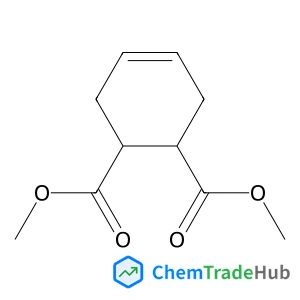
4-Cyclohexene-1,2-dicarboxylic acid, 1,2-dimethyl ester, (1R,2R)-rel-
CAS Number:
17673-68-6
Molecular Formula:
C10H14O4
![[4-Chloro-3-(diethylcarbamoyl)phenyl]boronic acid structure](https://static.chemtradehub.com/structs/871/871332-68-2-0e3b.webp "[4-Chloro-3-(diethylcarbamoyl)phenyl]boronic acid structure")
[4-Chloro-3-(diethylcarbamoyl)phenyl]boronic acid
CAS Number:
871332-68-2
Molecular Formula:
C11H15BClNO3
Recommended Suppliers





Disclaimer
This page provides academic journal information for reference and research purposes only. We are not affiliated with any journal publishers and do not handle publication submissions. For publication-related inquiries, please contact the respective journal publishers directly.
If you notice any inaccuracies in the information displayed, please contact us at support@chemtradehub.com. We will promptly review and address your concerns.