![[4-Chloro-3-(diethylcarbamoyl)phenyl]boronic acid structure](https://static.chemtradehub.com/structs/871/871332-68-2-0e3b.webp "[4-Chloro-3-(diethylcarbamoyl)phenyl]boronic acid structure")
[4-Chloro-3-(diethylcarbamoyl)phenyl]boronic acid
CAS Number:
871332-68-2
Molecular Formula:
C11H15BClNO3
Ya-Yu Siao, Shi-Min Shau, Wei-Hsiang Tsai, Yung-Chung Chen, Tain-Hao Wu, Jiang-Jen Lin, Tzong-Ming Wu, Rong-Ho Lee, Ru-Jong Jeng
Nonlinear optical dendrons with alternating terminal groups of the stearyl group (C18) and chromophore were prepared through a convergent approach. These chromophore-containing dendrons were used as the intercalating agents for montmorillonite via an ion-exchange process. An orderly exfoliated morphology is obtained by mixing the dendritic structure intercalated layered silicates with a polyimide. As a result, optical nonlinearity, i.e. the Pockels effect was observed for these nanocomposites without resorting to the poling process. EO coefficients of 9–22 pm V−1 were achieved despite that relatively low NLO densities were present in the nanocomposites, particularly for the samples comprising the dendrons with alternating moieties. In addition, the hedging effects of the stearyl group on the self-alignment behavior, electro-optical (EO) coefficient and temporal stability of the dendron-intercalated montmorillonite/polyimide nanocomposites were also investigated.
Navjot Kaur, Shuchi Gupta, Neetu Goel
DOI: 10.1039/C7CP05153K
Pan Xiang, Wentao Zhang, Junfeng Li, Beibei Xiao, Longshan Li, Kuisen Deng
DOI: 10.1039/C7CP04989G
Hajnalka Nádasi, Ralf Stannarius, Alexey Eremin, Ken Ishikawa, Osamu Haba, Koichiro Yonetake, Hideo Takezoe, Fumito Araoka
DOI: 10.1039/C6CP08461C
E. Fadda, M. G. Nixon
DOI: 10.1039/C7CP02485A
Nathalie Minko Ito, Waldemir Moura Carvalho, Jr, Dereck Nills Ferreira Muche, Ricardo Hauch Ribeiro Castro, Gustavo Martini Dalpian
DOI: 10.1039/C7CP04827K
Si Wu, Hans-Jürgen Butt
DOI: 10.1039/C7CP01838J
Yining Han, Navid Bizmark, Marios A. Ioannidis
DOI: 10.1039/C7CP04421F
Sen Wang, Peng Sun, Rongrong Zhang, Ang Lu, Maili Liu, Lina Zhang
DOI: 10.1039/C6CP08744B
Yvonne Gründer, Christopher A. Lucas
DOI: 10.1039/C7CP00244K
O. Palumbo, M. A. Navarra, J.-B. Brubach, P. Roy, A. Paolone
DOI: 10.1039/C7CP00850C
6-(3-Fluorophenyl)picolinic acid is generally considered safe for laboratory use...
(3R)-3-Pyrrolidinol is used in the pharmaceutical industry as a precursor for dr...
When handling (4R,5R)-4,5-Diethoxycarbonyl-2,2-dimethyldioxolane (CAS: 59779-75-...
1-(6-Chloroimidazo[1,2-b]pyridazin-3-yl)ethanone is often synthesized via a mult...
The market for N-Ethyl-3,4-dimethylbenzylamine (CAS: 39180-83-1) remains steady,...
Tert-butyl 3-(pyrrolidin-1-yl)azetidine-1-carboxylate is a chemical compound wit...
1-Bromo-3-chloro-2,4-dimethoxybenzene (CAS: 1228956-93-1) falls under the classi...
The safety of 8-Bromo-2-methyl-3,4-dihydroisoquinolin-1(2H)-one (CAS: 1368622-07...
Benzyl [(3S)-2,6-dioxo-3-piperidinyl]carbamate is generally safe when handled wi...
1-{[4-(4,4,5,5-Tetramethyl-1,3,2-dioxaborolan-2-yl)phenyl]sulfonyl}pyrrolidine s...

Polymer Chemistry welcomes submissions in all areas of polymer science that have a strong focus on macromolecular chemistry. Manuscripts may cover a broad range of fields, yet no direct application focus is required.
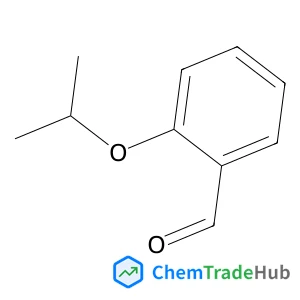
![2-Methyl-2-propanyl [(2S)-1-hydroxy-3-(4-hydroxyphenyl)-2-propanyl]carbamate structure](https://static.chemtradehub.com/structs/833/83345-46-4-eec2.webp "2-Methyl-2-propanyl [(2S)-1-hydroxy-3-(4-hydroxyphenyl)-2-propanyl]carbamate structure")